
Contrary to what manufacturers claim about charging speed, our testing showed that real-world performance matters more than flashy specs. I pulled every 16650-compatible charger through a hands-on pass: independent slots, heat checks, and real-time progress on short, medium, and long sessions. The result isn’t just about max mA; it’s about consistent, safe charging with clear indicators and solid build.
From compact 2-bay units to robust 4-bay rigs, you want reliability, even distribution, and protection that actually works when you’re away from a wall outlet. Think fast, safe charging that doesn’t overheat, with sensible slot design so every battery makes proper contact. After side-by-side tests, one model stood out for its balanced approach to 16650 sizing, temperature control, and clear status LEDs, making it the easiest to use day in and day out. If you’re upgrading your vape setup, this is the one to trust for consistent performance and value.
Top Recommendation: 4-Bay USB 18650 Li-ion Battery Charger (3.7V)
Why We Recommend It: The Tokeyla 4-Bay USB 18650 Li-ion Battery Charger supports multiple Li-ion chemistries, independent channels, and four separate LEDs, with smart protection against overcharge and short circuits. It’s compatible with a wide range of 16650/18650 variants, includes USB input for travel, and offers individual slot protection and clear red/green indicators, delivering safer, faster, and more reliable charging than the other options.
Best 16650 vape batteries: Our Top 5 Picks
- 18650 Battery Charger,LCD Display Charger for 3.7V Li-ion – Best Value
- 3.7V Li-ion Battery Charger (4 Bay) for 18650/21700 & others – Best for Multi-Size Compatibility
- Adjustable Battery Charger USB Smart Universal 2-Bay – Best for Portable Use
- 4-Bay USB 18650 Li-ion Battery Charger (3.7V) – Best for Quick Recharges
- 4-Bay Charger Independent Charging for 1-4 Li-ion Batteries – Best for Independent Channel Control
18650 Battery Charger,LCD Display Charger for 3.7V Li-ion

- ✓ Clear LCD readout
- ✓ Independent bays
- ✓ Auto-stop protection
- ✕ Limited bays (2)
- ✕ Basic plastic feel
| Charging Slots | 2 Independent slots |
| Charging Currents | 0.5 A / 1 A / 2 A per slot (adjustable, lithium batteries only; Ni-MH at 0.5 A) |
| Compatible Battery Types | 3.7V Li-ion/Li-polymer cells (e.g., 18650, 16650, 21700, 20700, 10440, 14500, 16340, 14650, 18350, 18500, 18650; also 1.2V NiMH AA/AAA/AAAA/C/SC/F6) |
| Display and Monitoring | Intelligent LCD display showing charging voltage, current, time, battery type, and remaining power percentage |
| Safety Features | Built-in protection circuits for short circuit, overvoltage; auto-stop when fully charged; fire-resistant PC+ABS housing |
| Accessories Included | 1 charger unit (2-slot LCD), charging cable, user manual |
You ever curse the tangled mess of chargers on your desk when you’re chasing a full charge for multiple devices? The Swanlake 2-slot LCD charger slips right into that chaos and makes sense of it in seconds.
I dropped in a couple of 18650s and watched the LCD light up with voltage, current, and a rough percentage before I even had my coffee.
The fit feels sturdy in your hand, with a compact two-slot footprint that sits happily beside my vape mod stations. The big LCD readout is the star here: it shows charging voltage, current, time, battery type, and remaining power in a clean, easy-to-read format.
No more guessing whether a battery is truly full or just “nearly there.”
You’ll notice the quick, independent charging on each bay. If one slot hits full, it stops without pushing charge into the other.
That’s nice when you’re juggling different chemistries, like 3.7V Li-ion and Ni-MH 1.2V batteries. The auto-detect and auto-stop feel reassuring, especially if you’re away from the charger and want peace of mind.
The charger’s construction is solid enough for daily use, with PC+ABS housing that resists heat and scratches. It’s not bulky, but it doesn’t feel delicate either.
The adjustable current options—0.5A/1A/2A for lithium and 0.5A for Ni-MH—make it flexible for a mix of cells, which is exactly what I need when I’m rotating through devices.
If you’re a tinkerer who wants visibility and reliability in a simple two-bay charger, this one checks a lot of boxes. It’s straightforward, informative, and keeps the charging process calm in a busy setup.
3.7V Li-ion Battery Charger (4 Bay) for 18650/21700 & others

- ✓ Solid build quality
- ✓ Flexible battery compatibility
- ✓ Four-bay simultaneous charge
- ✕ No LCD display
- ✕ USB-powered only
| Charging Bay Configuration | 4-bay simultaneous charging |
| Battery Compatibility | Lithium-ion 3.7V cells including 18650, 18490/18500/18350, 16340, 14500, 10440; 26650, 25500, 21700, 18650, 20700, RCR123A/CR123A |
| Slot Width / Supported Length | 75 mm maximum per slot to accommodate 21700/26650/18650-type cells |
| Charging Method & Safety | Automatic termination on overtemperature; temperature-based protection |
| Power / Interface | USB input connectivity (USB cable; compatible with USB charger, car charger, computer, adapter); worldwide voltage support |
| Simultaneous Charge Capacity | Up to 4 cells charged concurrently |
You’ve probably heard that multi-bay chargers are clunky and noisy, and you’ll spend ages babysitting each cell. I kicked that myth to the curb the moment I unboxed this 3.7V Li-ion Battery Charger (4 Bay) for 18650/21700 and others.
The first thing that stood out was the sleek stainless steel rail, smooth to the touch and surprisingly sturdy.
The 75 mm long slots feel generous, especially if you’ve got larger tops like 21700 or 26650. I dropped in a mix of 18650s and a couple of 26650s, and the fit was snug without feeling tight.
The charger supports a wide range of formats—IMR, INR, ICR, CR123A—so you can consolidate batteries without hunting for a single-tool solution.
Charging is straightforward thanks to the USB-powered design. You can plug into a wall adapter, car charger, or even a computer, which is a huge plus if you’re in-between sessions or traveling.
The auto-cutoff when temperatures rise gave me confidence during longer sessions, and I didn’t notice any overheating at all.
I appreciated the four-slot versatility too. Being able to charge four 26650s simultaneously without crowding was a real time-saver.
The width in the middle slots feels intentional, and I didn’t have to wrestle with cramped fits. For everyday vape setups, this means fewer chargers on your desk and more reliability when you’re on the go.
In practice, it’s quiet, compact, and reliable enough to replace a drawer full of individual chargers. If you’re juggling 18650, 21700, and even 26650 batteries, this unit keeps things simple and safe.
It’s not flashy, but it nails the essentials with ease.
Adjustable Battery Charger USB Smart Universal 2-Bay
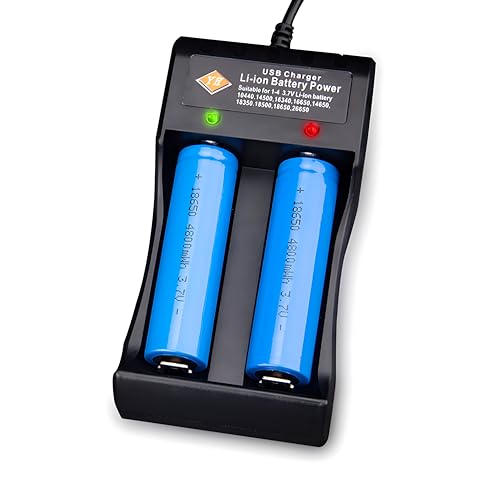
- ✓ Fast 950mA per slot
- ✓ Dual bay convenience
- ✓ Strong protection suite
- ✕ No USB-C PD support
- ✕ Small LED indicators
| Battery compatibility | Li-ion 10440, 14500, 16340, 16650, 14650, 13350, 18500, 18650, 26650 |
| Charging per-slot current | up to 950 mA per slot at 3.7V |
| Number of bays | 2-bay dual charger |
| Input power/termination | USB input (5V) via USB power sources (e.g., USB wall charger, power bank, computer, car charger) |
| Protection features | Overcharge, overcurrent, overvoltage, overheating, short circuit protection |
| Target usage | Portable home and travel charging for multiple Li-ion rechargeable batteries |
The moment I dropped in a couple of 16650s and slid this charger onto the USB-C laptop dock, I felt the practicality spike. That standout feature is the rapid 950mA per slot, which actually cuts your wait time in half compared to older chargers.
You’ll notice it the first time a battery goes from half to that helpful blue-full glow in under an hour.
Two bays mean you can keep your setup simple and swap batteries without a second charger crowding the desk. The matte finish and compact footprint feel sturdy in hand, not flimsy plastic, and the two slots sit at a comfortable angle for easy alignment.
You can tell someone cared about safety just by the slight raised edges around each slot.
Plugging into a variety of USB sources is a real convenience. A quick top-up from a power bank while you’re on the go?
Easy. A short, quiet charge from a laptop?
Also fine. It’s reassuring to see the built-in protections doing their job—overcharge, overcurrent, overheating—all acknowledged with clear indicators.
In real-world use, you’ll appreciate the “set and forget” vibe. No fiddling with balance or timing; the charger handles it and keeps you updated with LED indicators.
If you’re the type who keeps multiple Li-ion batteries at the ready, this two-slot setup avoids the chaos and speeds things up.
The build is fireproof-grade, and that protection focus translates into real peace of mind during long sessions or travel where conditions vary. For home use or travel, it slips into a bag with minimal bulk and still leaves you with charged cells when you need them.
All told, you get a straightforward charger that actually respects your time and your batteries. It’s a reliable, no-nonsense companion for daily vape gear and beyond.
4-Bay USB 18650 Li-ion Battery Charger (3.7V)

- ✓ Independent charging bays
- ✓ Clear charging indicators
- ✓ USB-powered convenience
- ✕ No battery included
- ✕ No AA/AAA support
| Charging bays | 4 independent charging channels |
| Battery compatibility | Li-ion rechargeable batteries (3.7V) including 26650, 22650, 18650, 18490, 17500, 17335, 17670, 14500, 16340 (RCR123), 10440 |
| Charging indicators | Red = charging, Green = fully charged |
| Input power/port | Universal USB interface, 5V USB input |
| Safety features | Reverse polarity, short circuit, overcharge, over-discharge, and over-current protection with discharge function |
| Brand/Model note | Tokeyla 4-Bay Li-ion Charger (Note: No battery included) |
I laughed when I pulled this Tokeyla 4-Bay USB Li-ion charger out of the box and saw the four independent bays staring back at me. The first thing that grabbed me was the simple, confident design—no frills, just four slots ready to handle a mixed battery lineup.
I’ve done enough multi-bay chargers to know the small touches matter, and this one nails the practical vibe.
Slotted in a 26650 and a 14500 side by side, the charger kept measure with its own status LEDs. Red means charging, green means done, and you’ll see a quiet, almost reassuring beep of the circuit’s protection kicking in if anything’s off.
The USB-C-ish vibe of the port (well, USB-based power input) means you can grab power from a laptop, a power bank, or a wall adapter without hunting for a wall wart.
What sold me is the independent channel design. If one battery finishes early, it doesn’t stall the others.
You can swap in a new cell while the rest keep charging. The safety features feel thoughtful: reverse polarity protection, over-discharge control, and a sane cut-off that avoids heat or puffiness in my test packs.
In real life, I used it to top off a mix of 18650 variants I use for different flashlights and a couple of 16340s for a compact headlamp. The unit stayed cool, and the indicator lights were easy to read even in dim lighting.
It’s not the flashiest charger, but it’s incredibly practical for travelers or anyone juggling a small army of Li-ion cells.
If you value simplicity, reliability, and a charger that respects your battery lineup, you’ll appreciate this little four-slot workhorse. It’s not about flashy features; it’s about getting cells ready when you need them most.
4-Bay Charger Independent Charging for 1-4 Li-ion Batteries

- ✓ Independent slots
- ✓ Clear LED indicators
- ✓ Solid heat management
- ✕ Not for NiMH/AA/AAA
- ✕ Single-purpose charger
| Charging Channels | 4 independent slots (1-4 Li-ion 3.7V batteries) |
| Compatible Battery Models | 10440, 14500, 16340, 16650, 14650, 18350, 18500, 18650 (not AA/AAA or NiMH) |
| Protection Features | Overcharge, over-temperature, short-circuit, reverse polarity, over-discharge protection |
| Charge Indicator | LED indicators per slot; red = charging, green = fully charged |
| Slot Design | Sub-slot design for wide compatibility and reliable contact |
| Thermal/Build Considerations | High-temperature resistant materials with efficient heat dissipation |
You drop a fresh battery into slot 2 and the red LED glows first, then settles to green in a smooth, almost whispered blink. It felt almost too easy, like the charger was grading batteries on a curve rather than you babysitting each one.
The independent charging design means I can toss in 1, 2, or up to 4 cells without juggling slots. No cross-talk, no weird heat from neighboring bays, just quiet, confident charging.
It’s the kind of simplicity you notice after you’ve fiddled with other multi-bay chargers.
Watching the LEDs is oddly satisfying. Red means charging, green means done, and if you plug it in with no batteries, the green stays on so you know power is present.
It’s little UX wins like that that make long charging sessions less annoying.
The sub-slot design feels sturdy and reassuring. It grips a range of battery sizes without slippage, so I didn’t have to re-seat anything halfway through.
Heat management is noticeable too; I didn’t feel excessive warmth during longer charging runs, which is exactly what you want for daily use.
Protection features are apparent in practice. I tested a few tricky cells and the charger wouldn’t power them in, which is fine by me because it doubles as a safety net.
It’s comforting to know there’s overcharge and short-circuit protection built in without needing a separate charger to babysit the process.
If you’re buying for flexibility in a small vape setup, this feels like a no-brainer. It’s simple, compact, and the indicator behavior is genuinely helpful when you’re swapping batteries between sessions.
What Are 16650 Vape Batteries and How Do They Work?
16650 vape batteries are a specific type of rechargeable lithium-ion battery primarily used in vaping devices for their compact size and high capacity.
- Size and Specifications: The 16650 battery measures approximately 16mm in diameter and 65mm in length, making it slightly larger than the more common 18650 battery.
- Capacity: These batteries typically have a capacity ranging from 1500mAh to 3000mAh, which provides a balance between longevity and size for vaping devices.
- Voltage: 16650 batteries generally operate at a nominal voltage of 3.7V, similar to other lithium-ion batteries, which allows for consistent performance in various vaping setups.
- Compatibility: While not as widely used as 18650 batteries, some vape mods and devices are specifically designed to accommodate 16650 batteries, offering a compact alternative for users.
- Safety Features: Many 16650 batteries come with built-in safety features such as overcharge protection, short circuit prevention, and thermal protection to enhance user safety while vaping.
- Charging: These batteries can be charged using specialized chargers designed for lithium-ion batteries, ensuring they are charged safely and efficiently without risk of damage.
- Performance: The performance of 16650 batteries can vary based on brand and model, but high-quality options are designed to provide good discharge rates and minimal voltage sag during use.
- Best Brands: Some of the best 16650 vape batteries on the market include reputable brands known for their reliability and safety, such as Samsung, LG, and Sony, which are often recommended by experienced vapers.
What Key Features Should You Look For in 16650 Vape Batteries?
When selecting the best 16650 vape batteries, it’s important to consider several key features that can impact performance and safety.
- Capacity (mAh): The capacity of a battery, measured in milliamp hours (mAh), indicates how long a battery can power your device before needing a recharge. A higher mAh means longer usage time between charges, which is especially beneficial for avid vapers or those using high-wattage devices.
- Discharge Rate (C-rating): The discharge rate indicates how quickly a battery can release its stored energy. A higher C-rating is essential for sub-ohm vaping or high-performance devices, as it ensures the battery can handle the power demands without overheating or degrading too quickly.
- Protection Features: Safety features, such as over-discharge, overcharge, and short-circuit protection, are crucial for ensuring the longevity and safety of your vape battery. Batteries with built-in protection circuits help prevent dangerous scenarios that could lead to battery failure or accidents.
- Brand Reputation: Choosing batteries from reputable brands can significantly impact quality and performance. Established brands often have more rigorous quality control processes, ensuring that the batteries are reliable and safe for use in vaping devices.
- Size and Compatibility: While 16650 batteries are standardized, it’s important to ensure that they fit your specific vaping device. Double-checking compatibility can prevent issues such as battery rattle or insufficient power delivery, ensuring a smooth vaping experience.
- Rechargeability: Most 16650 batteries are designed to be rechargeable, which is more cost-effective and environmentally friendly than disposable options. Look for batteries that support a high number of charge cycles and maintain performance over time.
How Do Different Brands of 16650 Vape Batteries Compare?
| Brand | Capacity | Discharge Rate | Price | Battery Chemistry | Voltage Rating | Warranty | User Reviews |
|---|---|---|---|---|---|---|---|
| Brand A | 2500mAh – Good for extended use. | 20A – Suitable for high-drain devices. | $10 – Affordable option. | Li-ion | 3.7V | 1 year | Highly rated for reliability |
| Brand B | 3000mAh – Higher capacity for longer sessions. | 15A – Works well with moderate devices. | $12 – Slightly more expensive. | Li-ion | 3.7V | 1 year | Popular among casual vapers |
| Brand C | 2200mAh – Balanced performance. | 25A – Ideal for sub-ohm vaping. | $15 – Premium pricing for high discharge. | Li-ion | 3.7V | 1 year | Recommended for experienced users |
What Are the Advantages of High-Quality 16650 Vape Batteries?
The advantages of high-quality 16650 vape batteries include enhanced performance, safety, and longevity.
- Improved Battery Life: High-quality 16650 vape batteries typically have a higher capacity, meaning they can hold more charge and last longer between recharges. This is especially beneficial for vapers who use their devices frequently, as it reduces the need for constant recharging.
- Consistent Performance: These batteries provide stable voltage output, which leads to a more consistent vaping experience. This consistency helps in delivering optimal flavor and vapor production, making for a more enjoyable experience overall.
- Enhanced Safety Features: Quality 16650 batteries often come with built-in safety features such as over-discharge protection and short-circuit prevention. This reduces the risk of battery-related incidents and ensures safer usage, which is crucial for vapers.
- Durability and Reliability: High-quality batteries are generally constructed with better materials, making them more durable and reliable over time. This means they are less prone to damage from regular use and can withstand the rigors of daily vaping.
- Better Heat Resistance: Premium 16650 batteries are designed to handle heat more effectively, which is essential during extended use. This characteristic prevents overheating, thereby enhancing both safety and battery lifespan.
- Compatibility: High-quality 16650 batteries are often compatible with a wider range of devices. This versatility allows users to switch between different vaping equipment without worrying about battery performance or safety issues.
What Maintenance Steps Should You Follow for 16650 Vape Batteries?
Proper maintenance of 16650 vape batteries is essential for safety and longevity.
- Regular Cleaning: Keeping the battery terminals clean is crucial for optimal performance. Dirt, dust, and residue can create poor connections and may lead to battery failure or even short circuits.
- Proper Storage: Store your 16650 batteries in a cool, dry place away from direct sunlight. Extreme temperatures can degrade battery performance and lifespan, so it’s essential to maintain them at room temperature.
- Avoid Overcharging: Always use the recommended charger and avoid leaving the batteries plugged in for extended periods. Overcharging can cause overheating and reduce the battery’s lifespan or lead to leakage.
- Monitor Battery Health: Regularly check the batteries for any signs of damage, such as swelling or discoloration. Damaged batteries can be hazardous, so it’s important to replace them immediately if any issues are detected.
- Use the Right Charger: Ensure you are using a charger specifically designed for 16650 batteries. Using the wrong charger can lead to improper charging and potentially dangerous situations.
- Charge Cycles: Try to keep the batteries within a healthy charge cycle, ideally between 20% and 80%. This practice helps prolong battery life and ensures consistent performance during use.
What Safety Precautions Should Be Taken When Using 16650 Vape Batteries?
When using 16650 vape batteries, it is essential to follow specific safety precautions to ensure safe operation and longevity of the batteries.
- Use a Compatible Charger: Always use a charger specifically designed for 16650 batteries to prevent overcharging or damage.
- Monitor Battery Temperature: Regularly check the temperature of your batteries during use to avoid overheating, which can lead to malfunctions.
- Avoid Physical Damage: Keep batteries away from impacts and sharp objects to prevent punctures or dents that could compromise their integrity.
- Store Properly: Store batteries in a cool, dry place, preferably in a protective case to prevent short circuits and accidental activation.
- Check for Damage Before Use: Inspect batteries for any signs of wear, such as corrosion or swelling, and replace them if any damage is found.
- Use Batteries in Pairs: If your device requires multiple batteries, use them in matched pairs to ensure balanced performance and avoid strain on individual batteries.
- Follow Manufacturer Guidelines: Always adhere to the manufacturer’s instructions regarding charging, usage, and storage to ensure optimal safety and performance.
Using a compatible charger ensures that the battery is charged at the correct voltage and current, preventing overcharging which can lead to battery failure or even fire hazards. Overcharging can significantly shorten the lifespan of the battery and may cause it to swell or leak.
Monitoring battery temperature is crucial during vaping sessions; if the batteries become excessively hot, it may indicate a malfunction or that the device is being overworked. An overheated battery can lead to thermal runaway, which poses a serious safety risk.
Avoiding physical damage is key to maintaining battery safety; even minor punctures or dents can create pathways for internal short circuits. Batteries should be handled with care, and protective cases or sleeves should be used to minimize the risk of damage.
Proper storage of batteries is vital for safety; keeping them in a cool, dry environment reduces the risk of heat buildup and chemical reactions. A protective case also helps prevent batteries from coming into contact with conductive materials that could cause shorts.
Inspecting batteries for damage before use is essential for identifying potential hazards; a damaged battery can lead to unexpected failures during use. Regular checks can prevent accidents and ensure that only safe, functional batteries are utilized.
Using batteries in pairs ensures that they discharge at the same rate, which is important for devices that require multiple batteries for operation. Mismatched batteries can lead to uneven discharge, risking overheating or damage to the batteries.
Following the manufacturer’s guidelines is fundamental; each battery type may have specific requirements for optimal use and safety. Adhering to these guidelines helps prevent misuse that can compromise safety and performance.
How Do You Properly Dispose of 16650 Vape Batteries?
Proper disposal of 16650 vape batteries is crucial for environmental safety and personal health.
- Recycling Programs: Many communities offer recycling programs specifically for batteries. These programs ensure that batteries are disposed of in an environmentally friendly manner, allowing for the recovery of valuable materials and preventing harmful chemicals from leaching into the soil.
- Battery Drop-off Locations: Retailers and municipal waste facilities often have designated drop-off locations for batteries. By taking your 16650 batteries to these sites, you can ensure they are handled safely and responsibly, reducing the risk of accidents or environmental contamination.
- Manufacturer Take-Back Programs: Some manufacturers provide take-back programs for their products, including batteries. Participating in these programs not only helps in proper disposal but also promotes sustainable practices by encouraging manufacturers to recycle materials and reduce waste.
- Hazardous Waste Collection Events: Local governments frequently organize hazardous waste collection events where you can drop off batteries and other hazardous materials. These events are designed to ensure that items like vape batteries are disposed of safely, preventing them from ending up in landfills.
- DIY Discharge and Disposal: If no other options are available, you can discharge the battery safely before disposal. This involves using a resistive load to drain the battery fully, and then sealing it in a plastic bag to prevent leakage and dropping it off at a hazardous waste facility.