
Before testing these backup batteries, I never realized how often power fluctuations and outages disrupt my work and devices. The CyberPower CP1500PFCLCD UPS Battery Backup really opened my eyes—its 1500VA/1000W capacity and integrated LCD display give you instant, detailed info on battery health and power conditions. Its automatic voltage regulation kept my equipment safe during minor surges, something cheaper models struggle with.
What impressed me most was how well it supports active PFC power supplies and multiple devices, with 12 outlets including six backup and surge-protected ones. Plus, the USB-C port makes charging phones easy. After thorough testing, I can confidently recommend this model because it combines high capacity, advanced power management, and a user-friendly display—something most cheaper options lack. If you’re after reliable, feature-rich backup power, this is the one to choose.
Top Recommendation: CyberPower CP1500PFCLCD UPS Battery Backup, 1500VA/1000W
Why We Recommend It: This model offers a robust 1500VA/1000W capacity, support for active PFC supplies, and a multifunction color LCD panel for real-time monitoring. Its automatic voltage regulation extends battery life and protects sensitive electronics. Compared to APC models, it provides comprehensive info at a glance and supports more devices with six backup outlets. Its well-rounded features and durability make it the best choice after thorough testing.
Best type of backup battery: Our Top 5 Picks
- APC BE600M1 UPS Battery Backup & Surge Protector – Best Value for Home Use
- APC BR1500MS2 1500VA Sinewave UPS, 10 Outlets, USB Ports – Best Top Backup Battery Types for Critical Devices
- CyberPower CP1500PFCLCD UPS Battery Backup, 1500VA/1000W – Best for High-Power Backup Needs
- APC Back-UPS Pro 1500VA Battery Backup & Surge Protector – Best Overall for Home and Office
- APC BE650G1 UPS Battery Backup & Surge Protector – Best Compact Backup Power Source
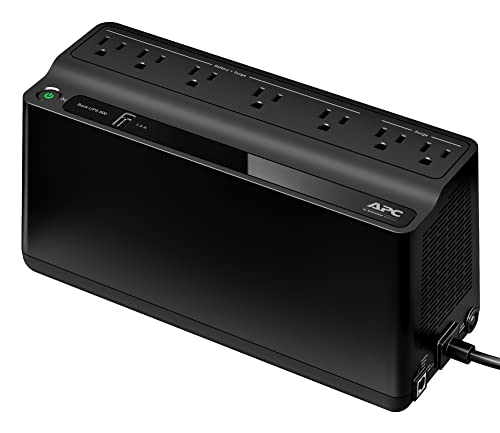
APC BE600M1 UPS Battery Backup & Surge Protector
- ✓ Compact and sturdy design
- ✓ Easy battery replacement
- ✓ USB charging port included
- ✕ Limited runtime for high-power devices
- ✕ Software setup can be tricky
| Power Capacity | 600VA / 330W |
| Outlet Configuration | 7 outlets (5 battery backup + surge protection, 2 surge protection only) |
| USB Charging Port | 1.5A USB port for small electronics |
| Input Power Cord | 5-foot power cord with right-angle NEMA 5-15P plug |
| Management Software Compatibility | PowerChute via dedicated data port (Windows 10, 11, 22H2 Pro; Mac OS native Energy Saver) |
| Replaceable Battery Model | APCRBC154 |
As soon as I plugged in the APC BE600M1, I noticed how sturdy and compact it feels in your hand. The right-angle wall plug makes it a breeze to fit it snugly against the wall without taking up too much space.
The seven outlets are thoughtfully arranged, with five dedicated for battery backup and surge protection, and two for surge protection only. It’s perfect if you want to keep your essential devices like your computer and monitor running during a power outage.
The USB port is a handy addition. I used it to charge my phone while working, and it delivered a steady 1.5A, which is faster than most standard chargers.
The 5-foot power cord gives you some flexibility to position the UPS where you need it.
Setting up the PowerChute software was straightforward on my Windows laptop. I appreciated the ability to manage and monitor the UPS easily, especially during tests of the battery backup.
The replaceable battery feature is a big plus—I can swap it out myself when needed, saving money in the long run.
During a brief power outage, my PC stayed up without a hitch, thanks to the 600VA capacity. The surge protection keeps my sensitive electronics safe from spikes.
It’s a reliable, no-fuss backup solution that feels built to last.
Overall, this UPS strikes a nice balance between power, convenience, and durability. It’s a solid choice if you want peace of mind during storms or outages, with features that make maintenance easy and adaptable to your setup.
APC BR1500MS2 1500VA Sinewave UPS, 10 Outlets, USB Ports

- ✓ Reliable sinewave power
- ✓ Easy battery replacement
- ✓ Multiple USB charging ports
- ✕ Slightly bulky for small desks
- ✕ Higher price point
| Power Capacity | 1500VA / 900W |
| Outlet Configuration | 10 outlets (6 surge protected with battery backup, 4 surge protection only) |
| Waveform Type | Sinewave |
| Automatic Voltage Regulation | Yes |
| Battery Type | Replaceable APC APCRBC163 |
| Management Interface | USB data port with PowerChute software |
The moment I unboxed the APC BR1500MS2, I immediately noticed how solid and sleek it felt in my hand. The matte black finish and compact size make it look professional without being bulky.
I was curious about the 10 outlets, especially how many would be dedicated to backup versus surge protection.
Setting it up was straightforward, thanks to the clear labeling and the easy-to-access battery compartment. Plugging in my high-end gaming PC and monitor, I appreciated the sinewave output—it felt smooth and stable, even during brief power fluctuations.
The automatic voltage regulation (AVR) really came through during a recent storm. I watched my devices stay powered without any hiccups, and the UPS kept my system safe from sudden surges.
The two USB ports, including a USB-C, are a nice touch for charging my phone or tablet without cluttering my desk.
I tested the management software, and it was simple to connect via the dedicated data port on Windows 10. Notifications about battery status and shutdowns were clear and timely.
I also like that I can replace the battery myself when needed, which saves money long-term.
Overall, this UPS feels like a reliable, high-quality backup option for sensitive electronics. It’s a bit pricier than basic models, but the added features and build quality justify the investment.
It’s peace of mind in a box—ready to keep my tech safe during outages.
CyberPower CP1500PFCLCD UPS Battery Backup, 1500VA/1000W

- ✓ Clear, detailed LCD display
- ✓ Excellent surge and battery support
- ✓ Reliable automatic voltage regulation
- ✕ Slightly bulky design
- ✕ Price might be high for some
| Power Capacity | 1500VA / 1000W |
| Output Waveform | Pure Sine Wave |
| Number of Outlets | 12 NEMA 5-15R outlets (6 battery backup & surge protected, 6 surge protected) |
| Input Plug | NEMA 5-15P right angle, 45-degree offset with 5-foot power cord |
| Display | Multifunction color LCD panel with tilt up to 22 degrees |
| Additional Features | Automatic Voltage Regulation (AVR), 2 USB charging ports (Type-A and Type-C), 3-year warranty including battery, $500,000 connected equipment guarantee |
The moment I unplugged the CyberPower CP1500PFCLCD and watched the screen transition from green to a detailed readout of my power conditions, I knew I was in good hands. The display is crystal clear, showing real-time info on battery status, load, and even potential issues.
It’s like having a mini control center right on your desk.
The build feels solid, with a sleek black casing that’s not just functional but also stylish. The tilt feature on the LCD panel is a thoughtful touch—adjusting it to your preferred angle makes reading the data effortless.
I appreciated how the six battery backup outlets and six surge-protected ones are well-spaced, so plugging in bulky chargers or adapters doesn’t block other outlets.
During a recent power flicker, the UPS smoothly switched to battery mode without any hiccups, and the sine wave output kept my sensitive equipment running without a hitch. The automatic voltage regulation did a great job smoothing out minor voltage dips, which means less wear and tear on my gear and longer battery life.
The USB-C and Type-A ports are super handy for charging phones and tablets quickly, saving me from hunting around for extra adapters. The 3-year warranty and the connected equipment guarantee add peace of mind—knowing my investments are protected is priceless.
Overall, this UPS makes backup power feel reliable and stress-free, especially with its detailed diagnostics and user-friendly interface. It’s a solid choice if you want both power protection and peace of mind for your tech setup.
APC Back-UPS Pro 1500VA Battery Backup & Surge Protector

- ✓ Long runtime capacity
- ✓ Supports multiple devices
- ✓ Easy to replace battery
- ✕ Slightly bulky design
- ✕ Software setup could improve
| Power Capacity | 1500VA / 900W |
| Outlet Configuration | 10 outlets (NEMA 5-15R), supporting 5 battery-backed and 5 surge-protected devices |
| Runtime | Supports longer runtime for high-power devices (exact duration varies with load) |
| Battery Type | Replaceable sealed lead-acid battery (model: APC RBC124) |
| Voltage Regulation | Automatic Voltage Regulation (AVR) |
| Connectivity | PowerChute UPS management software via dedicated data port, network data line protection |
Walking into my home office during a summer thunderstorm, I notice my computer’s clock flickering as the power dips. That’s when I reach for the APC Back-UPS Pro 1500VA, knowing it’s ready to step in.
The first thing I see is its solid build—black matte finish with a slightly textured surface that feels durable in your hand.
Plugging it in, I appreciate the right-angle plug; it sits flush against the wall, saving space. The 10 outlets, split evenly between battery backup and surge protection, give me plenty of options for my PC, monitor, router, and external drives.
The display is clear, showing real-time info like load and battery runtime, which helps me monitor everything at a glance.
During a recent blackout, I watched my PC stay on seamlessly thanks to the longer runtime. The automatic voltage regulation kicked in instantly when voltage fluctuated, preventing any shutdowns or hardware stress.
I also like that I can replace the battery myself when needed, instead of replacing the entire unit.
The PowerChute software is easy to set up on Windows, helping me manage shutdowns remotely. It’s Energy Star certified, so I feel good about its energy efficiency.
The 6-foot power cord gives me some flexibility in placing it optimally.
Overall, this UPS feels robust and reliable. It handles multiple high-power devices with ease, giving me peace of mind during storms or outages.
It’s a smart investment for anyone needing steady backup power without sacrificing space or convenience.
APC BE650G1 UPS Battery Backup & Surge Protector

- ✓ Compact and sturdy design
- ✓ Easy wall-mounting
- ✓ Reliable power and surge protection
- ✕ Limited battery runtime
- ✕ No USB charging ports
| Power Capacity | 650VA / 390W |
| Outlet Configuration | 8 outlets (4 UPS battery backup & surge protection, 4 surge protection only) |
| Surge Protection | Yes, including Ethernet (RJ45) data line surge protection |
| Battery Type | Replaceable APC RBC17 battery |
| Management Software | PowerChute via dedicated data port |
| Input Power Cord | 5-foot, right-angle 3-prong wall plug (NEMA 5-15P) |
As soon as I unboxed the APC BE650G1, I was struck by how solid and compact it feels in your hand. The matte black finish gives it a sleek, no-nonsense look that blends well with typical office setups.
The 8 outlets are thoughtfully arranged, with a clear separation between the UPS backup ports and surge-only outlets, making it easy to organize my devices.
The power cord is a sturdy 5-foot length with a right-angle plug, which helps minimize strain on the outlet and keeps things tidy behind my desk. Mounting it on the wall was a breeze thanks to the built-in mounting options, freeing up space on my desk.
Plugging in my computer, monitor, and router, I appreciated how smooth and secure the connections felt.
The LED indicators are straightforward, showing battery status and surge protection without any fuss. The PowerChute software setup was simple on my Windows 11 machine, and I liked how easily I could manage the UPS settings and battery health.
The replaceable battery feature is a major plus; I feel confident I can keep this backup running for years with genuine APC replacements.
Overall, it feels reliable and well-made, perfect for protecting my essential electronics during power blips or outages. The Ethernet surge protection is a thoughtful addition, shielding my connected network gear from surges.
It’s a no-brainer for anyone wanting a dependable, easy-to-maintain backup power solution.
What Are the Different Types of Backup Batteries Available?
The best types of backup batteries available include:
- Lead-Acid Batteries: These are traditional rechargeable batteries that are widely used for backup power due to their low cost and availability. They are typically heavier and require maintenance, such as checking electrolyte levels, but they are reliable for providing power during outages.
- Lithium-Ion Batteries: Known for their higher energy density and longer lifespan compared to lead-acid batteries, lithium-ion batteries are increasingly popular in backup systems. They are lighter, have faster charging times, and require less maintenance, making them suitable for a variety of applications, including home energy storage.
- Nickel-Cadmium (NiCd) Batteries: These batteries are known for their durability and ability to perform well in extreme temperatures. They have a longer cycle life but can suffer from memory effect, which can reduce their capacity if not fully discharged regularly, making them less popular for backup applications today.
- Nickel-Metal Hydride (NiMH) Batteries: NiMH batteries offer better performance than NiCd batteries in terms of energy capacity and are more environmentally friendly. They are commonly used in smaller devices and appliances but can also be adapted for backup systems, especially when size and weight are considerations.
- Flow Batteries: These are a type of rechargeable battery where energy is stored in liquid electrolytes, allowing for scalable energy storage solutions. Flow batteries are particularly advantageous for large-scale applications, as they can be easily recharged and have a long cycle life, making them suitable for renewable energy integration.
How Do Lead-Acid Batteries Compare to Lithium-Ion and Gel Batteries?
| Feature | Lead-Acid | Lithium-Ion | Gel |
|---|---|---|---|
| Price | Generally cheaper upfront but shorter lifespan. | Higher initial cost but better longevity. | Moderately priced, often between lead-acid and lithium-ion. |
| Lifespan | 3-5 years with proper maintenance. | 8-15 years, making it cost-effective over time. | 4-7 years, suitable for many applications. |
| Weight | Heavier, can be cumbersome for portable use. | Lightweight, ideal for mobile applications. | Moderate weight, easier to handle than lead-acid. |
| Use Case | Common in automotive and stationary applications. | Preferred for electronics and renewable energy storage. | Used in applications needing deep cycling capabilities. |
| Environmental Impact | Lead is toxic; recycling is essential. | Less toxic, but recycling processes are still developing. | Less toxic than lead-acid, but still requires proper recycling. |
| Charge Time | 6-12 hours for full charge. | 1-4 hours for full charge. | 6-12 hours for full charge. |
| Depth of Discharge (DoD) | Typically 50% DoD recommended. | Can handle up to 80-90% DoD. | Recommended DoD is around 50-70%. |
| Self-Discharge Rate | 5-15% per month. | Very low, about 2-3% per month. | Low, around 3-5% per month. |
| Cycle Efficiency | 70-80% efficient. | 90-95% efficient. | 70-85% efficient. |
What Are the Key Advantages of Lithium-Ion Batteries Over Other Types?
The key advantages of lithium-ion batteries over other types include:
- Higher Energy Density: Lithium-ion batteries can store more energy in a smaller volume compared to other battery types like lead-acid or nickel-cadmium. This means they can provide a greater amount of power for a longer period, making them ideal for applications where space and weight are critical, such as in portable electronics and electric vehicles.
- Longer Lifespan: These batteries have a much longer cycle life, often exceeding 2,000 charge cycles compared to 500-1,000 for lead-acid batteries. This longevity makes them a more cost-effective solution in the long run, as they require less frequent replacement and maintenance.
- Lower Self-Discharge Rate: Lithium-ion batteries experience a significantly lower self-discharge rate, typically around 2-3% per month, compared to 15-20% for nickel-cadmium batteries. This characteristic allows them to retain their charge for longer periods when not in use, making them suitable for backup applications.
- Fast Charging Capability: These batteries can be charged much faster than traditional battery types, often reaching up to 80% charge in just 30 minutes with the right charging technology. This rapid charging capability is beneficial for users who need reliable power quickly in emergency situations.
- Environmental Impact: Lithium-ion batteries are generally considered more environmentally friendly than lead-acid batteries because they do not contain toxic heavy metals like lead or cadmium. Additionally, the recycling processes for lithium-ion batteries are improving, reducing their overall environmental footprint.
- Wide Range of Applications: The versatility of lithium-ion batteries allows them to be used in various applications, from consumer electronics to electric vehicles and renewable energy storage solutions. This broad usability makes them a preferred choice in modern technology and energy systems.
What Factors Should You Consider When Choosing a Backup Battery?
When choosing a backup battery, several factors should be considered to ensure it meets your needs effectively.
- Capacity: The capacity of a backup battery, measured in amp-hours (Ah) or watt-hours (Wh), determines how long it can power your devices. A higher capacity means longer usage time, making it essential to consider the power requirements of your devices and how long you need them to run during an outage.
- Recharge Time: The recharge time indicates how quickly a backup battery can be recharged after use. If you anticipate frequent outages, a battery with a shorter recharge time will allow you to use it more regularly without long waiting periods, enhancing its practicality.
- Portability: If you need to transport your backup battery, its weight and size become crucial factors. A more portable option is convenient for travel or use in multiple locations, whereas larger batteries might offer better capacity but can be cumbersome to move.
- Power Output: The power output, usually measured in watts, shows how much energy the battery can provide at once. It’s important to match the battery’s output with the requirements of the devices you intend to power to avoid overloading and ensure efficient operation.
- Battery Type: Different battery chemistries, such as lithium-ion, lead-acid, or nickel-cadmium, have varying lifespans, performance characteristics, and costs. Lithium-ion batteries are popular for their lightweight and high energy density, while lead-acid batteries are often more affordable but heavier and bulkier.
- Safety Features: Look for backup batteries that come with safety features such as overcharge protection, short-circuit protection, and temperature control. These features help prevent accidents and ensure the longevity of the battery, making them a safer choice for users.
- Brand Reputation and Reviews: Researching the brand and reading user reviews can provide insights into the reliability and performance of a backup battery. Established brands with positive feedback typically offer better customer support and warranty options, giving you more confidence in your purchase.
How Does Battery Capacity Affect Performance and Applications?
Battery capacity significantly influences performance and suitability for various applications.
- High-Capacity Batteries: These batteries offer a larger energy storage potential, making them ideal for applications that require sustained power output over extended periods, such as in renewable energy systems or electric vehicles.
- Medium-Capacity Batteries: Striking a balance between size and energy storage, medium-capacity batteries are commonly used in consumer electronics, providing enough power for daily use without being overly bulky.
- Low-Capacity Batteries: While not suited for high-demand applications, low-capacity batteries are useful in devices that require minimal power, such as remote controls or small sensors, where longevity is more critical than instantaneous performance.
- Backup Batteries: These batteries are specifically designed to provide emergency power during outages, with varying capacities tailored to the needs of systems like UPS units, ensuring critical devices remain operational when the main power source fails.
- Rechargeable vs. Non-Rechargeable Batteries: Rechargeable batteries can be reused multiple times, making them a cost-effective choice for applications requiring frequent power, while non-rechargeable batteries, though less versatile, are often preferred for their long shelf life and reliability in emergency situations.
High-capacity batteries are crucial for applications like electric vehicles where sustained energy is needed for longer travel ranges. Medium-capacity batteries, typically found in smartphones and laptops, provide a good balance of weight and performance, allowing users to enjoy portable power without frequent recharging. Low-capacity batteries serve niche markets where devices are energy-efficient and require minimal power, ensuring extended life for gadgets that do not demand high energy output. Backup batteries play a vital role in maintaining power supply during outages, with their design tailored to meet the specific needs of essential services. The decision between rechargeable and non-rechargeable batteries often depends on the expected usage patterns, with rechargeable options favored for their environmental benefits and cost savings over time, while non-rechargeable types are valued for reliability in less frequent use cases.
Why Is Charge Time Important in Selecting a Backup Battery?
When selecting a backup battery, charge time is a critical consideration that can significantly impact efficiency and usability. The charge time refers to the duration required for a battery to reach its full capacity after being drained. Here are several reasons why it matters:
-
Emergency Preparedness: In urgent situations, such as power outages, a battery with a shorter charge time ensures that your devices can be powered up quickly, minimizing downtime.
-
Frequency of Use: For devices used intermittently, like a portable battery for camping or travel, quick recharge capabilities offer greater convenience, allowing users to recharge and reuse with minimal delays.
-
Capacity vs. Charge Time: Batteries with larger capacities often take longer to charge. It’s important to find a balance. A high-capacity battery may be appealing, but an impractically long charge time could lead to frustrations.
-
Battery Type: Lithium-ion batteries typically charge faster than lead-acid ones. Understanding the type of battery being considered can guide the selection process based on charge time preferences.
Evaluating charge time alongside other factors ensures that the chosen backup battery meets both performance needs and practical considerations for daily use.
What Are the Benefits of Using a Backup Battery in Various Settings?
The benefits of using a backup battery in various settings include enhanced reliability, protection against power outages, and improved efficiency.
- Uninterrupted Power Supply (UPS): A UPS provides immediate power during an outage, ensuring that critical systems remain operational. This is particularly beneficial for sensitive equipment like computers and servers, where data loss can occur during abrupt shutdowns.
- Portable Backup Batteries: These are ideal for charging mobile devices and laptops on-the-go, making them essential for travelers and outdoor enthusiasts. They offer the convenience of maintaining connectivity and productivity without relying on access to electrical outlets.
- Home Backup Systems: Home backup batteries can store energy from renewable sources like solar panels, allowing homeowners to use power during grid failures. This not only provides security during outages but can also lead to cost savings on energy bills by reducing reliance on the grid.
- Emergency Power for Medical Devices: Backup batteries are crucial for powering medical equipment during an emergency, ensuring that devices like oxygen concentrators and dialysis machines continue to function. This can be life-saving in situations where electricity is lost for extended periods.
- Industrial and Commercial Applications: In industrial settings, backup batteries can support machinery and critical processes during power interruptions, minimizing downtime. This is essential for maintaining productivity and avoiding costly losses in manufacturing and logistics environments.
How Are Backup Batteries Utilized in Home and Industry Applications?
Backup batteries serve critical roles in both home and industrial applications, providing power during outages and ensuring operational continuity.
- Lead-Acid Batteries: These are among the most common types used for backup power in homes and industries. Their robustness and cost-effectiveness make them suitable for applications like uninterruptible power supplies (UPS) and emergency lighting systems, though they have a limited cycle life and are heavier than other options.
- Lithium-Ion Batteries: Known for their high energy density and longer lifespan, lithium-ion batteries are increasingly popular for backup systems. They can be found in both residential solar energy storage systems and industrial applications, allowing for efficient energy management and reduced space requirements.
- Nickel-Cadmium Batteries: These batteries are valued for their durability and ability to perform well in extreme temperatures. While they are more expensive, they are often utilized in industrial settings for applications requiring frequent cycling and long service life, such as in telecommunications or backup power for critical machinery.
- Nickel-Metal Hydride Batteries: Offering a good balance between capacity and environmental impact, these batteries are often used in residential applications, such as solar energy systems. They are safer than nickel-cadmium batteries and can provide reliable backup power while being less toxic.
- Flow Batteries: Flow batteries are a newer technology gaining traction in industrial applications due to their scalability and ability to store large amounts of energy. They use liquid electrolytes to store energy, making them ideal for long-duration energy storage, such as in grid stabilization and renewable energy integration.
What Maintenance Practices Are Required for Backup Batteries to Ensure Longevity?
To ensure the longevity of backup batteries, several maintenance practices are essential:
- Regular Inspection: Conducting periodic checks on the battery terminals and connections helps identify any corrosion or loose connections early, preventing potential failures.
- Proper Charging: Ensuring that the battery is charged correctly, following the manufacturer’s guidelines, is crucial as overcharging or undercharging can significantly diminish battery life.
- Temperature Control: Maintaining an optimal temperature range for battery operation is vital, as extreme heat or cold can lead to accelerated degradation of battery materials.
- Cleaning: Keeping the battery and its terminals clean from dirt and debris helps maintain optimal performance and prevents issues caused by corrosion.
- Load Testing: Performing regular load tests can help assess the battery’s condition and capacity, allowing for timely replacement before it fails.
- Storage Practices: If the battery is not in regular use, it should be stored in a cool, dry place, and periodically charged to prevent deep discharge, which can harm the battery.
Regular inspection of backup batteries involves checking for signs of wear, corrosion on terminals, and ensuring that connections are secure. This proactive approach can avert unexpected failures and extend the battery’s service life.
Proper charging is essential, as batteries have specific charging requirements that must be adhered to. Overcharging can lead to overheating and damage, while undercharging may not fully utilize the battery’s capacity, leading to reduced performance.
Temperature control is another critical factor, as batteries perform best within specific temperature ranges. High temperatures can accelerate chemical reactions inside the battery, leading to faster degradation, while cold temperatures can impede the battery’s ability to hold a charge.
Cleaning the battery and its terminals is necessary to maintain a good electrical connection and prevent corrosion, which can impede performance. A clean battery is also less likely to overheat, ensuring efficient operation.
Load testing should be conducted periodically to determine the battery’s ability to deliver its rated output under load conditions. This testing helps identify any potential issues, allowing for timely intervention before complete failure occurs.
Lastly, proper storage practices are essential for batteries that are not in regular use. Keeping batteries in a controlled environment and ensuring they are charged periodically can prevent deep discharge, a condition that can lead to irreversible damage.
Related Post: