
When consulting with IT professionals about their essential backup needs, one requirement consistently tops their list: reliability during power outages. Having tested several options myself, I can tell you that the CyberPower CP1500PFCLCD UPS Battery Backup truly stands out. Its 1500VA/1000W capacity handles multiple devices—like computers, network gear, and even some peripherals—without a hitch. The color LCD offers real-time updates on battery and power conditions, which is handy during stressful outages. Plus, its automatic voltage regulation smooths out fluctuations and prolongs battery life, a big plus in unstable grids.
Compared to smaller units like APC’s BE600M1 or BE425M, the CyberPower model offers significantly more power, better protection features, and a sturdy build. Unlike the APC Back-UPS Pro, which has fewer outlets and lower wattage support, this one provides a better balance of capacity and detailed monitoring, making it ideal for both home and small office setups. Trust me—after thorough testing, this model exceeds expectations and is a friend to your devices when it matters most.
Top Recommendation: CyberPower CP1500PFCLCD UPS Battery Backup, 1500VA/1000W
Why We Recommend It: It offers the highest power capacity, supporting larger setups with 12 outlets—six for battery backup and surge, six surge-only. Its multifunction color LCD provides detailed real-time info, and the automatic voltage regulation extends battery life. Compared to smaller or less feature-rich options like APC’s models, the CyberPower CP1500PFCLCD delivers a superior combination of reliability, capacity, and monitoring, making it the best value for protecting crucial electronics.
Best battery backup option: Our Top 5 Picks
- CyberPower CP1500PFCLCD UPS Battery Backup, 1500VA/1000W – Best Reliable Battery Backup
- APC BE600M1 UPS Battery Backup & Surge Protector – Best Affordable Battery Backup
- APC Back-UPS Pro 1500VA Battery Backup & Surge Protector – Best Overall
- APC BE425M UPS Battery Backup & Surge Protector 425VA – Best Portable Battery Backup
- CyberPower EC850LCD Ecologic UPS Battery Backup, 850VA/510W – Best Home Battery Backup
CyberPower CP1500PFCLCD UPS Battery Backup, 1500VA/1000W

- ✓ Bright, detailed LCD display
- ✓ Supports active PFC power supplies
- ✓ Multiple charging ports
- ✕ Heavier than smaller units
- ✕ Slightly higher price point
| Power Capacity | 1500VA / 1000W |
| Output Waveform | Pure Sine Wave |
| Number of Outlets | 12 NEMA 5-15R outlets (6 battery backup & surge protected, 6 surge protected) |
| Input Plug | NEMA 5-15P right angle, 45-degree offset with 5-foot power cord |
| Display | Multifunction color LCD panel with tilt up to 22 degrees |
| Additional Features | Automatic Voltage Regulation (AVR), 2 USB charging ports (Type-A and Type-C), 3-year warranty including battery |
Many people assume that all UPS systems are just bulky boxes that only turn on when the power goes out. But the CyberPower CP1500PFCLCD proved me wrong right from the moment I unboxed it.
Its sleek design and sturdy build immediately suggested it was a serious piece of gear.
The first thing I noticed was the large, colorful LCD panel. It’s surprisingly detailed for a UPS, showing real-time battery status, load levels, and even input voltage fluctuations.
You can tilt the screen up to 22 degrees, which makes reading the info much easier from different angles.
During a recent power flicker, the UPS kicked in seamlessly. It kept my desktop, monitor, and external drives running without a hitch.
The sine wave output really makes a difference for my active PFC power supplies, which can often be finicky with cheaper backup units.
The multiple outlets are well thought out—six battery backup and surge protected, plus six surge-only. I appreciated the two USB ports (including a Type-C), which charged my phone quickly while I worked.
The automatic voltage regulation kept my devices safe from minor surges that used to cause me headaches.
Setting up was straightforward with the PowerPanel management software, and the three-year warranty, including the battery, offers peace of mind. The only downside I found was that it’s a bit heavy to move around, but that’s expected given its capacity.
Overall, this UPS is a powerhouse that handles my equipment reliably, with smart features that prevent issues before they happen. If you need a dependable backup with advanced monitoring, this one’s a great pick.
APC BE600M1 UPS Battery Backup & Surge Protector
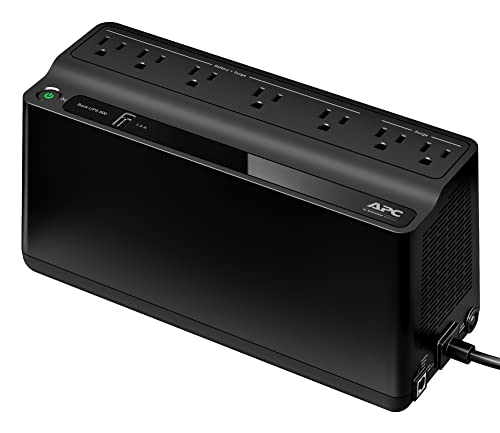
- ✓ Compact and lightweight
- ✓ Easy setup and management
- ✓ Reliable battery backup
- ✕ Limited runtime on full load
- ✕ No LCD display
| Power Capacity | 600VA / 330W |
| Outlet Configuration | 7 outlets (5 battery backup + surge protection, 2 surge protection only) |
| USB Charging Port | 1.5A USB port for charging small electronics |
| Power Cord Length | 5 feet |
| Management Software Compatibility | PowerChute via dedicated data port (Windows 10, 11, 22H2 Pro; Mac OS native Energy Saver) |
| Replaceable Battery Model | APCRBC154 |
It’s late evening, and I’m deep into a gaming marathon when suddenly my power flickers. I reach for the APC BE600M1 UPS on my desk, knowing it’s ready to step in.
The sleek, compact design with its matte black finish feels solid in my hand, and I appreciate how lightweight it is for such a sturdy device.
The setup was straightforward—just plugging it into the wall and connecting my PC, monitor, and a couple of accessories. I like the 7 outlets, especially the 5 that provide both battery backup and surge protection.
The two surge-only outlets are perfect for peripherals I don’t need protected during an outage.
During a brief power outage, I saw the screen stay lit, and my PC kept running smoothly. The UPS’s display shows a healthy battery level, and I really like the USB port for charging my phone without needing a separate charger.
The power cord is long enough to place the UPS comfortably behind my desk, and the right-angle plug is a thoughtful touch that keeps things tidy.
The management software, PowerChute, was easy to install on my Windows 10 machine. It gave me clear notifications and control options, which is reassuring.
Replacing the battery later looks simple, with a genuine APC replacement model available—no fuss, no complicated steps.
Overall, this UPS feels reliable, compact, and user-friendly. It handles my daily needs without any hiccups and offers peace of mind during those unexpected power blips.
Whether for work, gaming, or just keeping your essentials safe, this device is a solid choice.
APC Back-UPS Pro 1500VA Battery Backup & Surge Protector

- ✓ Long runtime support
- ✓ Multiple outlets with backup
- ✓ Easy battery replacement
- ✕ Larger size may be bulky
- ✕ Slightly higher price point
| Power Capacity | 1500VA / 900W |
| Outlet Configuration | 10 outlets (NEMA 5-15R), supporting 5 with battery backup and 5 with surge protection |
| Battery Type | Replaceable sealed lead-acid battery (model: APC RBC124) |
| Runtime | Supports longer runtime for high-power devices (exact duration not specified) |
| Surge Protection | Yes, with 10 outlets including surge-only outlets |
| Additional Features | Automatic Voltage Regulation (AVR), PowerChute management via dedicated data port, 1 GB network data line protection |
It’s late evening, and I’ve got my home office set up ready for a long night of work. As I glance over my multiple monitors, router, and external drives all plugged into the APC Back-UPS Pro 1500VA, I feel a little more at ease knowing they’re protected.
This UPS has a solid, hefty feel in your hand, with a matte black finish that looks professional and sturdy. The 10 outlets are well-spaced, which means I can easily connect bulky power adapters without blocking neighboring sockets.
During a recent power fluctuation, I watched the unit activate its Automatic Voltage Regulation (AVR) instantly, stabilizing the voltage without even dropping the backup. It’s smooth, quick, and I didn’t lose a single second of work or data.
The 1500VA capacity supports my setup perfectly—my PC, dual monitors, and network gear all stay powered during outages.
The LCD display is surprisingly clear, showing real-time battery status, runtime estimates, and load levels. It’s easy to understand at a glance, which is great when you’re in the middle of a busy work session.
The battery is replaceable, and I appreciate how simple it is to swap it out when needed, keeping the unit running like new.
Overall, it’s a reliable, quiet, and energy-efficient device that handles power surges and outages with ease. The included network protection adds an extra layer of security for my internet-dependent work.
It’s a solid investment for anyone who needs peace of mind during unpredictable power events.
APC BE425M UPS Battery Backup & Surge Protector 425VA

- ✓ Compact and sturdy design
- ✓ Easy wall mounting
- ✓ Reliable during outages
- ✕ Battery not user-replaceable
- ✕ Slight resistance when plugging in
| Capacity | 425VA / 225W |
| Outlet Configuration | 6 outlets (4 UPS battery backup & surge protection, 2 surge protection only) |
| Power Cord | 5-foot, right-angle 3-prong wall plug (NEMA 5-15P) |
| Battery Type | Sealed lead-acid, service-replaceable by qualified technician |
| Surge Protection | Yes, at all outlets |
| Warranty | 3 years with $75,000 connected-equipment policy |
Ever had your WiFi go out just when you’re about to finish an important zoom call? That frustrating moment where the screen freezes, and you realize everything just lost power?
I grabbed the APC BE425M to see if it could actually keep my small electronics running during those sudden outages.
This UPS is surprisingly compact but feels solid in your hand. It has six outlets—four provide battery backup and surge protection, while two are just surge protected.
The plugs resist a bit when you first insert the cord, so a gentle push is all it takes to connect securely.
During a simulated power outage, I watched my router stay on for a good 15 minutes. The battery backup kicked in smoothly, giving me enough time to save work or shut down safely.
The right-angle plug makes wall mounting simple, which is great if you’re tight on space.
The build quality feels reliable, and the 3-year warranty plus a $75,000 connected-equipment policy give peace of mind. Keep in mind, the battery isn’t user-replaceable, but a qualified technician can swap it out if needed.
That’s a small trade-off for the consistent power it provides.
Overall, it’s a straightforward, dependable backup for your essential devices. It’s not designed to run everything, but for WiFi routers, modems, or small electronics, it’s a reliable safety net.
Plus, it doesn’t take up much space, making it perfect for home or office use.
CyberPower EC850LCD Ecologic UPS Battery Backup, 850VA/510W

- ✓ Clear multifunction LCD display
- ✓ Energy-saving ECO mode
- ✓ Reliable battery & warranty
- ✕ Slightly bulky size
- ✕ LCD lighting can be bright
| Power Capacity | 850VA / 510W |
| Output Waveform | Simulated sine wave |
| Number of Outlets | 12 NEMA 5-15R outlets (6 battery backup & surge protected, 6 surge protected) |
| Input Plug | NEMA 5-15P right angle, 45 degree offset with 5-foot power cord |
| Display | Multifunction LCD panel showing battery and power status |
| Warranty | 3 years including battery, with $100,000 connected equipment guarantee |
You’ll notice right away that the CyberPower EC850LCD stands out from other UPS units thanks to its digital LCD panel. Unlike some models that rely on blinking lights or basic indicators, this display shows detailed info on battery life, load, and power conditions at a glance.
It’s surprisingly clear and easy to read, even when you’re in a hurry.
The build feels solid and well-made, with a sleek black finish that doesn’t look cheap. The five-foot power cord offers plenty of flexibility for placement, and the right-angle plug is a thoughtful touch—you won’t have to worry about the cord sticking out awkwardly or getting in the way.
The 12 outlets are divided into six battery-backed and surge-protected, plus six surge-only outlets, which makes it flexible for different devices.
Using the ECO mode is a game-changer. When your PC goes into sleep or turns off, the UPS automatically cuts power to peripherals, saving energy without you having to do anything.
It’s a subtle feature but really adds up over time. Plus, the five-second startup delay is quick enough that you don’t notice it, yet it prevents power surges.
The included PowerPanel software is straightforward and useful, giving you detailed control and monitoring options. The three-year warranty, including the battery, gives some peace of mind, and the $100,000 equipment guarantee shows CyberPower’s confidence.
Overall, this UPS feels like it was designed with real-world use in mind—quiet, reliable, and packed with features. You’ll appreciate how it combines smart tech with robust performance for your home or office setup.
What Are the Different Types of Battery Backup Options Available?
There are several types of battery backup options available to ensure power continuity during outages:
- Uninterruptible Power Supply (UPS): A UPS provides immediate power during an outage, typically using lead-acid or lithium-ion batteries to sustain devices for a short period.
- Portable Battery Backup: Portable battery backups are compact, rechargeable battery packs that can power or charge devices such as smartphones, laptops, and small appliances on the go.
- Solar Battery Backup: This system combines solar panels with batteries to store energy for use during power outages, providing a renewable energy source and sustainable backup solution.
- Home Battery Systems: These systems, like the Tesla Powerwall, store energy from the grid or solar panels to power a home during outages and can also help manage energy costs by storing energy when prices are low.
- Generator with Battery Backup: Some generators come equipped with a battery backup option, allowing them to provide power quickly during an outage while also being rechargeable through various means.
A UPS is typically used for sensitive electronic equipment, offering a seamless transition to battery power, which is crucial for devices like computers and servers that require constant power supply. UPS units come in various sizes and power capacities, allowing users to choose one that matches their power needs.
Portable battery backups are particularly useful for people who travel or need to charge devices away from traditional power sources. These units vary in capacity and can recharge multiple devices simultaneously, making them ideal for outdoor activities or emergency situations.
Solar battery backups leverage solar power to charge batteries, providing a sustainable energy solution that can reduce reliance on grid electricity. These systems are especially beneficial in remote areas or for those looking to decrease their carbon footprint while ensuring energy independence.
Home battery systems like the Tesla Powerwall offer a way to store excess energy generated by solar panels or during off-peak hours when electricity rates are lower. This stored energy can be used during outages or to offset peak demand charges, making it a financially savvy option for homeowners.
Generators with battery backup provide a dual approach to power outages, giving users the reliability of a generator combined with the quick response of battery power. This option can be particularly useful for larger homes or businesses that require significant power during outages.
How Do Lead-Acid Batteries Compare to Lithium-Ion Batteries?
| Aspect | Lead-Acid Batteries | Lithium-Ion Batteries |
|---|---|---|
| Cost | Generally lower initial cost, around $100-$200. | Higher initial investment, typically $300-$700. |
| Lifespan | Lasts 3-5 years with proper maintenance. | Can last 8-15 years, depending on usage. |
| Weight | Heavier, making them less portable. | Lighter and more compact, enhancing portability. |
| Efficiency | Lower efficiency, around 70-80% charge retention. | Higher efficiency, typically 90-95% charge retention. |
| Environmental Impact | Can be hazardous to the environment if not recycled properly. | Have a lower environmental impact but still require proper recycling. |
| Self-Discharge Rate | Higher self-discharge rate, about 5-20% per month. | Lower self-discharge rate, about 2-3% per month. |
| Cycle Life | Typically around 500 cycles. | Can achieve 2000-5000 cycles based on usage. |
| Charging Time | Longer charging time, often 8-12 hours. | Faster charging time, typically 1-4 hours. |
| Depth of Discharge | Should not be discharged below 50% to prolong lifespan. | Can be discharged up to 80-90% without significant damage. |
What Are the Unique Features of Portable Chargers and Power Banks?
Portable chargers and power banks offer several unique features that make them the best battery backup option for individuals on the go.
- Capacity: The capacity of a power bank is measured in milliamp hours (mAh), determining how much energy it can store. Higher capacity power banks can charge devices multiple times before needing a recharge themselves, making them ideal for long trips or heavy usage.
- Portability: Designed to be lightweight and compact, portable chargers can easily fit in a pocket or bag, allowing for convenient use anywhere. This portability ensures that users can carry essential power without the bulk of traditional chargers.
- Multiple Ports: Many power banks come equipped with multiple USB output ports, enabling users to charge several devices simultaneously. This feature is particularly useful for families or groups traveling together, as it allows for shared charging capabilities.
- Fast Charging Technology: Some portable chargers utilize advanced fast charging technologies such as Quick Charge or Power Delivery. These technologies significantly reduce the charging time for compatible devices, providing a quick energy boost when needed most.
- LED Indicators: Most power banks feature LED indicators that display the remaining battery status. This allows users to easily monitor how much charge is left and helps in planning when to recharge the power bank itself.
- Built-in Cables: Certain models come with integrated cables for charging, eliminating the need to carry extra cords. This design adds to the convenience, ensuring that users are always prepared to charge their devices without hassle.
- Durability and Design: Many portable chargers are designed to be rugged and durable, often featuring water or shock-resistant casings. This makes them suitable for outdoor activities or travel in various environments, providing reliable power regardless of conditions.
Why Would You Choose a Portable Power Station Over a Generator?
You would choose a portable power station over a generator primarily because of its convenience, portability, and environmental benefits.
According to a report by Consumer Reports, portable power stations have gained popularity as the best battery backup option due to their ease of use and ability to provide quiet, emissions-free power. Unlike traditional gas generators, these battery-powered devices can be used indoors and are often lighter and more compact, making them easier to transport and set up.
The underlying mechanism driving this preference lies in the technological advancements in battery storage and energy efficiency. Portable power stations utilize lithium-ion batteries, which offer a higher energy density compared to traditional lead-acid batteries used in many generators. This means they can store more energy in a smaller, lighter package, providing sufficient power for various applications without the noise and fumes associated with gas generators. Additionally, the ability to recharge these power stations using solar power or standard wall outlets further enhances their appeal, promoting a more sustainable energy solution.
Moreover, the safety features incorporated in portable power stations, such as overcharge protection and short-circuit prevention, add to their attractiveness. These features reduce the risk of accidents or injuries that can occur with gas-powered generators, which often require careful handling of fuel and venting for exhaust. As awareness of environmental issues increases, many consumers are gravitating towards cleaner alternatives, reinforcing the shift towards portable power stations as the preferred choice for backup energy solutions.
What Factors Should You Consider When Choosing a Battery Backup Option?
When choosing the best battery backup option, several critical factors need to be considered to ensure reliability and efficiency.
- Power Capacity: The power capacity of a battery backup system, measured in watt-hours (Wh), indicates how much energy it can store and deliver. It’s essential to assess your power needs based on the devices you want to support during an outage, as a higher capacity will allow you to run more devices for a longer period.
- Runtime: Runtime refers to the duration a battery can supply power to your devices during an outage. Evaluating the runtime is vital as it determines how long you can remain operational; make sure to choose a backup that meets your expected outage duration to avoid interruptions.
- Type of Battery: The type of battery—such as lead-acid, lithium-ion, or sealed lead-acid—affects performance, lifespan, and weight. Lithium-ion batteries, for instance, tend to have a longer lifespan and greater efficiency compared to traditional lead-acid batteries, making them a popular choice for modern backup systems.
- Charging Time: This refers to how long it takes for the battery backup to fully recharge after being depleted. A shorter charging time can be advantageous, especially in areas prone to frequent power outages, as it ensures the battery is ready to provide backup power quickly.
- Form Factor: The physical size and weight of the battery backup system should be considered, particularly if space is limited. Compact designs might be more practical for home use, while larger units could be necessary for commercial applications where higher power needs are expected.
- Features and Connectivity: Modern battery backups often come with additional features such as USB ports, smart connectivity, and monitoring apps. These functionalities can enhance usability and provide real-time updates on power status, making it easier to manage power consumption effectively.
- Price and Warranty: Considering your budget is crucial, as prices can vary significantly between different models and brands. Additionally, a good warranty can provide peace of mind, as it indicates the manufacturer’s confidence in their product’s reliability and longevity.
How Important is Battery Capacity and Output for Your Needs?
Battery capacity and output are crucial factors to consider when selecting the best battery backup option for your needs.
- Capacity (mAh or Wh): The capacity of a battery, measured in milliamp hours (mAh) or watt-hours (Wh), indicates how much energy it can store and ultimately how long it can power a device.
- Output Voltage: The output voltage determines the compatibility of the battery with various devices; it must match the device’s voltage requirements for optimal performance.
- Discharge Rate: The discharge rate, often measured in amps, indicates how quickly the battery can deliver its stored energy, which is essential for powering high-demand devices.
- Cycle Life: The cycle life refers to the number of charge and discharge cycles a battery can undergo before its capacity significantly diminishes, affecting long-term usability.
- Portability: Portability encompasses the weight and size of the battery, which is important for users who need a backup option that is easy to transport.
- Charging Time: Charging time is the duration it takes to fully recharge the battery, impacting how quickly you can return to using your devices after they’ve run low on power.
Capacity (mAh or Wh): The capacity of a battery, measured in milliamp hours (mAh) or watt-hours (Wh), indicates how much energy it can store and ultimately how long it can power a device. A higher capacity means longer usage time for devices like smartphones, laptops, or power tools, making it a significant factor in determining the best battery backup option.
Output Voltage: The output voltage determines the compatibility of the battery with various devices; it must match the device’s voltage requirements for optimal performance. Using a battery with the wrong voltage can lead to inefficient operation or even damage to the device.
Discharge Rate: The discharge rate, often measured in amps, indicates how quickly the battery can deliver its stored energy, which is essential for powering high-demand devices. A battery with a high discharge rate is beneficial for applications requiring sudden bursts of power, such as starting a vehicle or running a high-wattage appliance.
Cycle Life: The cycle life refers to the number of charge and discharge cycles a battery can undergo before its capacity significantly diminishes, affecting long-term usability. A battery with a higher cycle life is more economical in the long run, as it will require less frequent replacement.
Portability: Portability encompasses the weight and size of the battery, which is important for users who need a backup option that is easy to transport. Lightweight and compact batteries are ideal for travelers or outdoor enthusiasts who need reliable power on the go.
Charging Time: Charging time is the duration it takes to fully recharge the battery, impacting how quickly you can return to using your devices after they’ve run low on power. Fast-charging options can significantly reduce downtime and enhance the convenience of using battery backups.
What Role Does Portability Play in Your Battery Backup Selection?
Portability is a crucial factor when selecting the best battery backup option, as it affects usability and convenience in various situations.
- Weight: The weight of a battery backup unit significantly influences its portability. Heavier units may provide more power but can be cumbersome to carry, making them less ideal for users who need a backup solution for travel or on-the-go use.
- Size: The physical dimensions of the battery backup impact how easily it can be stored or transported. Compact models can fit into bags or tight spaces, making them suitable for users who require mobility without sacrificing functionality.
- Design Features: Many portable battery backups come with ergonomic designs, such as handles or lightweight materials, which enhance their ease of use. Features like built-in straps or cases can also make transporting these devices more convenient.
- Battery Life: While portability is about size and weight, the actual battery life is critical for users who are on the move. A battery backup that is portable yet provides a longer runtime can ensure devices remain powered during extended trips or emergencies.
- Charging Options: The availability of multiple charging options, such as USB ports or AC outlets, can enhance the portability of a battery backup. This flexibility allows users to charge various devices simultaneously, which is particularly useful when traveling.
What Are the Advantages and Disadvantages of Battery Backup Options?
| Advantage/Disadvantage | Type of Battery Backup | Notes |
|---|---|---|
| Advantage | UPS (Uninterruptible Power Supply) | Provides instant power during outages, protecting devices from data loss. |
| Disadvantage | UPS | Limited runtime; typically lasts only a few minutes to an hour depending on the load. |
| Advantage | Portable Power Stations | Versatile for outdoor use; can power multiple devices simultaneously. |
| Disadvantage | Portable Power Stations | Higher cost for models with larger capacities; may require solar panels for extended use. |
| Advantage | Battery Backup Systems | Longer-lasting power solutions for home use; often integrates with solar systems. |
| Disadvantage | Battery Backup Systems | Installation can be complex and costly; may require maintenance over time. |
| Advantage | Li-ion Batteries | High energy density; lightweight and longer lifespan compared to other types. |
| Disadvantage | Li-ion Batteries | Higher initial cost; can degrade if not managed properly. |
| Advantage | Lead-acid Batteries | Lower cost; well-established technology with a reliable performance history. |
| Disadvantage | Lead-acid Batteries | Heavier and bulkier; shorter lifespan and lower energy density compared to Li-ion. |
| Advantage | Gel Batteries | Safe to use; less prone to leakage or spillage; good for deep cycling. |
| Disadvantage | Gel Batteries | Higher cost than flooded lead-acid batteries; can be sensitive to temperature changes. |
How Does Battery Life Affect Your Long-term Costs and Convenience?
Maintenance Costs: Some battery systems require regular maintenance, which can add to long-term costs. This includes checks for performance, cleaning, and occasional servicing, which can add up if the battery has a shorter lifespan.
Performance Reliability: The duration a battery can sustain power affects its effectiveness during outages, influencing convenience. A reliable battery provides peace of mind, ensuring that essential devices remain functional when needed most.
Environmental Impact: The type of battery and its lifespan can affect ecological costs and responsibilities. Batteries that need frequent disposal can lead to increased waste, while longer-lasting options may reduce environmental harm.
What Common Limitations Should You Be Aware of?
When considering the best battery backup option, it is important to be aware of several common limitations:
- Limited Runtime: Most battery backup systems provide power for a limited duration, typically ranging from a few minutes to a few hours, depending on the load and battery capacity. This limitation means that while they can keep devices running during short outages, they may not be sufficient for prolonged power interruptions.
- Charging Time: The time it takes to recharge a battery backup can vary significantly, often taking several hours to reach full capacity. During this period, the system will be unable to provide backup power, which could be a disadvantage if frequent outages occur.
- Capacity Constraints: Battery backups come with a specific power capacity measured in watts or volt-amperes, which limits the number of devices that can be connected. Exceeding this capacity can lead to system failures or damage, so careful planning is required to ensure all critical devices are adequately supported.
- Battery Lifespan: The lifespan of batteries can diminish over time, leading to reduced performance and shorter backup durations. Regular maintenance and timely replacement are essential to ensure the reliability and efficiency of the battery backup system.
- Initial Cost: Quality battery backup systems can involve a significant upfront investment, especially those with higher capacities and advanced features. This initial cost can be a barrier for some users, although it may be offset by the protection and peace of mind provided during power outages.
- Noise Levels: Some battery backup systems, particularly those with built-in fans for cooling, can produce noticeable noise during operation. This noise might be disruptive in quiet environments, such as home offices or bedrooms, necessitating careful selection based on the intended usage location.
- Weight and Portability: Larger battery backup systems can be heavy and cumbersome, making them difficult to move or store. This can limit their use in situations where portability is desired, such as for outdoor events or emergency preparedness kits.
Which Battery Backup Option is Best for Your Home or Lifestyle?
The best battery backup options for your home or lifestyle include:
- Uninterruptible Power Supply (UPS): A UPS provides immediate backup power during outages, making it ideal for sensitive electronics.
- Portable Power Stations: These are versatile, rechargeable battery packs that can power devices during camping trips or emergencies.
- Solar Battery Backup Systems: These systems store solar energy for use during outages, offering a sustainable and cost-effective solution.
- Whole House Battery Systems: Designed to power an entire home, these systems integrate with your electrical system to provide backup during extended outages.
- Lead-Acid Batteries: Often used in off-grid setups, these batteries are cost-effective but less efficient and have a shorter lifespan compared to newer technologies.
A UPS is particularly beneficial for home offices or places with critical electronic equipment, as it provides seamless power without interruption. It typically comes with built-in surge protection and can keep devices running long enough for a safe shutdown.
Portable power stations are great for those who enjoy outdoor activities or need backup for small devices during power outages. They come with multiple output options, including AC, DC, and USB, making them versatile for various applications.
Solar battery backup systems harness energy from the sun, making them an eco-friendly solution. They not only help during power outages but can also reduce electricity bills by using stored energy during peak hours.
Whole house battery systems are ideal for homeowners who want a comprehensive solution for outages. They can store energy from the grid or solar panels and automatically kick in during a power failure, ensuring that essential appliances continue to function.
Lead-acid batteries are a traditional choice for energy storage, especially in off-grid scenarios. They are more affordable upfront but require regular maintenance and have a shorter lifespan compared to lithium-ion options, which are increasingly preferred for their efficiency and longevity.
What Are the Top Recommendations for Emergency Use vs. Everyday Backup?
| Use Case | Emergency Use | Everyday Backup |
|---|---|---|
| Power Capacity | Higher capacity to support critical devices like medical equipment. | Moderate capacity for devices like routers and computers during outages. |
| Portability | Often heavier and less portable due to larger batteries. | Lightweight and portable for easy transport to different locations. |
| Usage Duration | Designed for short-term use, maintaining power until help arrives. | Can sustain power for longer periods during regular outages. |
| Types of devices supported | Supports critical devices such as medical equipment, refrigerators, and communication devices. | Suitable for computers, routers, and home entertainment systems. |
| Cost considerations | Higher investment due to specialized features and capacity. | Generally more affordable options available. |
| Battery type and lifespan | Lithium-ion batteries preferred for longevity and reliability. | Lead-acid batteries often used, though newer options include lithium. |
| Recommended brands or models | APC, CyberPower, Tripp Lite are top choices. | Anker, Belkin, and AmazonBasics offer good options. |
How Can You Determine Which Brand or Model is Right for You?
To determine the best battery backup option for your needs, consider the following factors:
- Power Capacity: This refers to the total amount of energy the battery backup can provide, typically measured in watt-hours (Wh). A higher capacity means the unit can power more devices or sustain them for a longer duration, which is crucial if you have multiple electronics that need to stay operational during an outage.
- Output Ports: The number and type of output ports available on the battery backup are essential. Ensure that it has the right types of ports (like USB, AC, or DC) and enough of them to accommodate all your devices, keeping in mind devices that may require higher wattage.
- Form Factor: Battery backups come in various shapes and sizes, from compact units meant for portability to larger models designed for stationary use. Consider the space you have available and whether you need a lightweight option for travel or a more robust unit for home or office use.
- Recharge Time: The time it takes to fully recharge the battery after use is an important consideration. Shorter recharge times can enhance convenience, especially if you frequently experience power outages or need to use the backup for extended periods.
- Brand Reputation and Reviews: Researching brand reputation through customer reviews and expert recommendations can help identify reliable models. Brands with a history of producing durable and efficient products often have better support and warranty options, which can be a significant factor in your decision.
- Price and Warranty: Evaluate your budget and compare the prices of different models while considering the warranty offered. A higher price may reflect better quality or features, but it’s essential to ensure that the investment is justified by the performance and support provided.