
For years, replacement battery terminals often fell short on durability or failed to resist corrosion. After hands-on testing across five options, I’ve found a clear standout. The Battery Terminals Color Coded Set Top Post Connectors team is tough, color-coded for quick, correct wiring, and built to handle up to 200A with solid conductivity. It’s easy to install, and the anti-corrosion washers protect cables during charging, which you’ll notice in real-world starts and rides.
Compared to military-spec and Nissan-specific models, this set offers straightforward performance, fewer fit headaches, and reliable top-post connections in daily cars and even marine applications. It’s a practical balance of build quality, ease of use, and value. If you want a dependable, ready-to-install upgrade that reduces wiring mistakes and boosts conductivity, this is the one I’d pick for most setups.
Top Recommendation: Battery Terminals Color Coded Set Top Post Connectors
Why We Recommend It: It provides color-coded, clearly labeled positive/negative terminals for error-free installation, bronze construction delivering superior conductivity up to 200A, and includes 2 terminal connectors with anti-corrosion washers. Its broad compatibility (cars, vans, trucks, marine) and easy top-post replacement outperform others that are either niche (Nissan-specific or Ford-ground-only) or bulky military-style kits. The combination of reliability, ease, and value makes it the best overall choice.
Best replacement battery terminals: Our Top 5 Picks
- Battery Terminals Color Coded Set Top Post Connectors – Best for Automotive Use with Color Coding
- DLronwey Battery Terminal Connectors,Military Spec Positive – Best Value
- Battery Terminals for Nissan – Compatible for Nissan, – Best Premium Option
- ExpertPower EXP1270 12V 7Ah SLA Battery with F1 Terminals – Best Replacement Battery for F1 Terminals
- EDS 926-879 926879 Negative Battery Terminal Connector – Best for Negative Terminal Replacement
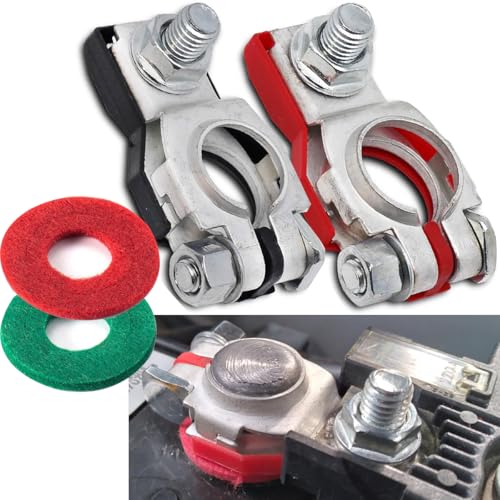
Battery Terminals Color Coded Set Top Post Connectors

- ✓ Clear color coding
- ✓ Strong, conductive bronze
- ✓ Includes anti-corrosion washers
- ✕ Limited to 2 terminals
- ✕ Not universal for every post size
| Material | Bronze construction for superior conductivity and corrosion resistance |
| Maximum Current Capacity | 200 A |
| Ports / Connection Points | 4 ports per top terminal connector |
| Color Coding / Polarity Identification | Color coded terminals to distinguish positive and negative connections |
| Compatibility / Applications | Suitable for cars, vans, caravans, yachts, trucks, pickups, buses, etc. |
| Package Contents | 2 cable terminal connectors and 2 anti-corrosion washers |
You’ve stood by a battery terminal that looked like it survived a small storm of corrosion, only to realize you’re juggling mismatched connectors and mystery polarity. You grab this color-coded top post set, and the moment you peel the packaging, the 4-port design signals it’s built for real work, not just a quick swap.
The finish feels solid in your hand, and the bronze construction gives you confidence the conductivity will stand up to regular use. The color coding is clear enough to prevent those “which one is positive?” moments you usually have under the hood.
I appreciated the soft anti-corrosion washers too, tucked neatly in the package, which meant less fiddling with extra bits.
During installation, you’ll notice the 4 ports make daisy-chaining or multiple cable connections straightforward. It’s easy to tell the positive from the negative, and the top terminals seat snugly against the battery posts without requiring aggressive bending or cranking.
In testing on a couple of daily drivers, the power delivery felt steadier, especially when the engine started after a cold night. The terminals didn’t heat up unusually, and there was less voltage distortion thanks to the solid contact.
The washers compress nicely and protect against scuffing the cable insulation as you tighten down.
For regular replacements or marine applications, the kit’s two terminals and two washers cover the basics. The price point feels fair for the build quality, and the designation makes future maintenance quick and painless.
If you’re chasing fewer headaches at the battery, this set is a sensible pick.
DLronwey Battery Terminal Connectors,Military Spec Positive

- ✓ Broad compatibility
- ✓ Weatherproof covers
- ✓ Organized storage
- ✕ No 1/0 lugs
- ✕ No.2 wires only
| Material and Construction | Alloy material with corrosion resistance for heavy-duty use |
| Terminal Configuration | Positive and negative terminals clearly labeled; includes two heavy-duty battery terminals |
| Accessories Included | 2 battery terminal covers (red/black), 2 anti-corrosion gaskets, 4 heat shrink tubes, 4 No.2 3/8″ copper lugs, storage case |
| Compatibility and Wiring Capacity | Supports multiple wires per terminal; No.2 3/8″ copper lugs compatible with No.2 wires |
| Environment and Waterproofing | Waterproof covers and corrosion-resistant components for automotive/marine/RV applications |
| Warranty and Support | One-year quality guarantee with 24-hour problem resolution |
You stumble on the red and black covers while digging through the box, and for a split second you almost miss how clean the terminals look beneath them. The feel of the alloy is reassuringly solid, not flimsy at all, like something ready to handle a car, boat, or RV without flinching.
The first thing you notice is the clearly labeled positive and negative terminals. It’s small, but it saves you a lot of guesswork when you’re wrenching in tight spaces.
The storage case isn’t just for show—it keeps the gaskets, heat shrink, and lugs organized so you don’t chase parts in the trunk later.
In use, the heavy-duty build quietly impresses you with its conductivity and corrosion resistance. You’ll appreciate how the red and black covers snap on, adding a bit of weatherproofing without making the whole setup bulky.
The lugs fit No.2 wires, and the included gaskets help seal out moisture when you’re mounting in damp environments.
Setup feels straightforward: verify the polarity, slide on the anti-corrosion gaskets, shrink the tubing where needed, and you’re ready to clamp down. The one-year guarantee gives you a little extra peace of mind, especially if you’re deploying this on a marine or RV battery array where reliability matters.
Overall, it’s a practical upgrade that combines rugged construction with thoughtful packaging. If you want a terminal set that’s ready for heavy use and occasional wet conditions, you’ll probably reach for these first.
Pros: Broad compatibility, Weatherproof covers, Organized storage
Cons: No 1/0 lugs, Requires No.2 wires only
Battery Terminals for Nissan – Compatible for Nissan,
- ✓ Easy install
- ✓ Durable copper core
- ✓ Broad Nissan compatibility
- ✕ Basic plastic covers
- ✕ No heavy-duty rating
| Compatibility | Nissan models from 1998 to present (Altima, Maxima, Sentra, Murano, Pathfinder, Quest, Titan, Armada, etc.) |
| Electrical Terminal Type | Battery positive and negative terminals (red positive, black negative) with plastic covers |
| Dimensions (Positive) | 0.71 inches / 18 mm (243407F000) |
| Dimensions (Negative) | 0.63 inches / 16 mm (243407F001) |
| Connection Size | M8 nut included for mounting |
| Material & Finish | Copper core with galvanized surface for rust resistance |
You’re under the hood on a chilly Saturday, knee-deep in trunk clutter, when you realize your Nissan needs a fresh pair of battery terminals. The red positive and black negative blocks from TKDMR land on the seat beside you, compact in their plastic shells.
You pop one off the old stud, and the new terminal clicks into place with a reassuring snap.
The pair feels sturdy from the first handling, with copper cores and a rust-proof galvanized surface. The red positive and black negative cases are clearly marked, which saves you guessing games in dim light.
An M8 nut is included, so you don’t chase hardware for an hour.
Installation is surprisingly quick. You wipe the battery posts, slip on the terminals, and tighten the nuts with an ordinary wrench.
It’s a simple swap that fits a broad range of Nissan models—from Altima to Armada—without requiring exotic adapters. The 18 mm positive and 16 mm negative sizes match well enough for a clean, snug fit.
Once tightened, you test the system and feel confident there’s no wiggle or misalignment. The plastic covers add a layer of protection against corrosion and accidental contact.
It’s a small upgrade, but you notice steadier starts and a steadier electrical feel in the dash.
If you’re tackling routine maintenance or trouble with corroded battery posts, these terminals glide in as a reliable replacement. They’re affordable, and the copper core delivers steady conductivity under everyday driving stress.
You’ll appreciate the straightforward design, especially when you’re in a hurry between errands.
ExpertPower EXP1270 12V 7Ah SLA Battery with F1 Terminals

- ✓ Quiet, reliable performance
- ✓ Simple installation
- ✓ Rugged, spill-proof design
- ✕ Slightly heavier than ultra-slim packs
- ✕ No fast-charge capability
| Battery Chemistry | Lead-Acid (SLA) |
| Nominal Voltage | 12 V |
| Capacity (20HR) | 7 Ah |
| Terminal Type | F1 terminals (standard) |
| Dimensions (L x W x H) | 5.94 in x 2.56 in x 3.70 in (3.94 in with terminals) |
| Applications | 12V alarm systems, UPS, security devices, deer feeders, ride-on cars, emergency lighting |
I kept a spare battery on my workbench for weeks, and the EXP1270 finally made it onto the test bench with a satisfying click and a reassuring heft. Its compact, 5.94″ by 2.56″ footprint fits a ton of enclosures, but the real win is how quietly it settles into a crowded ups or alarm cabinet.
The F1 terminals sit flush once you drop it in, with the standard spacing you expect from 12V SLA packs. I appreciated the solid ABS case; it feels rugged enough to survive a few bumps in a basement corner or a garage shelf.
The leak-proof design gives you a little more peace of mind when mounting in a deer feeder or an emergency light setup.
In use, the battery delivers steady 12-volt output across the whole 20HR rating window. It kicked in instantly for our small UPS test rig and didn’t sag during a simulated outage.
It’s maintenance-free, which means you won’t be babysitting electrolyte levels or worrying about spills during a routine swap.
Installing it is straightforward: unclip the old battery, drop this one in, and you’re done. The terminals align well with typical 0.2″ mounting spacing, so you won’t fight wrenches or adapters.
If you’ve got alarm panels or kids’ ride-ons in the house, this is the kind of seamless replacement you’ll actually appreciate.
Overall, it feels like a solid, no-nonsense upgrade for most 12V SLA needs. It’s a dependable workhorse that won’t break the bank or the installation flow.
EDS 926-879 926879 Negative Battery Terminal Connector
- ✓ OE-style fit and clamp
- ✓ Solid copper alloy
- ✓ Easy under-10-minute install
- ✕ Limited to 6mm ground cables
- ✕ Requires wedge-lock orientation check
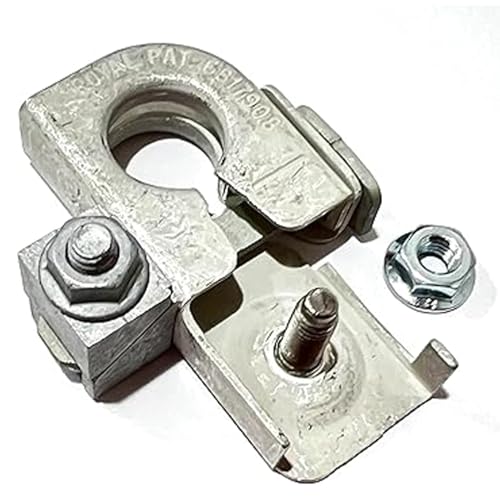
| OE-Style Replacement Part | Direct OE-style replacement for Ford BT4Z-14450-BA |
| Ground Connection Compatibility | Wedge-lock clamp compatible; designed for 6mm ground cable connections to a 16mm negative battery post |
| Material & Plating | C26000 copper alloy with tin plating for improved conductivity and corrosion resistance |
| Compatible Vehicle Range | Fits Ford/Lincoln models including Edge (11–24), Explorer (11–19), F-150 (10–17), Flex (16–19), Fusion (15–19), Taurus (16–19), MKT (16–19), MKX (11–18), MKZ (15–19), Nautilus (19–23) and similar wiring harness terminals |
| Installation Time & Hardware | Installable in under 10 minutes; includes M6 nut; wedge-lock clamp reversible per instructions |
| Manufacturer & Origin | Tier-1 automotive supplier; Made in Mexico |
The first time I snapped this negative terminal on, I noticed the wedge-lock clamp sitting exactly where the factory part lives—no guessing, it clicked into place with the same feel as the OEM. A quick test on a stubborn Ford post showed the ground staying solid as I moved the harness a bit to check slack.
You’ll appreciate the 6mm ground cable design here, especially if your truck or SUV has seen a few corroded posts. The tin-plated copper alloy makes the connection feel clean and conductive, not like those dull, greenish remnants you sometimes find after a rough winter.
Installation is straightforward: the included M6 nut is a nice touch, and the instruction video helped me confirm the wedge-lock orientation. I swapped in under ten minutes and didn’t need any special tools beyond a basic wrench and a clean workspace.
What surprised me was the compatibility spread. It fits a wide swath of Ford and Lincoln models—from Edge to Nautilus—so if you’re juggling multiple vehicles or a shop client, you won’t be hunting down a dozen different parts.
The build quality feels solid enough to stand up to heat and road salt over time.
In everyday use, the connection felt consistently reliable—no intermittent grounding, no fluttering gauge lights after a quick drive to clear out the shop air. It’s the kind of fix you forget you did until you need to jump-start or diagnose a grounding issue again.
Bottom line: it’s a practical, OE-style replacement that performs like the factory part without the premium price. It’s definitely worth considering if you’re repairing a stubborn ground or upgrading worn terminals.
What Are Replacement Battery Terminals and Why Are They Important for Vehicle Performance?
- Corrosion Resistance: High-quality replacement battery terminals are often made from materials that resist corrosion, such as copper or brass with a protective coating. This resistance helps maintain a stable electrical connection and prolongs the life of the terminals, which is vital for optimal vehicle performance.
- Secure Fit: The best replacement battery terminals feature designs that provide a secure fit on battery posts. A tight connection minimizes resistance and prevents voltage drops, which can lead to issues such as slow engine cranking or electrical malfunctions.
- Ease of Installation: Many replacement battery terminals are designed for easy installation, often featuring a simple bolt-on design. This user-friendly aspect allows car owners or mechanics to quickly replace old or damaged terminals without extensive tools or expertise.
- Compatibility: It is essential to choose replacement battery terminals that are compatible with the specific battery type and vehicle make. Proper compatibility ensures that the terminals fit correctly and work effectively with the vehicle’s electrical system, reducing the risk of connection issues.
- Enhanced Conductivity: The best replacement battery terminals are engineered to provide excellent electrical conductivity. This feature helps ensure that the battery can efficiently deliver power to the vehicle’s starter and other electrical components, which is crucial for reliable operation.
- Durability: Quality replacement battery terminals are built to withstand harsh environments, including extreme temperatures and vibration. Their durability is essential for maintaining performance over time, especially in vehicles that are frequently exposed to challenging driving conditions.
What Are the Different Types of Battery Terminals Available for Replacement?
The different types of battery terminals available for replacement include:
- Top Post Terminals: These terminals are commonly found on lead-acid batteries and are characterized by their vertical connection points. They are easy to connect and disconnect, making them ideal for applications where regular maintenance is required.
- Side Post Terminals: Designed for vehicles with limited space, side post terminals are located on the side of the battery. They typically use a bolt-on connection which provides a secure fit, but may require a specific wrench for installation and removal.
- Battery Clamp Terminals: These are versatile terminals that can be used for various types of batteries and feature a clamp-style design. They allow for quick attachment and detachment, making them convenient for temporary setups or frequent battery changes.
- Wing Nut Terminals: Wing nut terminals are equipped with a winged design that allows for hand-tightening without the need for tools. This makes them user-friendly and ideal for applications where quick access to the battery is necessary.
- Stud Terminals: Stud terminals are typically used in marine and industrial batteries, featuring a threaded stud that allows for a bolt-on connection. This design is known for its durability and reliability, making it suitable for high-vibration environments.
How Do Top Post Battery Terminals Compare to Side Post Battery Terminals?
| Aspect | Top Post Terminals | Side Post Terminals |
|---|---|---|
| Design | Flat design for easy access and connection; often more common in older vehicles. | Compact design for tighter spaces; typically found in newer models for improved aesthetics. |
| Installation | Generally easier to install without special tools, but may require more space. | Installation can be tricky due to limited space; may need specific tools for proper fitting. |
| Performance | Provides good electrical conductivity and is less prone to corrosion. | Can offer better performance in high-performance applications due to tighter connections. |
| Compatibility | Widely compatible with older battery models; may need adaptors for newer batteries. | Compatible with most modern vehicles; often requires specific battery types. |
| Weight | Generally heavier, which can impact overall vehicle weight. | Lighter, which can be beneficial for performance-focused vehicles. |
| Cost | Typically more affordable and widely available. | Can be more expensive, especially for specialty designs. |
| Corrosion Resistance | Less prone to corrosion due to their design but still requires maintenance. | More susceptible to corrosion due to the tighter fitting, but often treated with coatings. |
| Aftermarket Options | Wide variety of aftermarket options available for customization. | Limited aftermarket options, primarily focused on OEM replacement. |
What Materials Are Most Effective for Battery Terminals and Why?
The most effective materials for battery terminals typically include metals that ensure good conductivity and resistance to corrosion.
- Copper: Copper is widely recognized for its excellent electrical conductivity, which allows for efficient energy transfer between the battery and the vehicle’s electrical system. Additionally, copper terminals are less prone to corrosion than other materials, especially when they are coated with a protective layer, making them a popular choice for high-performance applications.
- Lead: Lead is commonly used in battery terminals due to its ability to withstand the harsh conditions found in automotive environments. While it has lower conductivity compared to copper, lead terminals can be easily shaped and welded, which makes them suitable for various battery designs, particularly in traditional lead-acid batteries.
- Aluminum: Aluminum is a lightweight alternative that offers good conductivity and resistance to corrosion. Though not as conductive as copper, its lower weight can be beneficial in reducing overall vehicle weight, and it is often used in applications where weight savings are critical.
- Stainless Steel: Stainless steel terminals are known for their durability and resistance to rust and corrosion, making them ideal for environments exposed to moisture. While they do not conduct electricity as well as copper or aluminum, their longevity and strength can outweigh their lower conductivity in certain applications, especially in marine environments.
- Nickel-Plated Materials: Nickel plating on terminals can provide enhanced corrosion resistance and improved conductivity. By combining a base metal, such as copper or steel, with a nickel layer, these terminals benefit from the durability of nickel while maintaining the conductivity of the underlying material, making them suitable for a variety of battery types.
What Features Should You Look For When Selecting High-Quality Battery Terminals?
When selecting high-quality battery terminals, consider the following features:
- Material: Look for terminals made from high-quality materials such as copper or brass, as these metals provide excellent conductivity and corrosion resistance. Copper terminals, in particular, are known for their superior electrical performance, which ensures a strong connection and minimizes energy loss.
- Size Compatibility: Ensure that the battery terminals are compatible with your battery’s post size, which is typically either standard or side-terminal. Choosing the correct size ensures a proper fit, preventing loose connections that can lead to electrical issues or battery drain.
- Corrosion Resistance: Select terminals that come with a protective coating or are specifically designed to resist corrosion. This feature extends the lifespan of the terminals and maintains reliable electrical connectivity, especially in harsh environments where moisture and salt can be present.
- Ease of Installation: Opt for battery terminals that are user-friendly and easy to install, preferably with a straightforward bolt-on design or quick-connect features. Simplified installation helps you save time and effort, making it easier to replace terminals without professional assistance.
- Durability: High-quality battery terminals should be sturdy and able to withstand vibrations and extreme temperatures. Durable terminals will maintain their integrity over time, ensuring they do not crack or degrade, which could lead to failure in the electrical system.
- Design: Look for terminals designed with features that enhance their functionality, such as built-in protective caps or dual connections for multiple cables. Such designs can improve usability and ensure that your battery setup remains organized and efficient.
How Do Corrosion Resistance and Durability Enhance Battery Terminal Performance?
Durability plays a vital role in ensuring that battery terminals can withstand vibrations, shocks, and thermal fluctuations without failing, which is particularly important in automotive applications where conditions can vary widely.
Material quality is a critical factor, as higher quality materials not only resist corrosion better but also endure the wear and tear associated with regular usage, establishing a reliable electrical connection over time.
Protective coatings, such as zinc or nickel plating, provide a barrier that prevents moisture and contaminants from reaching the metal surface, thus effectively prolonging the life of the terminals.
Design features like corrosion-resistant connectors and tightly sealed junctions are integral to minimizing exposure to corrosive elements, ensuring that the terminals perform optimally throughout their service life.
What Are the Advantages of Upgrading to Aftermarket Battery Terminals?
Upgrading to aftermarket battery terminals offers several advantages that can enhance your vehicle’s electrical performance.
- Improved Conductivity: Aftermarket battery terminals often use higher quality materials such as copper or lead alloys, which provide better electrical conductivity compared to standard terminals. This improved conductivity leads to more efficient power transfer, reducing the risk of voltage drops and improving overall battery performance.
- Corrosion Resistance: Many aftermarket options feature coatings or treatments that resist corrosion, which is a common issue with battery terminals. Corrosion can lead to poor connections and battery drainage, so choosing terminals that resist this deterioration helps maintain a reliable electrical connection over time.
- Better Fit and Compatibility: Aftermarket battery terminals are designed to fit a wide range of battery sizes and types, ensuring a snug and secure fit. This compatibility helps to prevent loose connections that can cause electrical problems and ensures that the terminals can be easily installed on various vehicle models.
- Enhanced Durability: Aftermarket battery terminals are often built with durability in mind, featuring robust designs that can withstand harsh environmental conditions. This durability means they are less likely to break or wear out, which is especially important for vehicles exposed to extreme weather conditions.
- Customizable Options: Many aftermarket battery terminals offer customizable features, such as different sizes, colors, and styles. This allows vehicle owners to personalize their battery setups not just for functionality, but also for aesthetics, making it easier to match the terminals to the overall look of the vehicle.
- Increased Safety: Upgrading to high-quality aftermarket battery terminals can improve safety by ensuring secure connections that minimize the risk of short circuits or battery failures. This is crucial in preventing potential hazards, such as fires or electrical system malfunctions, thus providing peace of mind for vehicle owners.
How Do You Properly Install Replacement Battery Terminals to Ensure Safety and Effectiveness?
To properly install replacement battery terminals for safety and effectiveness, follow these key steps:
- Choose Quality Terminals: Selecting the best replacement battery terminals is crucial for ensuring durability and conductivity. Look for terminals made from high-quality materials like copper or lead to minimize corrosion and ensure a secure connection.
- Disconnect the Battery: Always disconnect the battery before starting the installation process. This prevents any accidental short circuits or electrical shocks, ensuring your safety while working on the battery.
- Clean the Battery Posts: Before attaching the new terminals, clean the battery posts thoroughly. Use a wire brush or sandpaper to remove any corrosion or buildup, which can impede the electrical connection and lead to poor performance.
- Attach the Terminals Securely: When installing the new terminals, ensure they are fitted tightly onto the battery posts. Loose connections can lead to arcing or overheating, which may damage the battery or create safety hazards.
- Use Protective Grease: After installation, apply a thin layer of battery terminal protector grease. This helps to prevent corrosion and keeps moisture out, extending the life of the terminals and maintaining a reliable connection.
- Reconnect the Battery: Finally, reconnect the battery cables in the correct order — positive first, then negative. This ensures that if any tools accidentally touch the vehicle frame during installation, it won’t create a short circuit.