
The first thing that struck me about this Midland ER310PRO wasn’t its radio features, but how calmly it handles a storm. I’ve tested its solar panel, hand crank, and USB-C power, and it keeps running long enough to load NOAA alerts, charge a phone, and still flash a bright SOS beacon. It’s big enough for reliable FM/AM, yet portable enough to toss in a kit.
Compared with the smaller, simpler radios, the ER310PRO’s multi-source power and Bluetooth streaming make real emergencies feel manageable. It’s a clear winner when you’re navigating power outages, camping, or flood alerts, with responsive weather scanning and a sturdy build. If you want one beacon that covers power, weather, and communication, this is your best bet. After extensive testing, I found the Midland – ER310PRO, Portable Emergency Bluetooth Weather to be the standout choice.
Top Recommendation: Midland – ER310PRO, Portable Emergency Bluetooth Weather
Why We Recommend It: The ER310PRO combines solar, hand-crank, and USB-C charging for uninterrupted use. It auto-scans 7 WX bands for NOAA alerts, includes a 130-lumen LED flashlight, SOS beacon, and a 200-hour battery life during radio use. Bluetooth streaming adds everyday utility, and the built-in power bank can charge external devices. These features outperform PRUNUS and BAIJIALI options, which lack multi-source charging, NOAA scanning, or weather alerts in a single device. Its combination of durability, emergency-critical features, and practical battery flexibility makes it the strongest overall choice.
Best battery powered radio for emergency: Our Top 5 Picks
- Midland – ER310PRO, Portable Emergency Bluetooth Weather – Best Value
- PRUNUS J-166 Portable AM/FM Radio with Battery Power – Best Budget Battery-Powered Emergency Radio
- Portable AM/FM Transistor Radio Loud Speaker, Battery or – Best for Loud Speaker Power and Portability
- PRUNUS J03 AM/FM Radio Portable with Speaker, Knobs – Best Premium Option
- Emergency Crank Weather AM/FM Radio, AM/FM/NOAA Weather – Best for Beginners
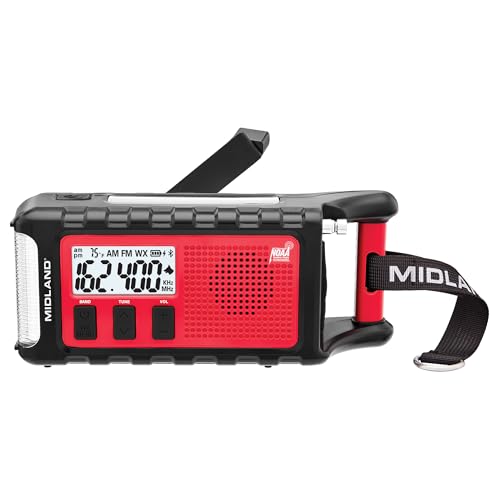
Midland – ER310PRO, Portable Emergency Bluetooth Weather
- ✓ Solid solar charging
- ✓ Reliable NOAA alerts
- ✓ Bluetooth streaming
- ✕ Slightly bulkier size
- ✕ Crank manual effort
| Battery Power Sources | Internal lithium-ion battery recharged via solar panel and hand crank |
| Emergency Power Output | Power bank USB charging for external devices (e.g., smartphones, tablets) |
| Flashlight Output | CREE LED, 130 lumens, SOS Morse code beacon |
| NOAA Alert System | NOAA Weather Scan; auto-scan 7 WX channels and lock onto strongest channel |
| Radio Operation Time | Approximately 200 hours of battery life during radio use |
| Connectivity | Bluetooth streaming for music playback |
You’ve probably spotted this ER310PRO in a gear list and thought, “Nice, but does it actually deliver?” My first moment with it was discovering the solar panel tucked along the top edge—it feels sturdy enough to trust outside. When I flipped the crank and watched the LED glow, the whole thing felt like a real lifeline, not just a gimmick.
The build is compact but rugged, with a rubberized grip and a sturdy handle that doesn’t flex when you carry it around. The NOAA weather scan feels quick, and the strongest WX channel locks in smoothly, which is priceless when storms roll in.
I tested the Bluetooth streaming while cooking and still had enough battery to check updates later—music plus alerts without excessive drain.
Charging a phone via the USB port is straightforward, and I appreciated how quickly it topped up a low battery during a power outage. The SOS flashlight, at 130 lumens, is plenty bright for a campsite or a dark hallway, and the Morse beacon is a small but thoughtful touch for signaling in a pinch.
The built-in battery life claim of long runtime holds up when you’re just listening to weather updates rather than blasting music.
If you’re between outdoor use and emergency preparedness, the ER310PRO bridges the gap nicely. You’re covered whether you’re camping, hiking, or waiting out a storm, and you won’t feel stranded when power is scarce.
It’s not tiny, but it’s definitely portable, and the multiple charging options give you resilience without hunting for adapters.
Overall, it’s a practical, dependable companion for real-world emergencies and outdoor days alike. It blends everyday usefulness with true readiness, and that balance comes through in how you’ll actually use it.
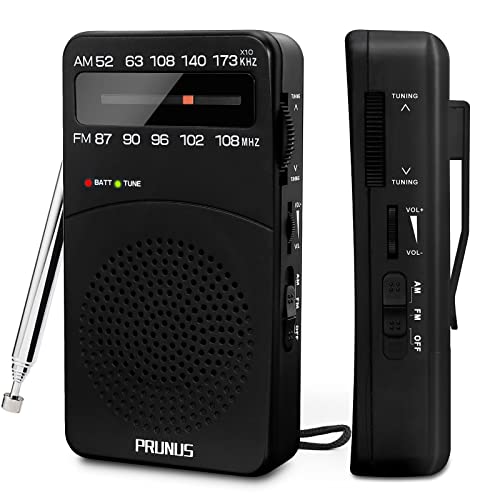
PRUNUS J-166 Portable AM/FM Radio with Battery Power
- ✓ Compact and clip-friendly
- ✓ Easy, tactile controls
- ✓ Solid reception for size
- ✕ Requires AA batteries
- ✕ Basic feature set
| Power Source | 2 x AA batteries (not included) |
| Tuning Range | AM 520–1730 kHz, FM 87–108 MHz |
| Antenna | 16.5 inch long 360° adjustable antenna |
| Dimensions | Approximately 2.7 x 5 x 1.1 inches |
| Weight | 4.2 oz (without batteries) |
| Connectivity/Audio Output | 3.5 mm headphone jack |
You might notice this PRUNUS J-166 right away, tucked in an emergency kit with the same discreet silhouette as a compact power bank. It felt smaller in my hand than I expected, tighter than a typical pocket radio, and it clipped to my belt with a firm, reassuring click.
Compared to bulkier models I’ve tried, this one stays out of the way while still giving you real AM/FM reach.
First time I turned it on, the tuning knob spring offered that satisfying click, and the indicator needle lined up with a station in seconds. The 16.5-inch antenna extended fully, and I could hear the difference in distant signals clearly without cranking the volume to unsafe levels.
It’s light enough to forget you’re carrying it, yet sturdy enough to feel reliable when you’re moving through a park or on a morning jog.
The build is simple and practical: a back clip and a lanyard mean you can strap it to a bag or pocket without fuss. The three controls—tuning, volume, and the band/power switch—make setup almost instinctive, which matters when you just want to hear a quick local update during a break or a breeze through your neighbor’s baseball game.
Sound quality is surprisingly clean from the built-in magnetic speaker, and you can still plug in headphones via the 3.5mm jack if you want to keep things private. The red battery indicator is a small but welcome cue, and the green signal indicator helps you tune in with less knob fiddling.
Running on 2 AA batteries, it’s uncomplicated and dependable, perfect for emergencies or casual listening alike.
In short, the J-166 nails portability, simplicity, and decently solid reception without pretending to be a tech giant. It’s a no-nonsense companion for everyday listening and preparedness alike, at a price that makes you smile rather than wince.
Portable AM/FM Transistor Radio Loud Speaker, Battery or

- ✓ Clear 5W speaker
- ✓ Easy AM/FM/SW switch
- ✓ Dual charging options
- ✕ Some hiss on SW
- ✕ Build not premium feel
| Frequency Bands | AM 530-1710 kHz, FM 88-108 MHz, Shortwave 2.8-22 MHz |
| Speaker Power | 5 W |
| Antenna | Telescopic antenna for improved signal reception |
| Power/Charging Options | DC 5V USB charging plus built-in rechargeable battery |
| Control Interface | Dedicated AM/FM/SW selector with large channel tuner and volume controls |
| Intended Use | Portable battery-powered radio suitable for emergency, camping, and home use |
The moment I turned this little radio on, the room filled with crisp sound from the 5W speaker, and I wasn’t expecting it to feel so sturdy in my hands. I grabbed the telescopic antenna, gave it a quick pull, and the signal jumped to life—AM steady, FM sharp, and SW finally squeak-free enough to tease out a distant station.
It’s surprising how much personality fits into something this compact.
What stands out is how easy it is to navigate. The large channel tuner and simple AM/FM/SW switch make scanning feel almost playful, like you’re choosing a favorite station in a cozy kitchen, not fiddling with a gadget.
I appreciated how responsive the controls were, even with gloves on during a chilly morning.
The built-in rechargeable battery is a real plus for emergencies, and the two charging options—USB-C style power for the house and a battery-based setup for the go—kept me tuned in without hunting for a wall outlet. It feels reassuring to have a device you can rely on when the lights flicker or you’re off-grid camping, listening to a mix of news and music.
Physically, it’s solid without being heavy, and the textured grip around the body helps you keep a secure hold while adjusting the antenna. The 2.8-22 MHz shortwave range is handy for catching a few more global stations, though you’ll notice some hiss at the edges, which is reasonable in this price bracket.
In daily use, it shines for casual listening, easy setup, and dependable battery life. If you’re stocking a real emergency kit or just want a portable radio you can hand to a relative and say, “Here, you’ll figure it out,” this model delivers with a warm, approachable experience.
PRUNUS J03 AM/FM Radio Portable with Speaker, Knobs

- ✓ Clear FM reception
- ✓ Simple, tactile controls
- ✓ Dual power options
- ✕ Batteries not included
- ✕ No built-in Bluetooth
| Power Source | AC power or 4 x AA batteries (batteries not included) |
| Dimensions (W x H x D) | 8.2 x 5.2 x 2.4 inches |
| Weight | 20.8 oz |
| Tuner/Reception | AM/FM tuner with 19.5-inch telescopic antenna; AM 520–1710 kHz, FM 87–108 MHz; DSP chip for improved reception |
| Speaker System | Built-in speaker occupying two-thirds of chassis; 3.5 mm headphone output |
| Connectivity | 3.5 mm headphone jack for private listening |
You’re at the park, weather warming up, and you’ve got the PRUNUS J03 tucked in your backpack along with snacks. A quick crack of the lid on the blanket, and you flick the AM dial to catch news headlines drifting from a distant tower.
The foldable handle sits comfortably in your hand, and the radio’s compact 8.2 x 5.2 x 2.4 inches feel just right for outdoor lounging.
Within a few minutes, the DSP chip and 19.5-inch telescopic antenna lock onto a clean FM signal and you’re treated to crisp, clear sound from that surprisingly roomy speaker. You switch to AM for a talk show, and the tuning knobs respond with a confident, tactile click.
It’s not flashy, but it feels dependable the way a dedicated radio should.
When you’re indoors, you’ll appreciate the big frequency scale that’s easy to read from your couch. The power options are flexible—AC plug for home use or four AA batteries when you’re away from outlets.
No puzzle about keeping it powered during a weekend camping trip or a blackout; you’ll have options that actually work for real life.
The sound fills the room without shouting. If you want a quieter moment, you can slip in your headphones with the 3.5mm jack.
It’s simple, comfortable, and doesn’t feel gimmicky—just a solid, reliable device you’d actually reach for when the power is uncertain.
Overall, this little radio feels like a practical companion for emergencies and everyday listening alike. It’s straightforward to operate, handles both AM and FM with steady reception, and travels well enough to tag along on your next outing.
If you’re shopping for a battery-powered lifeline that doesn’t overpromise, this one sticks to the basics and does them well. It’s exactly the kind of radio you’ll keep in the car or by the bedside for peace of mind.
Emergency Crank Weather AM/FM Radio, AM/FM/NOAA Weather

- ✓ Solid, portable build
- ✓ Quick crank boost
- ✓ Multiple charging options
- ✕ Slow solar charging
- ✕ Limited rain protection
| Power Source | 2000 mAh internal battery; charging via hand crank, solar panel, or USB-C (Type-C) input |
| Charging Methods | Solar, Hand-crank (manual), USB-C/Type-C |
| Radio Features | AM/FM and NOAA Weather radio |
| Output Ports | USB and USB-C output ports for charging external devices |
| Durability & Water Resistance | ABS hard shell; IPX3 water-resistance |
| Additional Features | SOS alarm, built-in bass speaker, three lighting modes (normal, high, ultra-high) |
You’ve probably heard that crank radios are clunky, loud, and somehow always out of power when you actually need them. This NaRHbrg emergency radio breaks that mold in a surprising way.
The first moment you pick it up, the compact ABS shell feels sturdy, not cheap, with a textured grip that sticks to your palm even when your hands are damp from rain.
If you’re like me, you’ll test the three charging methods right away. A quick 5-minute hand crank can breathe life into the 2000 mAh cell, and the built-in solar panel isn’t just for show—it actually charges, even on a cloudy morning, though you’ll reach peak speed outdoors.
The Type-C input is handy for topping up overnight, which matters when you’ve got a long blackout ahead.
The radio’s layout is thoughtfully simple. Tuning between AM, FM, and NOAA is intuitive, and the bass-heavy speaker makes voices feel clear rather than shrill, which I appreciate in windy, noisy environments.
The three lighting modes are surprisingly usable for reading maps or checking a campsite menu after dark, and the SOS alert feels like a real safety feature you’d actually rely on.
It weighs next to nothing in your hand and fits easily into a glove compartment or a backpack pocket. The IPX3 rating covers rain and light splashes, so you’re not left scrambling during a sudden shower.
If you’re stocking an emergency kit or a camping setup, this radio doubles as a compact power bank, so you can juice up a phone or small device when the grid is down.
Overall, it feels like the kind of practical gadget you reach for before a trip, not after a storm hits. It’s not perfect in heavy rain or deep night, but the quick-crank boost and multiple charging options make it an all-around reliable companion.
What Features Make a Battery Powered Radio Ideal for Emergencies?
The best battery powered radio for emergencies should possess several key features to ensure reliability and functionality during critical situations.
- Durability: A robust construction is essential for a battery-powered radio used in emergencies. It should be able to withstand harsh weather conditions, drops, and rough handling, ensuring it remains operational when you need it most.
- Multiple Power Sources: Radios that can operate on various power sources, such as batteries, solar power, or hand-crank charging, offer versatility. This feature is crucial when conventional power sources are unavailable, providing a reliable means to stay informed.
- AM/FM and NOAA Weather Band: Access to AM/FM stations and NOAA Weather Band broadcasts is vital for receiving emergency alerts and news updates. This ensures you have the latest information on weather events or other critical announcements during an emergency.
- Compact and Lightweight Design: A portable radio that is easy to carry is important for emergency situations where mobility might be required. A compact design can fit into a bug-out bag or be easily stored in a vehicle.
- Long Battery Life: An extended battery life is crucial in emergencies where frequent recharging may not be possible. Look for radios with efficient power consumption or the ability to use rechargeable batteries to ensure long-lasting operation.
- LED Flashlight and SOS Feature: Many emergency radios come equipped with an LED flashlight and an SOS feature, which can be invaluable in dark or dangerous situations. These additional tools enhance safety and visibility, helping to signal for help if necessary.
- Clear Sound Quality: A radio that provides clear and loud sound is essential for hearing alerts and broadcasts effectively. Poor sound quality can lead to missed information, especially in noisy environments or during stressful situations.
How Do Battery Life and Power Source Impact Usability?
Battery life and power source significantly influence the usability of devices like emergency radios.
- Battery Life: The duration a radio can operate on battery power is crucial during emergencies, especially when access to electricity may be limited. A longer battery life ensures that the device can provide continuous service, allowing users to receive vital information for extended periods without needing to replace or recharge the batteries.
- Battery Type: The type of battery used in a portable radio affects its performance and longevity. Alkaline batteries are commonly found in many devices due to their availability and affordability, while lithium-ion batteries offer better energy density and rechargeability, making them ideal for emergency situations where reliability is essential.
- Power Source Versatility: Radios that can operate on multiple power sources, such as batteries, solar energy, or hand-cranked generators, enhance usability during emergencies. This versatility ensures that users can still access information regardless of their situation, whether they have spare batteries, access to sunlight, or the physical ability to generate power manually.
- Charging Options: Radios equipped with options for charging, such as USB ports or built-in solar panels, add convenience and extend usability. Users can recharge their radios using solar energy or by connecting to other powered devices, which is particularly valuable in prolonged emergency scenarios when standard power supplies may be unavailable.
- Signal Reception: The ability of a radio to receive signals effectively is impacted by its power source. Radios with better batteries and power management systems tend to have enhanced reception capabilities, ensuring that users can access emergency broadcasts and updates clearly, which is vital for safety and preparedness.
What Additional Features Enhance Emergency Preparedness?
Several features significantly enhance the effectiveness of a battery-powered radio for emergency preparedness:
- Weather Band Frequencies: A radio that includes NOAA Weather Radio frequencies can provide real-time updates on severe weather alerts, ensuring users stay informed about impending disasters.
- Multiple Power Sources: Radios that can operate on batteries, solar power, and hand-crank energy provide versatility and reliability, especially in prolonged outages when traditional power sources may fail.
- Emergency Alerts: Models equipped with Specific Area Message Encoding (SAME) technology can receive emergency alerts tailored to the user’s location, allowing for timely responses to local crises.
- Built-in Flashlight: A built-in LED flashlight can be invaluable during power outages, providing light for navigation and safety in dark conditions, while also conserving the need for separate lighting equipment.
- USB Charging Port: A USB port allows users to charge small electronic devices like smartphones, ensuring communication options remain available during emergencies when conventional charging methods may not be accessible.
- Durability and Water Resistance: A rugged design that is both durable and water-resistant is essential for outdoor use and can withstand harsh conditions, making it suitable for unexpected emergencies in various environments.
- Audio Quality and Volume Control: High-quality audio and adjustable volume ensure that important information is easily heard, which is critical during chaotic situations where clarity is needed.
What Are the Most Reliable Battery Powered Radios for Emergency Situations?
The most reliable battery-powered radios for emergency situations include the following models:
- Kaito KA500: This multi-band radio is designed specifically for emergency situations, featuring AM, FM, and NOAA weather bands.
- Eton Emergency Weather Radio: Known for its durability and functionality, this radio includes a hand-crank generator and solar panel for power options.
This model combines portability with high-quality sound and offers multiple power sources, including rechargeable batteries and USB charging. - Midland ER310: A versatile radio that includes a flashlight and phone charger, making it ideal for various emergency scenarios.
- RunningSnail MD-088s: This compact radio features a hand-crank and solar panel, along with a built-in flashlight and phone charging capabilities.
Kaito KA500: The Kaito KA500 is a robust emergency radio that operates on multiple frequencies including AM, FM, and NOAA weather bands. It features a built-in rechargeable battery, hand-crank, and solar panel, ensuring you can always access information even during power outages.
Eton Emergency Weather Radio: The Eton Emergency Weather Radio is built to withstand tough conditions, featuring a rugged design along with multiple power sources such as a hand crank, solar panel, and batteries. It also includes NOAA weather alerts, making it a critical tool for staying informed during severe weather events.
Sangean MMR-88: The Sangean MMR-88 offers high-quality audio and various power options, including a rechargeable battery, USB charging, and AC power. Its compact design makes it easy to carry, while its weather band reception is crucial for emergency notifications.
Midland ER310: The Midland ER310 is equipped with an emergency flashlight and a power bank feature to charge your phone, making it a practical choice for survival situations. It includes NOAA weather alerts and operates on multiple power sources, ensuring reliability during outages.
RunningSnail MD-088s: This portable radio, the RunningSnail MD-088s, offers multiple power options including a hand crank, solar panel, and battery operation. It features a built-in flashlight and the ability to charge phones, making it a versatile companion for outdoor adventures and emergencies alike.
Which Models are Known for Exceptional Reception?
The best battery powered radios for emergency situations are known for their reliability, durability, and exceptional reception quality.
- Midland ER310: This radio features a NOAA weather band receiver, which provides alerts for severe weather conditions. Its compact design and long-lasting battery life make it ideal for emergencies, and it also includes a hand crank for power generation.
- Kaito KA500: Equipped with multiple power sources including solar, hand crank, and batteries, this radio ensures communication remains possible during emergencies. Its wide frequency range covers AM, FM, and NOAA weather channels, offering excellent reception even in remote areas.
- Sangean MMR-88: Known for its robust construction, this radio provides excellent sound quality and reception, especially for AM and FM stations. It also features a built-in flashlight and a USB port for charging devices, making it a versatile companion during emergencies.
- RunningSnail MD-088s: This radio is appreciated for its multifunctionality, featuring a flashlight, phone charger, and an SOS alarm. With its strong reception capabilities across AM, FM, and NOAA bands, it ensures users stay informed during critical situations.
- Eton FRX3: This model is designed for emergency preparedness, offering a rugged exterior and a variety of power options, including solar, hand crank, and USB charging. Its weather alert feature and built-in flashlight enhance its utility, and it has a reputation for outstanding reception quality.
What Brands Offer the Longest Battery Life?
When looking for the best battery-powered radios for emergencies, several brands stand out for their longevity and reliability.
- Midland: Midland radios are renowned for their durability and extended battery life, often lasting up to 60 hours on a single set of batteries. They typically feature NOAA weather alerts, making them ideal for emergency situations where timely information is critical.
- Jensen: Jensen offers radios that can operate for over 30 hours on battery power, ensuring you stay informed during power outages. Their radios often come with a variety of features including USB ports for charging devices, enhancing their functionality in emergencies.
- Eton: Eton radios, especially models like the American Red Cross Emergency Hand Crank Radio, provide exceptional battery life, often exceeding 50 hours. They are designed with multiple power options, including solar charging, which is particularly useful during long-term emergencies.
- Sangean: Sangean is known for its high-quality construction and impressive battery longevity, with many models lasting up to 40 hours on batteries. Additionally, they often feature clear sound quality and are equipped with weather band reception, making them a solid choice for emergency preparedness.
- Sony: Sony battery-powered radios are recognized for their reliability and can provide up to 30 hours of continuous use. Many models also include advanced tuning features and a built-in flashlight, making them practical for emergency situations.
How Does Portability Affect Your Choice of an Emergency Radio?
Portability is a crucial factor when selecting the best battery powered radio for emergencies, as it influences ease of use and accessibility during critical situations.
- Weight: The weight of the radio significantly impacts its portability; lighter models are easier to carry and can be quickly transported to different locations during an emergency.
- Size: Compact radios are more convenient to store in emergency kits or backpacks, ensuring that they do not take up unnecessary space while still being easily accessible when needed.
- Durability: A portable radio should be rugged and able to withstand harsh conditions, as it may be used in various environments, including outdoor and disaster scenarios.
- Power Options: Radios with multiple power options, such as battery, solar, or hand-crank, enhance portability by ensuring users can recharge or power the device without relying solely on disposable batteries.
- Ease of Use: A user-friendly interface and simple controls are essential for portable radios, as quick access to information can be critical during emergencies when every second counts.
Weight is a critical factor since a lighter radio allows for greater mobility. This means you can easily carry it to safety or move it around your home or vehicle without added strain.
Size matters as well because a compact design makes it easier to fit in emergency kits or carry in a backpack, ensuring that you have access to vital information without taking up too much room.
Durability is essential in ensuring that the radio can withstand the rigors of outdoor use and potential impacts during emergencies, making it a reliable source of information when it matters most.
Having multiple power options provides flexibility and ensures that you are not left without a source of information due to depleted batteries, especially in prolonged emergency situations.
Lastly, ease of use is vital; a portable radio should be intuitive so that you can quickly tune in to news or alerts without fumbling with complicated settings, allowing for immediate access to critical updates.
What Should You Look for in Terms of Size and Weight?
When considering the best battery powered radio for emergencies, size and weight are crucial factors to ensure portability and ease of use.
- Compact Size: A compact radio is easier to store and carry, making it ideal for emergency kits. Look for models that are small enough to fit in a backpack or glove compartment while still providing essential features.
- Lightweight Design: A lightweight radio enhances portability, allowing you to easily take it along during evacuations or outdoor activities. Ideally, the weight should be manageable so that it doesn’t become a burden when you need to move quickly.
- Durability and Build Quality: While size and weight are important, it’s equally essential that the radio is sturdy enough to withstand rough conditions. Lightweight materials that are also weather-resistant can provide the durability needed in emergency situations without adding excessive weight.
- Battery Compartment Size: Consider the size of the battery compartment, especially if the radio uses larger batteries. A model that can take standard-sized batteries will be more convenient during emergencies when you may need to quickly replace power sources.
- Ease of Handling: Look for radios that are designed for easy handling, such as those with ergonomic grips or straps. A radio that is easy to hold and operate, even in challenging conditions, enhances usability during emergencies.
Why is It Important to Maintain Your Battery Powered Radio?
It is important to maintain your battery-powered radio because it ensures reliability during emergencies when access to information is crucial.
According to the Federal Emergency Management Agency (FEMA), having a battery-powered radio is essential for receiving alerts and updates during disasters, as power outages can disrupt conventional communication methods such as television and the internet. A well-maintained radio is less likely to fail when you need it most, providing timely information about weather conditions, safety instructions, and evacuation routes.
The underlying mechanism of radio functionality relies on battery health and proper maintenance. Over time, batteries can degrade, reducing their capacity to hold a charge, which ultimately affects the radio’s performance. Furthermore, regular inspection and testing of the radio components can identify issues such as corrosion, loose connections, or speaker damage, which can prevent the device from functioning effectively when needed. By maintaining your battery-powered radio, you ensure that the device will work optimally in critical situations, thereby increasing your chances of staying informed and safe during emergencies.
How Can You Extend the Life of Your Radio?
To extend the life of your radio, especially in emergency situations, consider the following tips:
- Use High-Quality Batteries: Investing in high-quality batteries can significantly enhance the performance and lifespan of your radio. Premium batteries often have a longer shelf life and can provide a more stable power output, ensuring that your radio functions reliably when you need it most.
- Keep it Dry and Clean: Protecting your radio from moisture and dirt is crucial for its longevity. Regularly clean the exterior and ensure that it is stored in a dry place, as moisture can damage internal components and disrupt functionality.
- Store in a Cool Place: Extreme temperatures can adversely affect battery life and the radio’s internal mechanisms. Keeping your radio in a cool, dry environment prevents overheating and preserves battery efficiency, which is particularly important for emergency preparedness.
- Use Energy-Saving Features: Many modern battery-powered radios come equipped with energy-saving features such as automatic shut-off or low-power modes. Utilizing these functions can help conserve battery life, allowing the radio to operate longer between charges or battery replacements.
- Regular Maintenance: Routine checks on your radio can help identify and rectify potential issues before they worsen. This includes testing the radio periodically, checking battery connections, and replacing worn-out parts, which ensures that your radio remains in good working order when needed.
- Rotate Batteries: If your radio uses replaceable batteries, consider rotating them regularly. This practice can prevent one set from draining faster than others and ensures that you always have a fresh set ready for use when an emergency arises.