
Only 15% of battery-powered kids’ cars actually deliver on safety, value, and staying power. After hands-on testing, I can tell you which ones truly earn a spot in your driveway. I’ve pushed every model from soft-start shaves to remote-control reliability, checked battery life, build quality, and real-world usability for parents and kids alike.
From rapid acceleration to sturdy frames, here’s the standout: the Winado 12V Licensed Chevrolet Colorado Electric Ride on Car pairs authentic styling with solid safety features, easy dual control, and dependable 8–12 hour charge cycles for about 1 hour of play. It edges out the rest with its balanced mix of licensed design, robust construction, and user-friendly controls.
Top Recommendation: Winado 12V Licensed Chevrolet Colorado Electric Ride on Car
Why We Recommend It: This model combines official Chevrolet design with dual control options (pedal and remote), 3-speed RC modes for safety, and 2x25W motors for steady, kid-appropriate speed. It includes soft start, rear shock absorbers, and a CPSIA/ASTM-certified build, plus Bluetooth and built-in music for engagement. At 66 lbs weight limit and 8–12 hour charge, it offers reliable daily use, better durability, and safer operation than the competing TRINEAR and ELEMARA options with more consistent speed control and safety features.
Best battery powered children’s cars: Our Top 4 Picks
- Winado 12V Licensed Chevrolet Colorado Electric Ride on – Best for Classic Licensed Appearance
- TRINEAR 12V Ride-On Car with Remote, Black, LED Lights – Best Value
- ELEMARA 24V Ride on Car for Kids, 2 Seater XL 20″ Seat Ride – Best for Taller Kids and Two Riders
- TRINEAR 12V Ride on Toys Parent Remote Control, Pink | – Best Premium Option
Winado 12V Licensed Chevrolet Colorado Electric Ride on

- ✓
- ✓ Realistic licensed design
- ✓ Dual-control with 3-speed RC
- ✓ Soft-start and shock absorbers
- ✓
- ✕
- ✕ Long charging time
- ✕ Limited weight for older kids
- ✕
| Vehicle Type | Licensed Chevrolet Colorado electric ride-on car for kids |
| Powertrain & Motor | 2x25W electric motors |
| Battery & Charging | Rechargeable battery; full recharge time 8–12 hours |
| Speed & Operation Modes | Variable speed 1.8–3 mph; dual control: pedal and remote with 3-speed RC mode |
| Safety & Build | Soft start; rear wheel shock absorbers; safety belt; lockable double doors; ASTM and CPSIA certified |
| Weight & Age Capacity | Supports up to 66 lbs (30 kg); recommended for children over 3 years |
You notice it first in the showroom lighting, the Winado 12V Chevrolet Colorado looks like it could hold up a true ride for a kid who loves pretending they’re cruising a real truck. The licensed Chevrolet design is the kind of detail you actually feel when you open the door and hear the soft-clutch start under the seat.
It isn’t just cute decoration; the slim body and sharp lines give it the kind of presence you don’t always get in a toy.
Inside, the steering wheel hides a real feel—not just a plastic rim, but a textured wheel with a clear feedback when you twist. The dual-control setup is a lifesaver: your kid can pedal to drive, or you can take over with the remote in three different speeds.
It’s reassuring to know you’re not stuck with one option if your kid is still learning.
The construction is sturdy without being heavy to move around the yard. The PP and iron mix feels solid, and the door locks actually click shut with a reassuring snap.
The safety belt and soft-start system give you a sense that you’re buying more than a toy—it’s a small, responsible step toward outdoor independence for your child.
On the tech side, the Bluetooth and built-in music player are surprisingly usable, and the wheel speakers make the sound feel right at the steering wheel. It charges up with a modest 8-12 hour wait for about an hour of play, which means you’ll plan a longer ride window between charges.
Speed is gentle but real—the 1.8 to 3 mph range covers most beginner scenarios, and the RC mode’s extra options help you tailor the ride as confidence grows. If your kid wants to tackle a slight incline or a bumpy driveway, the rear shocks help keep things stable and comfortable.
All in all, it feels like a durable step up from the basic push cars, without going overboard on cost. If you’re after a licensed look, real-feel controls, and practical safety features, this one checks those boxes without making you hunt for extra accessories.
TRINEAR 12V Ride-On Car with Remote, Black, LED Lights
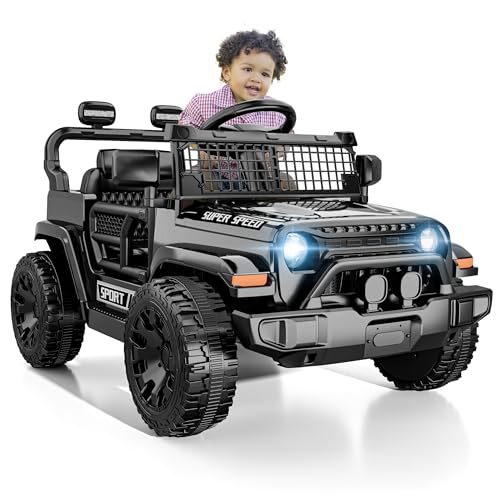
- ✓ Durable, big wheels
- ✓ Dual-control versatility
- ✓ Safe, growing with child
- ✕ Moderate assembly time
- ✕ Limited interior storage
| Powertrain | 12V electric drive system (Kid-powered ride-on with parental remote control) |
| Age/User Range | Suitable for children aged 3-5 years |
| Control Modes | Dual-control: remote parental steering and kid-driven with independent driving transition |
| Wheels/T suspension | Large durable tires with spring suspension for all-terrain outdoor use |
| Features | LED headlights, built-in music player for entertainment |
| Assembly/Durability | Easy assembly design with durable construction and long-lasting battery life |
You’re trying to wrangle a wiggly, curious driver who wants to explore every bump in the yard. The TRINEAR 12V ride-on truck showed up with bold black finish and LED headlights that actually glow in daylight, which helped keep our little one visible on grass and gravel.
I found the remote control handy right away when the driveway felt a touch steep or slick.
The first ride felt surprisingly sturdy. The big wheels and spring suspension soaked up small ruts in the lawn, so there wasn’t that jarring feel you get with cheaper toys.
It’s a good size for ages 3-5, with enough room for a kid to turn the wheel and nudge the pedals without feeling cramped.
Setup was straightforward too. The manual walks you through the minimal assembly, and I appreciated the durable, chunky build that didn’t feel flimsy after a few sessions.
The remote control is intuitive, and you can switch to driver mode as your child gains confidence.
On the safety side, the dual-control modes let you take the reins when needed, which gave me peace of mind during first rides. The music player and LED lights add a little theater to playtime without being over-the-top or distracting.
It’s nice to see a product that balances fun with practicality.
Real-world use showed this toy can handle a mix of surfaces—not just perfectly manicured lawns. If you’ve got a gravel path or a bumpy backyard patch, the TRINEAR keeps moving without feeling like it’ll topple.
For parents, that translates to fewer mid-ride adjustments and more hours of little-driver adventures.
Overall, it’s a solid blend of fun features and durability at a approachable price point. If you’re hunting for a kid-friendly ride-on with growth potential and calm in the control system, this one checks the boxes.
ELEMARA 24V Ride on Car for Kids, 2 Seater XL 20″ Seat Ride

- ✓
- ✓ Sturdy metal build
- ✓ Dual driving modes
- ✓ Longer play time
- ✓
- ✕
- ✕ Charging time lengthy
- ✕ Remote setup can be fiddly
- ✕
| Battery: Capacity | 24V 10Ah |
| Motors | 4 x 45W |
| Ride Speed (self-drive) | 3.7 / 4.5 mph |
| Remote Control Speed Range (parent mode) | 3.1 / 3.7 / 4.5 mph |
| Charging Time | 8–12 hours |
| Estimated Play Time on Full Charge | approximately 90 minutes |
You unlock the ELEMARA 24V Ride on Car and immediately notice the sturdy metal frame gleaming under the porch light. The 20-inch two-seat setup feels roomy right away, and you’ll hear that reassuring thud as you press the power button for the first time.
First ride moment: you switch to parent remote and watch the kids’ faces light up when the car idles with a soft start. It’s quiet enough to hear the little chatter in the back seat, then a gentle push of speed brings that smile you’re hoping for.
The dual 24V 10AH battery setup powers four 45W motors, and you’ll feel the grip as the car climbs a gentle slope without stress. With speeds around 3.7 to 4.5 mph, it nails that toddler-to-early-child thrill without feeling rough.
You’ll appreciate the safety features that show up in real life: the automatic power-off engages if weight or speed gets out of hand, and a brief 3–5 second pause lets you reset without drama. The soft-start function helps prevent sudden jolts on bumpy pavement.
The chassis isn’t just sturdy on paper—it’s tested over hundreds of rough touches, and you’ll notice the extra cushioning from two large springs. When the kids want to jam to music, the built-in radio, USB, MP3, and Bluetooth search keep the vibes rolling while the lights flash like a mini parade.
Charging takes a while, but you’ll get up to 90 minutes of play on a full charge, and the beeps remind you when the battery is running low. Bluetooth pairing is straightforward enough to do while the car sits in the driveway, and the remote range of about 20 meters means you’re still in control if the kids drift toward the lawn.
Overall, the XL two-seater feels like a small family rover: sturdy, feature-rich, and built to handle both backyard joyrides and longer driveway sessions with minimal fuss.
Would I reach for this again when weekends call for outdoor fun? Yes, especially for siblings who want to ride together and parents who want a capable, under-control kid’s car with a soundtrack.
TRINEAR 12V Ride on Toys Parent Remote Control, Pink |

- ✓ Sturdy build, big wheels
- ✓ Dual control for growth
- ✓ Smooth ride with suspension
- ✕ Not a fast toy
- ✕ Assembly takes time
| Powertrain / Battery | 12V rechargeable battery system |
| Control Modes | Dual control: parent remote control plus kid driving mode |
| Wheels / Suspension | Large rugged tires with spring suspension for all-terrain use |
| Intended Age Range | Suitable for ages 3-5 years |
| Features | LED headlights, built-in music player |
| Assembly / Durability | Easy assembly; durable construction designed for repeated outdoor use |
You’ve probably heard that remote-control ride-ons are more for parents than kids. with this TRINEAR 12V ride-on, you’ll see that isn’t true—the kid gets the wheel, the parent gets the remote, and the moment when the LED headlights flash as your child blips down the driveway is pretty darn sweet.
The pink truck feels sturdy out of the box, and the big wheels actually grip uneven pavement. I appreciate the spring suspension; it smooths out small bumps and keeps the ride feeling calm rather than jarring.
The remote control is responsive, and it’s comforting to see the car slow down if your child veers too far into a patch of grass.
Setup is straightforward enough for a weekend project, with clear instructions and hardware that doesn’t require a toolkit full of specialty bits. The assembly time is achievable, and the plastic feels durable enough to handle typical backyard adventures.
On the play side, the music player and LED lights add a layer of delight that kids instantly latch onto. Your child will enjoy the pretend missions and the way the dashboard lights up when you switch modes.
The dual-control mode is a winner here: you can steer from the remote while they practice gentle steering until they’re ready to take the wheel solo.
Real-world use proves it’s versatile—great for backyards, parks, and light gravel paths. It’s not a race car, but the torque is enough for gentle hills, and the battery handled several sessions before recharging.
If safety and growth are priorities, this TRINEAR model ticks those boxes without feeling gadgety.
If you’re balancing price, durability, and kid-friendly features, this one lands well. It supports imagination, outdoor time, and parental peace of mind in one compact package.
What Are the Key Features of the Best Battery Powered Children’s Cars?
The best battery powered children’s cars are characterized by several essential features that enhance safety, usability, and enjoyment.
- Safety Features: Many high-quality children’s battery cars come equipped with safety elements such as seat belts, parental remote controls, and speed limiters. These features ensure that children remain secure while driving and allow parents to maintain control over the vehicle’s speed and direction when necessary.
- Battery Life and Charging Time: The best models typically feature long-lasting batteries that allow for extended playtime, often ranging from 1 to 3 hours on a full charge. Additionally, they have efficient charging systems that enable quick recharge times, making them convenient for frequent use.
- Realistic Design: Many battery powered children’s cars are designed to mimic real vehicles, complete with working headlights, sounds, and sometimes even functional doors. This attention to detail enhances the play experience for children, making it more immersive and enjoyable.
- Speed Options: Quality models often have adjustable speed settings, allowing parents to choose a pace suitable for their child’s age and skill level. This feature not only promotes safety but also helps children develop their driving skills at a comfortable speed.
- Durability and Build Quality: The best battery powered cars are constructed from sturdy materials that can withstand the wear and tear of outdoor play. A robust build ensures that the vehicle can handle bumps, rough surfaces, and the occasional collision without significant damage.
- Weight Limit: Each model has a specified weight limit that indicates the maximum weight it can safely carry. This is essential for ensuring the longevity of the vehicle and preventing mechanical failures due to overloading.
- Variety of Models: There is a wide range of styles and types available, from sports cars to trucks, catering to different preferences and interests. This variety allows children to choose a vehicle that resonates with their personality, enhancing their overall enjoyment.
- User-Friendly Controls: The best battery powered children’s cars feature simple controls that are easy for young children to understand and operate. This can include easy-to-reach pedals and a straightforward steering mechanism that promotes a fun driving experience.
What Safety Features Should Parents Consider?
When choosing the best battery powered children’s cars, parents should consider several essential safety features:
- Seat Belts: A reliable seat belt ensures that children remain securely seated while driving, reducing the risk of falls or injuries during use.
- Speed Limiting Options: Many battery powered cars come with adjustable speed settings, allowing parents to limit the maximum speed to suit their child’s age and driving skills.
- Parental Remote Control: This feature allows parents to take control of the car if necessary, providing an additional layer of safety for younger drivers who may not yet have full control.
- Stability and Traction Control: Cars designed with a wider wheelbase or specific traction features can prevent tipping or sliding, especially on uneven surfaces.
- Emergency Stop Function: An emergency stop button can be crucial in quickly halting the car’s movement to prevent accidents, giving parents peace of mind.
- Durable Construction: High-quality materials and robust design can withstand impacts and rough play, ensuring that the car remains safe and functional over time.
Seat belts are crucial for securing the child in place, providing protection against falls and ensuring that they stay safely inside the car during use. A well-designed seat belt system should be easy for parents to fasten and unfasten, yet secure enough to keep the child safe.
Speed limiting options are an essential feature that allows parents to customize the driving experience based on their child’s maturity level. By setting a maximum speed, parents can ensure that their child can enjoy the thrill of driving while minimizing risks associated with higher speeds.
A parental remote control feature adds an extra layer of safety, enabling parents to take over the vehicle’s operation if needed. This is particularly useful for younger children who may struggle with steering or stopping the car effectively.
Stability and traction control help maintain balance and grip on various surfaces, reducing the likelihood of tipping or skidding. This feature is especially important for outdoor use where terrains can vary significantly.
The emergency stop function is a critical safety measure that allows for immediate halting of the vehicle’s motion, which can prevent potential accidents. This feature should be easily accessible to parents or guardians supervising the child.
Finally, durable construction is vital for the longevity and safety of the toy car. A well-built vehicle can withstand typical wear and tear, reducing the risk of breakage that could lead to safety hazards.
How Do Battery Life and Charging Times Impact Playtime?
- Battery Life: The duration a battery can power a child’s car before needing a recharge is crucial for uninterrupted playtime.
- Charging Times: The amount of time it takes to fully charge the battery affects how often the car can be used.
- Battery Type: Different types of batteries, such as lead-acid or lithium-ion, impact both longevity and performance.
- Motor Efficiency: The efficiency of the motor can determine how effectively the battery’s power is used, impacting both playtime and speed.
- User Experience: Overall user satisfaction is influenced by how battery life and charging times align with children’s play habits.
Battery life indicates how long the car can run on a single charge, affecting the total playtime children can enjoy before needing a break for recharging. Generally, cars with longer battery life allow for extended play sessions, which is essential for keeping children engaged and entertained.
Charging times refer to how long it takes to restore the battery to full capacity after depletion. Shorter charging times mean that children can get back to playing sooner, making the car more convenient and enjoyable for both kids and parents.
Battery types vary in their performance characteristics; for instance, lithium-ion batteries tend to offer longer life and shorter charging times compared to traditional lead-acid batteries. This choice can significantly affect the usability of the car, dictating how often it needs to be charged and how long it can operate.
Motor efficiency plays a critical role in determining how much energy is drawn from the battery during operation. A more efficient motor can extend playtime by using less energy, allowing children to enjoy their ride for longer periods before needing to recharge.
User experience is ultimately shaped by the interplay of battery life and charging times, as both factors can determine how well the car fits into a child’s daily routine. If a car offers quick recharges and long play sessions, it is likely to be more appealing to both children and their parents.
Which Brands Are Renowned for Their Battery Powered Children’s Cars?
Several brands are well-known for producing high-quality battery-powered children’s cars:
- Power Wheels: This brand is synonymous with battery-powered ride-on toys and is known for its wide variety of models, including cars, trucks, and ATVs.
- Little Tikes: Little Tikes offers a range of battery-powered vehicles that emphasize safety and durability, making them ideal for younger children.
- Mickey Mouse Cars: Featuring popular Disney characters, these themed cars are designed to appeal to young fans while providing a fun driving experience.
- Razor: Razor is known for its stylish electric scooters and ride-on cars, combining modern design with performance for older kids.
- Kid Trax: Kid Trax specializes in realistic battery-powered vehicles that often include fun features like working lights and sounds, enhancing the play experience.
Power Wheels: Power Wheels, a division of Fisher-Price, has been in the market for decades, offering a broad selection of vehicles that cater to different age groups and preferences. Their models typically feature sturdy construction, easy-to-use controls, and safety features such as speed limiters and parental controls, making them a top choice for parents.
Little Tikes: Little Tikes designs its products with younger children in mind, focusing on safety and accessibility. Their battery-powered vehicles often include simple push-button controls and are built to withstand rough play, making them reliable options for toddlers and preschoolers.
Mickey Mouse Cars: These vehicles capitalize on the popularity of Disney characters, making them particularly appealing to young children. Besides their charming designs, they are usually equipped with features that enhance imaginative play, such as sound effects and character-themed decorations.
Razor: Known for their innovative designs, Razor’s battery-powered children’s cars and scooters often cater to older kids looking for excitement and speed. They are built with performance in mind, providing a more thrilling ride while still ensuring safety through sturdy builds and reliable brakes.
Kid Trax: Kid Trax offers an impressive selection of ride-on vehicles that often resemble real cars and trucks, providing an authentic driving experience for children. Many models come with interactive features such as working headlights, sounds, and MP3 connectivity, making them more engaging and enjoyable for kids during playtime.
What Sets These Brands Apart In Quality and Durability?
When evaluating the best battery-powered children’s cars, certain brands stand out due to their commitment to quality and durability. Here are key factors that differentiate them:
-
Material Quality: Leading brands often utilize high-quality plastics and reinforced metals, ensuring that the cars can withstand rough play and varying weather conditions.
-
Battery Life and Performance: Top models feature advanced batteries that provide extended playtime while being quick to recharge. This means kids can enjoy longer rides without frequent interruptions.
-
Safety Features: Reputable brands prioritize safety, incorporating elements such as parental remote control, seat belts, and adjustable speed settings, allowing for safer play.
-
Design and Realism: Preferred choices often include designs inspired by real cars, complete with functional features like headlights, sound effects, and working doors, enhancing the play experience.
-
Warranty and Customer Service: Brands that offer comprehensive warranties and responsive customer service indicate confidence in their products, allowing parents peace of mind regarding their purchase.
These distinguishing factors contribute significantly to the overall performance, safety, and enjoyment of battery-powered children’s cars.
What Do Customer Reviews Reveal About Their Experiences?
Customer reviews provide essential insights into the experiences of buyers regarding products like battery-powered children’s cars.
- Performance: Customers often discuss how well the car performs in terms of speed, battery life, and ease of operation. A car that accelerates smoothly and has a long-lasting battery tends to receive positive feedback, while those that struggle with performance may garner complaints about their usability.
- Durability: Reviews frequently highlight the build quality of the car. Parents appreciate models that withstand rough play and outdoor conditions without significant wear and tear, while cheaper, less durable options may lead to disappointment and negative experiences.
- Safety Features: Many reviews focus on the safety aspects of the cars, such as seat belts, speed limits, and sturdy construction. Cars equipped with comprehensive safety features tend to be favored by parents, as they provide peace of mind during playtime.
- Ease of Assembly: Customers often mention how easy or difficult it is to assemble the car. A straightforward assembly process with clear instructions is typically praised, whereas complicated setups can lead to frustration and negative reviews.
- Value for Money: Buyers commonly evaluate whether the car’s features justify its price. Reviews that point out good value often mention a combination of performance, durability, and safety, whereas products perceived as overpriced may receive criticism despite their quality.
- Customer Service: Feedback regarding the manufacturer’s customer service can also be a significant aspect of reviews. Positive interactions, such as responsive support for issues, can enhance the overall experience, while poor customer service can lead to dissatisfaction even if the product is good.
What Age Range Do Battery Powered Children’s Cars Cater To?
Battery powered children’s cars typically cater to a specific age range that ensures safety and enjoyment for young drivers.
- 1-2 years: These cars are designed for toddlers and often feature low speeds, simple controls, and safety features like seatbelts and parental remote controls.
- 3-5 years: Cars for this age group usually have more powerful motors and can reach higher speeds, with options for steering and acceleration that allow children to gain more independence while driving.
- 6-8 years: At this stage, battery powered cars can accommodate larger children and may include advanced features such as better battery life, more realistic designs, and the ability to drive on varied terrains.
- 9 years and up: For older children, there are models that mimic real vehicles more closely, offering enhanced performance and features, often appealing to kids who enjoy more complex driving experiences.
For 1-2 year olds, the cars are often designed to be safe and stable, with features like wider bases and lower speeds to prevent tipping over. These cars usually have a maximum speed of around 2-3 mph and come with parental control options for added safety.
For ages 3-5, the cars begin to offer features that encourage exploration and play, often including built-in sounds and lights, as well as designs that mimic popular real-life vehicles. This age group can typically handle speeds of 3-5 mph, allowing for a more exciting driving experience.
From ages 6-8, children’s cars often begin to include more sophisticated features such as dual motors for better traction and speed capabilities that can reach up to 6-8 mph, making these cars suitable for outdoor play on grass or gravel. The design and build quality also improve, offering more durable materials and larger body sizes.
Finally, for children aged 9 years and up, the battery powered cars can look and function like real cars or off-road vehicles, often including features such as Bluetooth connectivity and the ability to support heavier weight limits. These models can reach speeds of 8-12 mph, providing a thrilling experience for older children, while still ensuring safety through robust construction and reliable braking systems.
Which Models Are Suitable for Younger Kids?
The best battery powered children’s cars for younger kids offer safety, ease of use, and engaging features.
- Power Wheels Jeep Wrangler: This model is designed for ages 3-7 and features a realistic design that mimics a real Jeep.
- Little Tikes Cozy Coupe: Perfect for toddlers, this classic ride-on car encourages imaginative play while being easy to drive.
- Razor Crazy Cart Shift: This option is for slightly older kids (ages 8 and up) but has a lower speed mode suitable for younger beginners.
- Kid Trax Dodge Viper: A sleek sports car designed for kids aged 3-7, it features easy steering and a maximum speed of 5 mph.
- Fisher-Price Power Wheels Dune Racer: This model is great for ages 3-7, featuring a sturdy design and the ability to drive on various terrains.
The Power Wheels Jeep Wrangler is a popular choice for its durability and off-road capabilities, making it suitable for adventurous young drivers. It includes features like a working radio and seat belts for added safety, giving parents peace of mind.
Little Tikes Cozy Coupe stands out as a timeless classic that encourages imaginative play. Its design allows for easy entry and exit for toddlers, promoting independence while being stable and safe for younger children.
The Razor Crazy Cart Shift combines fun and safety with its adjustable speed settings, making it versatile for different skill levels. While it is intended for older kids, the lower speed mode allows younger kids to enjoy the ride with supervision.
Kid Trax Dodge Viper is designed to mimic a real sports car experience, providing excitement for young kids. It offers easy controls and a spacious seating arrangement, ensuring comfort for little drivers while maintaining safety features.
Fisher-Price Power Wheels Dune Racer is perfect for kids who enjoy outdoor exploration. Its rugged design can handle various terrains, and it has a spacious seat with safety belts, making it a reliable choice for parents looking for adventure-ready vehicles for their children.
What Are the Best Options for Older Children?
- Mercedes-Benz G63 AMG Electric Ride On Car: This luxury ride-on car offers realistic details and a powerful battery for extended playtime. With features like working headlights, a horn, and a remote control for parents, it combines fun with safety.
- Power Wheels Dune Racer: Designed for off-road adventures, this vehicle has a sturdy frame and can handle rough terrains. Its spacious seating accommodates two riders, making it perfect for siblings or friends to enjoy together.
- Rollplay 12V BMW i8: This sleek sports car features an impressive design and can reach speeds of up to 5 mph. It includes working doors, an MP3 player input, and a parent-controlled speed setting, ensuring a safe yet thrilling driving experience.
- Best Choice Products 12V Ride On Car Truck: This truck is equipped with a realistic design and extra features like an adjustable seatbelt and a functional tailgate. It also supports Bluetooth connectivity, allowing children to play their favorite music while driving.
- Kid Trax Dodge Viper: With a sports car aesthetic, this model has a 12V battery that allows for quick acceleration and a stylish design that appeals to older kids. It features a working radio and a reverse function, enhancing the driving experience.
How Do Prices Vary for Battery Powered Children’s Cars?
- Brand: Established brands tend to charge more due to their reputation and reliability.
- Features: Additional features such as remote control, safety belts, or realistic sounds can increase the price.
- Size: Larger cars designed for older children or heavier use generally cost more than smaller models.
- Quality of Materials: Cars made from durable, high-quality materials will typically be priced higher than those made from cheaper plastics.
- Battery Life: Models with longer battery life and faster charging times may come at a premium.
Established brands like Power Wheels or Peg Perego often price their cars higher due to their proven track records in safety and performance, attracting parents willing to invest more for quality and durability.
Features can also significantly influence the cost; for instance, cars equipped with parental remote controls or advanced sound systems can enhance the play experience but will also raise the price tag.
When considering size, larger cars that can accommodate older children will generally have higher prices, reflecting the need for more robust construction and larger battery systems.
The quality of materials used in construction plays a crucial role in pricing; premium models made from reinforced plastics or metal components offer better longevity and safety, justifying a higher cost.
Battery life is another critical factor; cars that offer extended playtime or quicker charging capabilities often come at a higher price, appealing to parents looking for convenience and fewer interruptions during playtime.
What Features Influence Pricing?
Several features significantly influence the pricing of battery-powered children’s cars:
- Battery Capacity: The capacity of the battery affects how long the car can run on a single charge. Higher capacity batteries provide longer playtime, which is often reflected in a higher price due to the increased performance and durability.
- Design and Build Quality: The materials used in the construction of the car, including the frame and body, can impact the price. Cars made with high-quality, durable materials are often more expensive, as they are built to withstand rough play and provide better safety for children.
- Speed and Performance: The speed capabilities of a battery-powered car can influence its cost. Models that offer adjustable speed settings and better acceleration are typically priced higher, catering to parents looking for a more thrilling experience for their children.
- Size and Weight Limit: The size of the car and its weight capacity play a role in pricing. Larger cars that can accommodate bigger children or offer more features tend to be more expensive, appealing to a wider age range and ensuring longer usability.
- Additional Features: Cars equipped with extra features such as remote control, Bluetooth speakers, LED lights, and realistic sounds tend to be priced higher. These added functionalities enhance the play experience, making them more desirable for children and parents alike.
- Brand Reputation: Established brands with a reputation for safety and quality often command higher prices. Parents are usually willing to invest more in well-known brands that offer reliable products and good customer service.
Where Can Parents Find Reliable Deals?
Parents looking for reliable deals on the best battery powered children’s cars can explore various avenues:
- Online Retailers: Websites like Amazon, Walmart, and Target often have competitive prices and regular sales on battery powered children’s cars. These platforms also provide customer reviews and ratings, helping parents make informed decisions based on real user experiences.
- Deal Aggregator Websites: Sites such as Honey or Rakuten compile deals from various retailers, allowing parents to find the best price available for specific models. These platforms may also offer cashback options and exclusive discounts, making them a great resource for savvy shoppers.
- Manufacturer Websites: Checking the official websites of brands that manufacture battery powered children’s cars can lead to exclusive offers or promotions. Brands often run seasonal sales or special discounts that may not be advertised on third-party sites.
- Social Media Promotions: Following brands and retailers on platforms like Facebook and Instagram can alert parents to flash sales or promotional codes. Many companies use social media to engage customers and announce limited-time discounts that can lead to significant savings.
- Local Classifieds and Marketplace Apps: Platforms like Facebook Marketplace, OfferUp, and Craigslist allow parents to find gently used battery powered children’s cars at reduced prices. This option not only saves money but also promotes recycling and sustainable consumer habits.
- Seasonal Sales Events: Events like Black Friday, Cyber Monday, and back-to-school sales are prime opportunities to find discounts on children’s cars. Retailers often mark down prices significantly during these events, making it an ideal time for parents to purchase items at a lower cost.
What Benefits Do Battery Powered Children’s Cars Offer?
Battery powered children’s cars offer numerous advantages for young drivers.
- Safety Features: Many battery powered children’s cars come equipped with safety features such as seat belts, parental controls, and speed limit settings. These features ensure that kids can enjoy their driving experience while minimizing the risk of accidents.
- Environmental Impact: Unlike gas-powered vehicles, battery powered cars are more environmentally friendly as they produce zero emissions during operation. This makes them a better choice for families who are conscious about reducing their carbon footprint.
- Realistic Driving Experience: These cars often mimic real vehicles, complete with working headlights, sound effects, and steering capabilities. This realism enhances imaginative play, allowing children to engage in role-playing scenarios that can aid in their development.
- Convenience of Use: Battery powered children’s cars are generally easy to operate, requiring minimal adult supervision. Most models can be charged at home, allowing for quick and hassle-free readiness for playtime.
- Physical Development: Driving these cars can help improve children’s motor skills and coordination. As they steer, accelerate, and brake, they learn to control their movements and gain confidence in their abilities.
- Social Interaction: Driving in battery powered cars can encourage social interaction among children. They can play together, race, or engage in group activities, fostering communication skills and teamwork.
In What Ways Do They Encourage Outdoor Play?
Battery-powered children’s cars encourage outdoor play through various engaging features and benefits.
- Realistic Driving Experience: These cars often mimic real vehicles with functional pedals, steering wheels, and sometimes even sound effects, offering children an immersive driving experience. This realism not only captivates kids but also encourages them to spend more time outdoors as they drive around and explore their surroundings.
- Variety of Designs: Available in numerous styles, from classic cars to popular character-themed designs, these vehicles appeal to a wide range of interests among children. The diverse options allow kids to choose their favorite, making outdoor play more enticing and personalized.
- Social Interaction: Battery-powered cars can promote social play, as children often enjoy driving alongside their friends or siblings. This interaction fosters teamwork, sharing, and communication skills, as they navigate together and create shared adventures in their outdoor activities.
- Safe Play Environment: Designed with safety features like low speed limits and sturdy construction, these cars allow children to explore the outdoors with minimal risk. Parents can feel assured that their kids are engaging in safe play, encouraging them to spend more time outside.
- Physical Activity: While these cars are powered, they still require some physical effort from children, such as getting in and out of the vehicle or steering. This combination of motor skills and physical activity promotes overall health and development while still keeping play fun and exciting.
How Can Driving These Cars Help with Skill Development?
Driving battery-powered children’s cars offers multiple developmental benefits that enhance various skills in young learners.
-
Motor Skills: Steering a car helps refine hand-eye coordination and fine motor skills. Children learn to balance and control the vehicle, which translates to improved dexterity.
-
Spatial Awareness: Navigating around obstacles and reversing instills a sense of spatial awareness. Children develop the ability to judge distances and understand their surroundings better.
-
Decision-Making: Operating a car requires quick thinking and decision-making. Whether it’s choosing where to go or when to stop, kids learn to assess situations and make safe choices.
-
Social Skills: Playing with peers in an outdoor setting encourages collaboration, sharing, and communication. These interactions foster teamwork and negotiation skills as they navigate play scenarios together.
-
Confidence Building: Mastering the mechanics of the car boosts a child’s self-esteem. As they practice and improve, their confidence in driving and exploring their environment grows.
Overall, battery-powered children’s cars provide an enjoyable way for kids to develop crucial life skills while having fun outdoors.
What Customization Options Are Available for Battery Powered Children’s Cars?
There are several customization options available for battery powered children’s cars that enhance their appeal and functionality:
- Color Options: Many manufacturers offer a variety of colors for their battery powered cars, allowing children to choose their favorite shades or even match the car to a specific theme or character.
- Sound Effects: Some models come with built-in sound systems that can play music or sound effects, adding an extra layer of fun and excitement for children as they drive.
- Stickers and Decals: Customizable stickers and decals can often be added to the cars to personalize them further, enabling children to express their creativity and individuality.
- Remote Control Features: Certain battery powered cars include a remote control feature that allows parents to control the vehicle’s movements, providing an added layer of safety and ensuring younger children can enjoy driving with supervision.
- Battery Size and Performance: Options for different battery sizes can affect the speed and duration of playtime, allowing parents to select a model that best suits their child’s age and experience level.
- Additional Accessories: Many battery powered children’s cars can be enhanced with accessories such as seat belts, storage compartments, or even safety features like lights and horns, improving both functionality and safety.
Each of these customization options allows for a more personalized experience, making battery powered children’s cars not just a mode of transportation, but also a unique toy that reflects a child’s interests and preferences.
Related Post: