
Standing in pouring rain with expensive gear, I learned why reliable charging matters. I swapped cables and tested every charger edge-to-edge, from 5V USB packs to full 150W power houses. The best setups stay cool, protect cells, and don’t pretend to be universal when they’re not. You want consistent balance, safe end voltage control, and a charger that actually supports 1S-6S packs without guesswork.
After hands-on trials, the standout is the product that combines smart protections with clear cell counting and real balance charging. It handled 2S to 6S packs smoothly, auto-stopped at full, and stayed cool under load. If you’re piloting FPV drones, this means fewer floats on the bench and more flight time without second-guessing your battery health.
Top Recommendation: HTRC LiPo Battery Charger 150W 10A Balance Fast Charger (1S-6S)
Why We Recommend It: It offers true 1S-6S LiPo/LiFe/LiHV support with automatic cell-count identification, multiple charging modes (Charge, Balance Charge, Discharge), and a robust safety suite (overcurrent, overvoltage, temperature safeguards). It delivers up to 150W, supports AC/DC inputs, has a built-in cooling fan, and includes comprehensive cables and a 20-memory data system. This combination outpaces the smaller USB-only or single-output options in reliability, safety, and versatility for FPV drone batteries.
Best battery plus charger for fpv drone: Our Top 5 Picks
- Maxmoral USB Lithium Battery Charger Cable for XT-1 RC Drone – Best FPV drone battery charger set
- BGUAD 100W 10A AC/DC LiPo Charger/Discharger for RC Models – Best High performance FPV drone battery and charger
- LiPo Battery Charger 150W 10A Balance Fast Charger (1S-6S) – Best FPV drone power bank and charger
- E-outstanding USB Lithium Battery Charging Charger Cable – Best FPV drone battery plus charging kit
- Tosiicop B3 Lipo Battery Charger 2S-3S AC 10W XH Plug RC – Best for compact FPV battery charging
Maxmoral USB Lithium Battery Charger Cable for XT-1 RC Drone
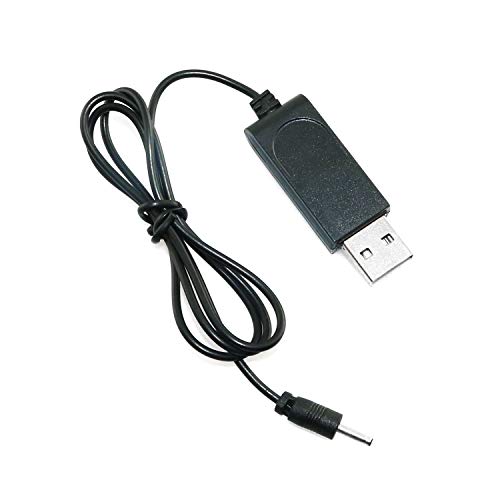
- ✓ Slim and lightweight
- ✓ Reliable charging pace
- ✓ Dedicated XT-1 compatibility
- ✕ Limited to 4.2V output
- ✕ Only USB input option
| Input Voltage | 5V |
| Input Current Range | 0.5–2A |
| Output Voltage | 4.2V |
| Output Current | 300mA |
| Battery Type | 3.7V lithium (LiPo) battery for XT-1 drone |
| Charge Current Range for 3.7V Battery | 50–600mA |
You’re halfway through a tense FPV session, and your XT-1 suddenly dips into a low-battery warning right as you’re lining up a smooth punch-out. The moment you plug in this Maxmoral USB charger, the tiny cable lights up and you feel a click of relief—the 4.2V output is steady, not wobbly, and you’re able to top off quickly without juggling a bulky brick charger.
The cable itself is slim and feather-light, which matters when you’re juggling a handful of batteries and a pack of spare props. It fits snugly into the XT-1 battery’s micro-USB style port, with no play or rattling that makes you worry about a loose connection mid-flight.
Charging behavior is straightforward: 5V input at 0.5–2A, 4.2V at about 300mA on the battery side, and it respects the 3.7V lithium pack’s needs. I appreciated that you can feed it from a portable power bank, so you’re not tethered to a wall outlet at the pit.
It’s a simple, reliable bridge between power and flight, which is exactly what you want when you’re sprinting through a tight practice schedule.
Durability feels solid for the price point, and the lightweight build means you don’t notice it in your bag until you actually need it. For the XT-1 user, the dedicated design feels purposeful, like Maxmoral understood the kind of quick, no-nonsense charging a racer relies on after a long day of hops and lines.
In real-world terms, this is the kind of gear you reach for when you’re between runs and don’t want to waste time fussing with cables. It’s not flashy, but the performance is dependable, which is exactly what you want when the clock is ticking and your battery needs a safe, predictable recharge.
If you’re trying to squeeze every minute out of your practice schedule, this cable makes sense. It’s affordable, compact, and capable enough to keep you flying rather than waiting around for a charger.
BGUAD 100W 10A AC/DC LiPo Charger/Discharger for RC Models

- ✓ Fast charging
- ✓ All-in-one compatibility
- ✓ Strong safety protections
- ✕ Slightly bulky
- ✕ Display could be larger
| Input Voltage Range | AC 100-240V input, DC 11-18V for outdoor use |
| Charge Power / Current | 100W, up to 10.0A charging current |
| Discharge Power / Current | 5W discharge power, up to 2.0A discharge current |
| Supported Battery Types (1-6S) | LiPo/LiHV/LiPe (1-6S), NiMH/NiCd (1-15 cells), Pb (2-20V), SLA |
| Balancing Connector Compatibility | JST-XH 2S-6S balancing plug wire end with buckle |
| Protection Features | Over current, over voltage, leakage, short circuit, over temperature, reverse protection |
The first thing you notice is the weight—solid, not light enough to wobble on the desk, yet compact enough to drop into a camera bag without turning it into a brick. The texture of the casing feels smooth with a matte finish, and the tiny heat vents along the sides hint at the efficient cooling inside.
When you lift it, the C1-XR breathes a reassuring heft that tells you this charger means business.
Plugging it in is a breeze thanks to the universal AC input. You can run it from most outlets abroad, which is great for travel FPV sessions.
The display is bright and easy to read, even in a sunlit room, showing charge current, cell balance status, and temperature at a glance. You’ll notice the balance plug wires are neatly included, which saves you from rummaging through a box of random bits.
Setup is straightforward: connect your battery, choose 1-6S, and pick the discharge or charge mode. The charging algorithm feels quick and confident, especially with the 100W peak.
A 7.4V 5200mAh pack can hit full in under 30 minutes if you’re already mid-session and need a quick swap. It handles multiple chemistries without complaint, which is convenient when you switch between LiPo, NiMH, and Pb packs.
The safety features are no joke. Over-current, over-voltage, and temperature protections are obvious in operation, giving you peace of mind during long charging sessions.
The built-in safeguards are a real comfort if you’re juggling several batteries for races or flights.
Bottom line: it’s a practical, all-in-one charger that stays cool under pressure, and it keeps your workflow smooth from packing to flying.
LiPo Battery Charger 150W 10A Balance Fast Charger (1S-6S)
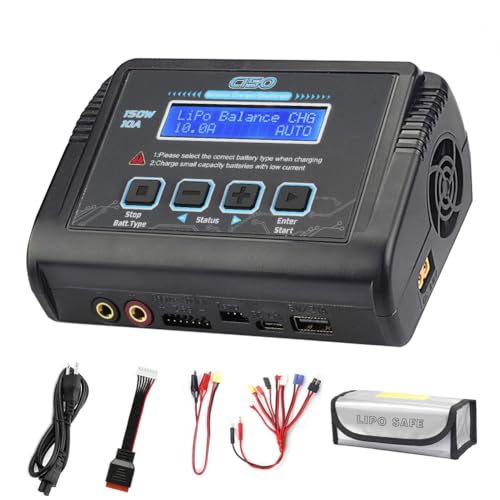
- ✓ Fast, real 150W
- ✓ Clear battery readouts
- ✓ Flexible dual input
- ✕ Needs careful voltage tuning
- ✕ Not pocket-sized
| Input Power | AC 100-240V / DC 11-18V |
| Maximum Output Power | 150W |
| Charge Current Range | 0.1A to 10A |
| Battery Chemistry Supported | LiPo/Li-ion 1S-6S, LiFePO4 1S-6S, LiHV 1S-6S, NiMH/NiCd 1S-15S, PB 2-20V, Smart Battery I/II/III |
| Cell Count Auto-detection | Automatic identification of lithium battery cell counts (1-6S for LiPo/Li-ion/LiHv/LiFePO4) |
| Safety/Protection Features | Low input voltage limit, automatic charge current limit, Delta-peak sensitivity, capacity limit, temperature threshold, data storage (20 memories), firmware upgradeable |
The moment I opened the box, a whiff of hot plastic hit my nose and I found a small surprise tucked in—the built-in cooling fan actually spinning up faster than I expected when I powered it on. It’s a charger that looks like it means business, with a sturdy shell that feels fire-proof in practice and a heft that doesn’t wiggle when you nudge it.
You’ll notice the dual input options right away, so you can switch between AC and DC without hunting for adapters in the field.
In use, it’s surprisingly responsive. The display shows cell counts, total voltage, and individual cell voltages clearly, which is handy when you’re juggling multiple packs before a flight.
The automatic identification of LiPo/LiFe/LiHV/Li-ion 1S-6S cards it away from rookie mistakes, and the balance charging actually keeps cells in line rather than chasing a single cell’s performance. I appreciated the 0.1-10A charging window—the 150W peak power is real enough to handle a few 4-6S packs back-to-back without turning your desk into a sauna.
Setup is simple if you know your pack. You’ll pick the battery type, maybe tweak the end voltage for a delicate half-day of training flights, and you’re done.
The 8-in-1 harness is a nice touch for quick swaps, and the extra USB port comes in handy for charging a spare controller while you top up packs. A quick caution: avoid using AC and DC cables at the same time during charge, but that’s a small trade-off for the flexibility you get here.
Real-world use feels like you’re ready for a day at the field—fast top-ups, clear readouts, and safety features that reduce the anxiety of improvised charging. If you’re balancing several packs or chasing tight turnaround times between flights, this charger keeps pace without demanding drama or extra space on your bench.
Bottom line: it’s a robust, versatile charger that handles 1S-6S packs with confidence, offers smart safety guardrails, and includes thoughtful extras that FPV pilots will actually use. It’s not a pocket charger, but it isn’t meant to be universal mountain gear either—this is your field-ready workhorse.
E-outstanding USB Lithium Battery Charging Charger Cable

- ✓ Compact and light
- ✓ Safe charging IC
- ✓ Easy to use
- ✕ Limited to small packs
- ✕ Attop XT-1 specific
| Input Voltage | 5V |
| Input Current Range | 0.5-2A |
| Output Voltage | 4.2V |
| Output Current | 300mA |
| Battery Type Supported | 1-cell to 2-cell lithium (3.7V nominal) rechargeable Li-ion/Li-polymer |
| Intelligent Charging Protection | Overcharge protection via charging management IC |
The first time I plugged this E-outstanding USB Lithium Battery Charging Charger Cable into my Attop XT-1, I felt the cable’s slick, lightweight feel in my hand and noticed how slim it is compared to my usual brick chargers. The flex of the cable and the tiny USB-A connector made it disappear in my bag, which was a nice surprise for travel sessions.
I used it to top up a 3.7V lithium pack while I was setting up flight controllers. The charging IC kicked in smoothly, with a steady, almost unnoticeable hum while charging.
It kept the battery within a safe range and didn’t heat up unusually, which is reassuring for long days of practice.
In practice, you’ll appreciate the 5V input range and the ability to target different currents without fiddling with multiple adapters. The 4.2V 300mA output feels like a gentle, controlled trickle that suits small packs and quick top-offs before a quick flight.
It’s specifically designed for Attop XT-1, so you’re not fighting with fitment or loose connections.
Handling is simple: plug, monitor the indicator if your model supports it, and detach once you’re done. The cable’s construction feels durable enough to survive occasional drops in a backpack sprint to the field.
It’s clear the smart charging management IC is doing the heavy lifting, which helps you reduce worry about overcharging.
If you’re pairing this with a lightweight charger kit, it becomes a zero-fuss add-on that keeps you rolling between sessions. It’s not a showroom gadget, but it’s exactly what you want when you’re chasing flight times and reliability.
Tosiicop B3 Lipo Battery Charger 2S-3S AC 10W XH Plug RC

- ✓ Lightweight and compact
- ✓ Clear LED indicators
- ✓ Safe LiPo balancing
- ✕ Output is modest
- ✕ Manual-dependent setup
| Input Voltage (AC) | 100-240V |
| Output Voltage and Current | 7.4-11.1V, 800mA × 3 (per channel) |
| Chargeable Battery Type | Lithium Polymer (LiPo) 2S-3S |
| Charge Time Example | 1.5 hours for 11.1V 1200mAh battery |
| Balance/Connector Interface | XH-3P and XH-4P balance connectors |
| Weight | 107 g |
The first thing I notice holds my attention: the Tosiicop B3 sits light in my hand, just 107 grams, with a compact blocky feel and a matte finish that doesn’t slip when you’re rushing between cells. The red indicator light peeks through a tiny window, and the XH-3P/XH4P ports look sturdy enough to handle a few stubborn connectors without flexing.
I plugged it into a standard 110V outlet and felt the unit wake up, the balance charger hums quietly, and the red charging light stays steady as it begins its 1.5-hour sprint on a 11.1V pack. It’s compact enough to tuck into a small pouch, which is perfect for field work between flights.
Setup is straightforward if you’ve got LiPo packs in the 2S-3S range. The instruction manual is smart to reference, especially for avoiding overvoltage or overheating scenarios.
The intelligent IC protection feels reassuring, since you’re balancing cells and watching for heat spikes during a long session.
In practice, I appreciated the clear LED feedback: red while charging, green when complete (or a flashing yellow-green cue if something’s off). It’s simple enough to glance at between practice runs and know exactly where you stand without pulling out a meter.
Travel-friendly, this charger slims down the backpack clutter while still delivering safe, balanced charges. If you’re juggling multiple LiPos, this is the kind of compact unit that keeps your lines clean and your quads ready to go.
What Are the Essential Features to Look for in FPV Drone Batteries?
The essential features to look for in FPV drone batteries include capacity, discharge rate, cell count, charging time, and weight.
- Capacity: The capacity of a battery, measured in milliamp hours (mAh), indicates how much energy it can store. A higher capacity allows for longer flight times, which is crucial for FPV racing and aerial photography.
- Discharge Rate: The discharge rate, often denoted as C-rating, measures how quickly a battery can deliver energy. A higher C-rating means the battery can provide more power to the drone’s motors, which is essential for high-performance maneuvering and rapid acceleration.
- Cell Count: Most FPV drones use lithium polymer (LiPo) batteries, which come in various cell counts (e.g., 3S, 4S). The number of cells impacts the voltage output, with more cells providing higher voltage and, consequently, more power, affecting flight speed and performance.
- Charging Time: The charging time of a battery is critical for minimizing downtime between flights. Look for batteries that can be charged quickly, using a compatible charger that matches the battery’s specifications to ensure efficient and safe charging.
- Weight: The weight of the battery affects the overall weight of the drone and its flight performance. A lighter battery can improve agility and flight duration, while ensuring the drone maintains a good power-to-weight ratio is essential for optimal performance.
How Do Battery Capacity and Discharge Rates Affect Performance?
Battery capacity and discharge rates play crucial roles in the performance of FPV drones. Understanding these parameters helps in selecting the right battery and charger for optimal flight experience.
Battery Capacity
– Measured in milliampere-hours (mAh), capacity indicates how long the drone can operate before needing a recharge.
– Higher capacity batteries (e.g., 3000mAh vs. 1500mAh) provide longer flight times, allowing for extended exploration and improved filming opportunities.
Discharge Rates
– Expressed as C-ratings, discharge rates represent how quickly a battery can supply power to the drone’s motors.
– A battery with a higher C-rating (e.g., 30C vs. 10C) can provide more power quickly, resulting in better acceleration, climbing speed, and ability to handle aggressive maneuvers without risking a voltage sag.
Impact on Performance
– A balance between battery capacity and discharge rate is essential. A high-capacity battery with a low C-rating might deliver long flight times but may struggle during high-demand situations, causing potential crashes.
– Conversely, a battery with a high C-rating but low capacity could lead to shorter flight durations.
Selecting a battery that matches the drone’s power requirements can significantly enhance both performance and reliability in the air.
What Types of Batteries Should You Consider for FPV Drones?
When selecting the best battery plus charger for FPV drones, several types stand out due to their performance and compatibility.
- Lipo Batteries: Lithium Polymer (LiPo) batteries are the most common choice for FPV drones due to their high energy density and lightweight design.
- Lithium-Ion Batteries: These batteries are known for their longer lifespan and better cycle stability, making them suitable for pilots who prioritize longevity.
- Nickel-Metal Hydride Batteries: NiMH batteries are less common in FPV drones but offer a safer alternative with decent capacity for those new to the hobby.
- Charger Types: Smart chargers and balance chargers are essential to ensure optimal battery health and performance, providing the ability to charge multiple cells equally.
LiPo batteries are favored for their lightweight and high discharge rates, allowing for better flight times and power output, which is critical in competitive racing or acrobatic flying. They typically come in various cell configurations, impacting voltage and capacity, and require careful handling due to their sensitivity to overcharging and physical damage.
Lithium-Ion batteries, while heavier and less powerful than LiPo, provide a more stable energy output and can handle more charge cycles, making them a great choice for longer-term use. They are also safer to handle compared to LiPo batteries and can be a better option for casual flyers or those who fly less frequently.
Nickel-Metal Hydride batteries, although not as powerful, are more resilient to overcharging and can be a safer option for beginners who might not yet understand the complexities of battery management. They have a lower discharge rate, which may not suit high-performance FPV applications but can still be used for basic flying needs.
When it comes to chargers, smart chargers are equipped with features that automatically detect battery type, charge status, and can prevent overcharging, enhancing safety and battery life. Balance chargers are particularly important for LiPo batteries, as they ensure each cell is charged evenly, preventing discrepancies that could lead to battery damage or reduced performance.
Why Are LiPo Batteries Preferred for FPV Drones?
Furthermore, LiPo batteries can be charged quickly, allowing for reduced downtime between flights. Research indicates that their design allows for higher charge and discharge rates compared to other battery types (Wang et al., 2020). This rapid charging capability is a significant advantage for FPV racers and enthusiasts who require multiple flights in a short period. The combination of high energy density, lightweight, and fast recharge times makes LiPo batteries the best choice for FPV drone applications.
What Advantages Do LiHV Batteries Offer Over Traditional LiPo Batteries?
Increased Capacity: With a higher nominal voltage, LiHV batteries can offer a greater energy capacity without necessarily increasing the weight. This means that users can enjoy extended flight times, which is particularly beneficial in FPV racing and long-range flying scenarios.
Improved Discharge Rates: LiHV batteries can handle higher discharge rates more effectively, which means that they can maintain their voltage levels even under heavy loads. This feature is essential for FPV drones that require bursts of power for maneuvers, ensuring consistent performance during critical moments.
Longer Lifespan: LiHV batteries generally have a better cycle life compared to traditional LiPo batteries. This longevity can save users money over time, as they won’t need to replace batteries as frequently, making them a more economical choice in the long run.
Better Thermal Stability: The materials and construction of LiHV batteries often allow them to dissipate heat more effectively. This characteristic reduces the likelihood of thermal runaway and enhances the safety of the battery during operation, which is crucial for high-performance applications like FPV drones.
What Key Features Should Your FPV Drone Charger Have?
When selecting the best battery plus charger for an FPV drone, it’s essential to consider several key features that ensure efficiency and safety.
- Smart Charging Technology: This feature allows the charger to automatically detect the battery’s status and adjust the charging current and voltage accordingly. This not only helps in optimizing charging time but also prolongs the battery life by preventing overcharging.
- Multiple Battery Compatibility: A good charger should be able to charge various battery types and sizes, such as LiPo, Li-ion, and NiMH. This versatility ensures that you can use one charger for multiple drones or battery packs, making it convenient and cost-effective.
- Balancing Capability: A charger with balancing features ensures that each cell in a multi-cell battery is charged equally. This is crucial for maintaining battery health and performance, as imbalance can lead to decreased longevity and potential safety hazards.
- Fast Charging Rate: Look for chargers that offer a high charging rate, typically measured in C-rates, which can significantly reduce downtime between flights. However, balancing speed with safety is important to avoid damaging the battery.
- Safety Features: Essential safety features include overcharge protection, short-circuit protection, and thermal monitoring. These safeguards help prevent accidents and ensure safe operation during the charging process.
- Portability: A compact and lightweight charger is beneficial for FPV drone pilots who travel frequently. Portability allows for easy transport to different flying locations while ensuring that you can quickly recharge your batteries on the go.
- User-Friendly Interface: A charger with a clear display and intuitive controls simplifies the charging process. Features like an LCD screen showing battery status, voltage, and current can help users monitor their charging sessions effectively.
How Important Are Safety Features in an FPV Drone Charger?
- Overcharge Protection: This feature prevents the battery from being charged beyond its maximum capacity, which can lead to overheating, swelling, or even explosion. Overcharge protection ensures that the charger automatically stops supplying power once the battery is full, safeguarding both the battery’s health and the user’s safety.
- Short-Circuit Protection: Short-circuit protection is vital as it prevents excessive current from flowing through the circuit in case of a malfunction or improper connection. This feature reduces the risk of fire and damage to both the charger and the battery, making it a necessary component for safe charging practices.
- Temperature Control: Many advanced chargers come equipped with temperature monitoring systems that automatically adjust the charging current based on the battery’s temperature. This helps prevent overheating during the charging process, ensuring that the battery remains within safe operating conditions and extending its lifespan.
- Cell Balancing: For multi-cell batteries, cell balancing ensures that all cells charge equally. This is important as imbalances can lead to reduced performance, shorter battery life, or even damage to the cells. A charger with cell balancing capabilities helps maintain the health of each cell, providing a more efficient and safer charging experience.
- Fire-Resistant Design: Some chargers are designed with fire-resistant materials or enclosures to contain any fire that may occur due to battery malfunctions. This feature adds an extra layer of safety, especially when charging high-capacity lithium-polymer batteries commonly used in FPV drones.
What is the Significance of Charging Speed When Selecting a Charger?
According to the Consumer Electronics Association, faster charging speeds can significantly reduce downtime for devices, making them more efficient and user-friendly for enthusiasts and professionals alike. This is particularly true for FPV drone operators, who often require multiple battery packs to maximize flight time and minimize waiting periods between sessions.
Key aspects of charging speed include the charger’s output capacity, the battery’s charge tolerance, and the interplay between the two. Chargers are often rated by their maximum output current (in amps), and pairing a charger with a battery that supports high charge rates can dramatically decrease charging time. For example, a charger with a 3A output can charge a 1300mAh battery in roughly 30 minutes, compared to a slower 1A charger that might take over an hour.
This faster charging capability is crucial in competitive environments or for FPV racing, where every second matters. Additionally, the ability to quickly recharge batteries allows for extended flight sessions, enabling users to maximize their enjoyment and utility from the drone. This efficiency can be a deciding factor for professionals who rely on drones for aerial photography or surveying tasks.
The impact of charging speed extends beyond convenience; it can also influence battery lifespan and performance. Batteries that are charged too quickly may experience heat build-up, which can lead to reduced capacity over time. Therefore, selecting a charger that balances speed with safe charging practices is vital. Optimal charging practices involve using chargers that are specifically designed for the battery chemistry (such as LiPo) and adhering to recommended charge rates to ensure battery health.
To achieve the best results, users should consider investing in smart chargers that adapt their output based on the battery’s condition, providing a balance between speed and safety. Additionally, utilizing multiple chargers can allow for simultaneous charging of multiple batteries, further reducing wait times and enhancing the operational experience for FPV drone users.
How Can You Maintain Your FPV Drone Batteries for Optimal Performance?
To maintain your FPV drone batteries for optimal performance, consider the following practices:
- Proper Storage: Store batteries in a cool, dry place away from direct sunlight to prevent degradation.
- Regular Charging: Use a high-quality charger specifically designed for your battery type to ensure safe and efficient charging.
- Discharge Cycles: Avoid fully discharging your batteries; instead, aim for a discharge level of around 20-30% before recharging.
- Temperature Management: Monitor the temperature of your batteries during use and charging, as extreme temperatures can impact performance and lifespan.
- Battery Maintenance: Regularly inspect batteries for any physical damage or swelling, which indicates they may need to be replaced.
Proper Storage: Storing your FPV drone batteries correctly is vital for maintaining their health and longevity. Batteries should be kept in a temperature-controlled environment, ideally between 20-25°C (68-77°F), and in a fireproof container if possible. Avoid exposing them to moisture or extreme temperatures, which can lead to deterioration.
Regular Charging: Utilizing the best battery plus charger for FPV drones is crucial for optimal performance. Always use the charger that matches your battery specifications to prevent overcharging or damage. A smart charger can help maintain the correct voltage and current levels, prolonging battery life.
Discharge Cycles: Maintaining the right discharge cycle is essential for battery health. LiPo batteries, commonly used in FPV drones, should not be discharged below 3.0 volts per cell, as this can lead to permanent damage. Aim to recharge your batteries when they reach around 20-30% capacity to keep them in good condition.
Temperature Management: Keeping an eye on battery temperature is crucial during operation and charging. Batteries should not exceed 60°C (140°F) while in use or charging, as high temperatures can reduce their lifespan and performance. Let them cool down before charging if they feel too hot after a flight.
Battery Maintenance: Regularly checking your batteries for any signs of wear and tear is important for safety and performance. Look for any swelling, punctures, or corrosion on the terminals, as these can indicate that the battery is no longer safe to use. Proper maintenance ensures that you can enjoy safe and reliable flights.
What Practices Help Extend the Lifespan of FPV Drone Batteries?
Several practices can help extend the lifespan of FPV drone batteries:
- Proper Charging: Always use a charger specifically designed for your battery type and follow the manufacturer’s recommended charging rates.
- Storage Conditions: Store batteries in a cool, dry place and avoid extreme temperatures, which can degrade battery performance.
- Regular Usage: Regularly cycling your batteries can help maintain their capacity; avoid letting them sit unused for extended periods.
- Battery Maintenance: Regularly check for physical damage, swelling, or corrosion and ensure connections are clean and secure.
- Discharge Practices: Avoid discharging the batteries below the recommended voltage, as deep discharges can lead to permanent capacity loss.
Proper Charging: Using a charger that matches your battery’s specifications ensures safe and efficient charging. This helps in preventing overcharging, which can lead to overheating and damage, ultimately shortening the battery’s lifespan.
Storage Conditions: The environment where you store your batteries plays a crucial role in their longevity. Keeping batteries in a temperature-controlled environment prevents chemical reactions that can occur in extreme heat or cold, thereby maintaining optimal battery health.
Regular Usage: Batteries that are regularly used tend to maintain their capacity better than those that are left idle. Performing periodic charge and discharge cycles helps keep the battery’s chemistry active and can prevent issues associated with prolonged inactivity.
Battery Maintenance: Routine inspections of your batteries can identify potential problems early on. By checking for physical damage or corrosion, you can take corrective actions before they affect the battery’s performance or safety.
Discharge Practices: Monitoring the discharge level is essential for battery health. Avoiding deep discharges—where the battery voltage drops below the recommended level—prevents irreversible damage and ensures that the battery remains functional for a longer time.
Related Post: