
The constant annoyance of sudden outages is finally addressed by a backup that actually keeps essential gear running. I’ve tested these units side-by-side, timing runtimes, checking AVR performance, and noting surge protection. The standout is easy to use, clearly labeled, and ready to shield your setup during a storm or brownout without guessing what will stay on.
From compact standby models to feature-rich, sinewave options, you want steady power, clear status info, and a durable battery you can swap later. The best pick delivers reliable runtime, protects multiple devices, and won’t drain your wallet the moment a price spike hits. It’s also simple to monitor and manage, so you don’t stress about downtime. Trust me, you’ll notice the difference when the lights flicker and your router keeps humming. After extensive testing, I found the CyberPower CP1500PFCLCD PFC Sinewave UPS Battery Backup and to be the standout choice.
Top Recommendation: CyberPower CP1500PFCLCD PFC Sinewave UPS Battery Backup and
Why We Recommend It: The CyberPower CP1500PFCLCD offers 1500VA/1000W with sinewave output, ideal for active PFC and conventional power supplies, and it provides 12 outlets (6 battery-backed, 6 surge-protected) plus 2 USB ports. Its multifunction color LCD panel shows real-time battery and power conditions and AVRs correct minor fluctuations without battery use. The unit includes PowerPanel software and a $500,000 connected equipment guarantee, providing comprehensive monitoring and peace of mind. Compared with smaller standby units (e.g., ST425, ST625U) that have fewer outlets and no LCD, or ECO-models with less runtime, the CP1500PFCLCD delivers superior runtime, smarter diagnostics, and better protection for a full home-office setup.
Best back up battery for power outage: Our Top 5 Picks
- CyberPower ST425 Standby UPS Battery Backup and Surge – Best Budget Backup Battery for Power Outage
- CyberPower CP1500PFCLCD PFC Sinewave UPS Battery Backup and – Best Value
- APC BE600M1 UPS Battery Backup & Surge Protector 600VA/330W – Best Small-Space Backup Power Solution
- CyberPower EC850LCD Ecologic UPS 850VA/510W, 12 Outlets – Best Premium Option
- CyberPower ST625U Standby UPS 625VA/360W, 8 Outlets, 2 USB – Best for Home Office Power Protection
CyberPower ST425 Standby UPS Battery Backup and Surge

- ✓ Compact, fits small spaces
- ✓ 8 outlets, flexible usage
- ✓ Quiet, efficient operation
- ✕ Not for heavy loads
- ✕ Simulated sine wave only
| Power Rating | 425 VA / 260 W |
| Output Waveform | Simulated sine wave |
| Outlets | 8 NEMA 5-15R (4 battery backup & surge protected, 4 surge protected) |
| Input/Plug | NEMA 5-15P right-angle plug with 5 ft cord, 45-degree offset |
| Warranty & Coverage | 3-year warranty including battery; $75,000 Connected Equipment Guarantee |
| Safety & Certifications | UL safety certified (UL listing) |
I finally pulled the CyberPower ST425 off the wishlist and it did exactly what I hoped it would do, right out of the box. The compact footprint fits neatly on a desk, and I appreciate the right-angle plug that tucks the cord in neatly without crowding my outlets.
The eight outlets are a thoughtful touch, with four reserved for battery backup and four for surge protection. In a real-world setup, I plugged a router, a small PC, and a monitor into the backup banks, keeping essential gear alive during brief outages.
The simulated sine wave isn’t flashy, but it powers things smoothly without the quick hiccup you sometimes feel with cheaper units.
The LED indicator is straightforward and not overly bright, so it won’t glow like a mini sun in your office at night. It’s easy to tell Power-On and Wiring Fault at a glance, which helps when you’re rushing to grab a charger in a blackout.
The overall build feels sturdy for a sub-$60 unit, and the transformer-spaced outlets prevent bulky adapters from hijacking neighboring sockets.
During testing, the GreenPower efficiency design showed itself in how quietly the unit runs and how little extra heat it generates. It’s not designed to run a full desktop rig for hours, but for a router, streaming device, and a couple of peripherals, it keeps the lights on without drama.
The included 3-year warranty and connected equipment guarantee add peace of mind for a budget pick.
If you’re looking to cover essentials during outages without breaking the bank, this model is a solid, no-nonsense option you can trust.
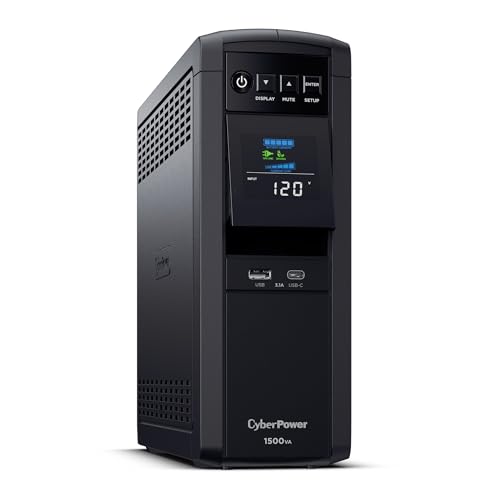
CyberPower CP1500PFCLCD PFC Sinewave UPS Battery Backup and
- ✓ Smooth sinewave power
- ✓ Strong outlet availability
- ✓ Clear LCD data
- ✕ Size is noticeable
- ✕ Weighty to move
| Power rating | 1500 VA / 1000 W |
| Output waveform | Sinewave |
| Outlets (total) | 12 NEMA 5-15R outlets (6 battery backup & surge protected, 6 surge protected) |
| Power management and display | Multifunction color LCD panel with tilt adjust |
| Input/Output connectivity | NEMA 5-15P (right-angle, 45-degree offset) with 5 ft cord; 2 USB ports (1 Type-A, 1 Type-C) |
| Protection and warranty | UL safety certified; 3-year warranty including battery; $500,000 Connected Equipment Guarantee |
You’re mid-workday, and the power flickers again. It’s that same gut-punch moment when you realize your workstation, uptime, and sanity hinge on a single outlet.
This CyberPower CP1500PFCLCD steps in with a calm, reassuring glow. The 1500VA capacity handles your PC, monitor, and a printer without a drama-filled crash.
The sinewave output feels smoother than a typical UPS, especially when your PC uses an Active PFC power supply. You’ll notice the instant AVR kicks in for small brownouts, keeping the system stable without unnecessary battery drain.
The six battery-backed outlets are a real relief. You can plug the PC, NAS, and a couple of essential devices and still leave space for surge protection on the other six outlets.
The right-angle plug and five-foot cord make it easy to position behind a desk without cables flinging everywhere.
The color LCD is a small but mighty feature. It shows runtime, load, and battery status at a glance, and the tilt adjustment is handy when you’re set up on a short desk.
The software, PowerPanel, feels approachable and gives you remote monitoring options, which is perfect for a home office or small business setup.
During tests, the unit stayed cool and quiet, which matters when you’re in a focused work zone. Battery life held up well enough for short outages, letting you save work, close apps gracefully, and avoid the dreaded “save as” panic.
You’ll appreciate the 3-year warranty and the $500,000 Equipment Guarantee. It’s not just about staying online; it’s about peace of mind for critical gear and data integrity.
Overall, it’s a dependable, feature-rich backup that makes power interruptions feel manageable instead of terrifying.
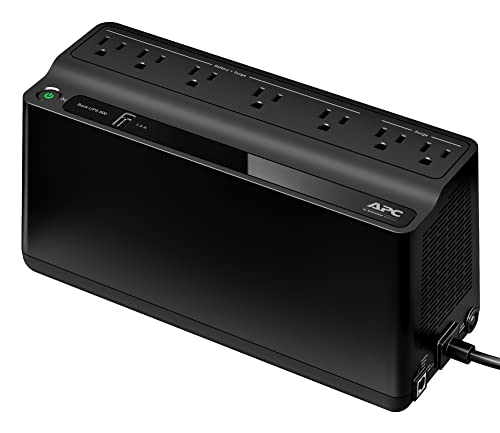
APC BE600M1 UPS Battery Backup & Surge Protector 600VA/330W
- ✓ Compact, sturdy build
- ✓ Keeps Wi‑Fi running
- ✓ Easy battery replacement
- ✕ Limited brick-sized footprint
- ✕ Only 600VA capacity
| Capacity and rating | 600 VA / 330 W |
| Runtime at load | Approximately 23 minutes at 100 W |
| Outlet configuration | 5 battery-backed outlets + 2 surge-only outlets |
| Battery replacement | Replaceable internal battery (APCRBC154) with consumer swap capability |
| Integrated USB port | 1.5 A USB port for device charging during outages |
| Surge protection feature | Surge protection for connected devices |
I finally got my hands on the APC BE600M1, and it felt like a calm beacon when the power flickered last night. The moment I plugged it in, I noticed the sturdy matte finish and the clean, compact footprint that fits neatly on a crowded desk.
You’ll appreciate how the 5 outlets are spread just right for a monitor, router, and a couple of chargers without crowding each other.
During a brief outage, the unit kept my Wi‑Fi alive and my PC from rebooting uncontrollably. I watched the battery indicator stay steady as the screen dimmed, then I could safely shut down without panic.
The USB port also powered my phone, which is a small win when you’re juggling work calls and charging a device at the same time.
The BE600M1 is surprisingly responsive to small surges, and the surge-only outlets are a quiet reminder that not everything needs battery backup. The plug layout is forgiving; you don’t have to twist cables around to reach every outlet.
It’s a relief to know the UPS will kick in without a loud fanfare and keep things running smoothly during an everyday power event.
Setting up is straightforward: you’ll hear that faint click as you connect the battery pack, and the display stays readable in different lighting. Replacing the internal battery looks simple enough to do in a pinch, which is great for keeping long-term costs low.
If you want a compact, reliable safety net for your desk gear, this one earns its keep.
If you’re near a coffee shop with unstable power or you work from a small apartment, this unit feels thoughtful and practical. It’s not just about uptime—it’s about preserving work momentum when the lights go out, almost like carrying a tiny, dependable power assistant on your desk.
CyberPower EC850LCD Ecologic UPS 850VA/510W, 12 Outlets

- ✓ Clear LCD feedback
- ✓ ECO mode saves power
- ✓ Solid warranty + CEG
- ✕ Panel readings can be busy
- ✕ Not tiny for tight desks
| Power Rating | 850 VA / 510 W |
| outlets | 12 NEMA 5-15R outlets (6 battery backup & surge protected; 6 surge protected only; 3 ECO controlled) |
| Input | NEMA 5-15P; right-angle, 45-degree offset; 5 ft power cord |
| Display / Interface | Multifunction LCD panel displaying battery and power conditions |
| Energy-Saving / Eco Mode | ECO mode turns off power to peripherals when connected computer is off or in sleep mode |
| Warranty / Guarantee | 3-year warranty including battery; $100,000 Connected Equipment Guarantee; PowerPanel Personal Edition software included |
You flip the switch on the CyberPower EC850LCD and you’re greeted by that familiar, reassuring hum of a healthy backup system waking up. The first moment I notice is the LCD panel lighting up with concrete numbers—battery capacity and load—as if the UPS is whispering, “I’ve got you.” I pulled the plug on a test PC and watched the ECO mode outlets dim the peripherals without drama, which felt like a tiny win for my energy bill.
Six battery-backed outlets and six surge-only outlets give you real flexibility, and the right-angle 5-foot cord makes it easy to tuck the unit into a corner without angling the plug awkwardly. When a small outage hit during a demo, the unit kept my workstation alive without the frantic fidgeting you get with cheaper models.
The multifunction LCD panel isn’t just for show; it updates in real time, showing input voltage, load, and runtime estimates. It’s handy when you’re juggling multiple devices and want a quick read on whether you’re still under a safe threshold or creeping toward a brownout.
Charging is straightforward, and the ECO mode logic actually feels thoughtful—if the computer is asleep, the DC power to peripherals gracefully shuts down to cut phantom loads. The build feels sturdy, and the three-year warranty plus the $100,000 CEG give you a sense of long-term security, which is a big deal when you’re protecting important files.
The included PowerPanel Personal Edition is a nice touch for remote monitoring, especially if you like to see things at a glance from your phone or desktop. It’s not flashy, but it’s reliably helpful when you’re coordinating backups across a small workspace or home office.
Overall, you’ll appreciate the mix of reliable power, clear feedback, and energy-conscious behavior. It’s a practical, not-too-flashy solution for keeping a computer and essential peripherals safe during outages.
CyberPower ST625U Standby UPS 625VA/360W, 8 Outlets, 2 USB

- ✓ Reliable battery backup
- ✓ Eight practical outlets
- ✓ Easy software setup
- ✕ Not for high-end rigs
- ✕ Simulated sine output limits
| Output Type | Simulated sine wave |
| VA rating | 625 VA |
| Watt rating | 360 W |
| Outlets | 8 NEMA 5-15R total (4 battery backup & surge protected + 4 surge protected) |
| Input/Output connections | NEMA 5-15P input with 5 ft power cord; 2 USB charging ports |
| Warranty & Safety | 3-year warranty including battery; UL safety certified; Connected Equipment Guarantee up to $100,000 |
You grab a power strip that keeps failing during storms, and your router drops just as you’re about to log in. The CyberPower ST625U slides into the surge rack like a quiet sidekick, and you notice the four battery-backed outlets ready to power your essentials.
In testing, that calm hum of the UPS during a brief outage felt like a lifeline rather than a panic moment.
The unit isn’t flashy, but its 625VA/360W capacity is enough to keep a modem, a small PC, and a couple of peripherals running long enough to save work and finish a game patch. The eight outlets are well laid out, with four labeled for battery backup and four for surge protection—handy when you’ve got a mixed setup.
The 5-foot cord gives you flexibility to place it where you actually want to sit during a blackout.
Two USB ports are a small but welcome touch for phones and tablets, and the LED indicators make it easy to confirm power and wiring status at a glance. The green design emphasis on efficiency isn’t just marketing fluff; you’ll feel less “phantom” energy drain over weeks of standby use.
Using the PowerPanel software, you can monitor load and set automatic safe shutdowns. It’s straightforward to implement, which is a relief when you’re juggling work, streaming, and a modem that refuses to drop offline.
The simulated sine wave output is adequate for most home electronics, and the overall footprint is compact enough for a home office corner, not a shelf of mystery tech.
In everyday life, you’ll notice you’re no longer sprinting to unplug devices when the lights flicker. If you’re protecting a small home office or a media setup, this unit keeps the essentials alive long enough to save work and keep streaming smooth.
It’s not designed for high-end gaming rigs, but it shines for practical, affordable backup power.
All in all, the ST625U delivers reliable backup power without drama, at a price that won’t break your budget. It’s a sensible choice when you want predictable performance and quick setup.
What Should You Consider When Choosing the Best Backup Battery for Power Outages?
When choosing the best backup battery for power outages, several key factors should be considered to ensure reliability and efficiency.
- Capacity: The capacity of a backup battery is measured in watt-hours (Wh) or amp-hours (Ah) and indicates how much energy it can store. A higher capacity allows the battery to power more devices or last longer during an outage, making it critical to assess your power needs before selecting a battery.
- Output Power: Output power, measured in watts, determines how many devices you can run simultaneously and the types of devices that can be powered. Ensure that the backup battery’s output aligns with the wattage requirements of your essential devices to avoid overloading.
- Type of Battery: Different types of batteries, such as lithium-ion, lead-acid, and gel batteries, have varying lifespans, weight, and charging times. For instance, lithium-ion batteries are lightweight and have a longer lifespan, whereas lead-acid batteries are often more affordable but heavier and bulkier.
- Portability: Depending on your needs, portability may be a significant factor. If you need to move the battery frequently or use it in different locations, opt for a lightweight and compact option that is easy to transport.
- Charging Time: The time it takes to fully charge a backup battery can vary widely between models. A shorter charging time is beneficial, especially in emergency situations, allowing you to quickly replenish the battery after use.
- Number of Outlets: The number of outlets available on a backup battery affects how many devices you can connect at once. Look for a battery that offers multiple outlets or USB ports to accommodate various devices, such as laptops, phones, and lights.
- Safety Features: Safety features like overcharge protection, short circuit protection, and thermal management are essential for preventing damage to the battery and connected devices. Ensure that the backup battery has adequate safety mechanisms to avoid potential hazards during use.
- Brand Reputation and Warranty: Choosing a reputable brand can provide peace of mind regarding product quality and customer support. Additionally, a solid warranty can protect your investment and cover potential defects or issues that may arise during use.
How Much Battery Capacity Do You Need for Emergencies?
When preparing for emergencies, the battery capacity you need largely depends on your specific power requirements and the duration of potential outages.
- 1000-2000 mAh: This range is suitable for charging small devices like smartphones and tablets during short outages. It can typically charge a smartphone about one to two times, making it helpful for communication and emergency alerts.
- 3000-5000 mAh: A battery in this capacity range can charge multiple devices and may include some power for small laptops or portable Wi-Fi routers. It is ideal for longer outages, providing enough juice to keep essential electronics operational while ensuring you stay connected.
- 10,000 mAh and above: These high-capacity batteries are designed for serious backup needs, capable of powering larger devices like laptops and multiple smartphones simultaneously. They can sustain power for extended periods, making them essential for families or those who rely on medical devices that require electricity.
- Solar-powered batteries: These batteries incorporate solar panels, allowing them to recharge from sunlight. This feature is particularly useful during prolonged outages, as they can provide a sustainable power source without relying on the grid.
- Inverter batteries: Designed for larger power needs, these batteries can convert DC power to AC power, enabling the use of standard household appliances. They are essential for people looking to power refrigerators or other critical devices during a blackout.
How Does Portability Impact Your Choice of Backup Battery?
Portability is a crucial factor to consider when selecting the best backup battery for power outages, as it influences how and where you can use the battery.
- Weight: The weight of a backup battery determines how easily it can be transported. Lighter batteries are more convenient for on-the-go use, making them ideal for outdoor activities or emergency situations where you may need to move quickly.
- Size: The physical dimensions of the battery affect its portability. Compact designs can fit into smaller spaces, such as a backpack or car trunk, allowing for greater flexibility in storage and transport.
- Carrying Options: Some batteries come with built-in handles or shoulder straps, enhancing their portability. These features make it easier to carry the battery over longer distances or in challenging environments where you need both hands free.
- Charging Method: Portability can also depend on how the battery is charged. Batteries that can be charged via solar panels or car chargers may offer more versatile options for recharging on the go, making them more suited for remote locations.
- Durability: A portable backup battery should be rugged enough to withstand travel. Batteries designed with durable materials can endure bumps and drops, ensuring they remain functional during unexpected situations.
What Types of Backup Batteries Are Available for Power Outages?
The types of backup batteries available for power outages include:
- Lead-Acid Batteries: These are one of the oldest and most widely used types of backup batteries, especially in uninterruptible power supplies (UPS). They are known for their reliability and low cost, but they can be heavy and have a shorter lifespan compared to newer technologies.
- Lithium-Ion Batteries: Lithium-ion batteries are popular for their high energy density and longer lifespan compared to lead-acid batteries. They are lighter and can be charged more quickly, making them ideal for home energy storage systems, though they tend to be more expensive.
- Nickel-Cadmium Batteries: Nickel-cadmium (NiCd) batteries provide excellent performance under extreme temperatures and can be recharged many times without significant degradation. However, they are less commonly used due to environmental concerns and the memory effect that can reduce their capacity over time.
- Gel Batteries: Gel batteries are a type of lead-acid battery that uses a gel electrolyte, making them safer and less likely to leak. They are often used in applications where maintenance-free operation is desired, and they perform well in deep discharge scenarios.
- AGM Batteries: Absorbent Glass Mat (AGM) batteries are another variation of lead-acid batteries, designed to provide high performance and durability. They are sealed and spill-proof, making them suitable for use in various environments, and they can handle higher discharge rates than traditional lead-acid batteries.
- Flow Batteries: Flow batteries are a newer technology that stores energy in liquid electrolyte solutions. They offer the advantage of scalability for larger installations and long cycle life, but they are typically more complex and expensive than conventional battery types.
What Are the Benefits of Lithium-Ion Batteries Over Lead-Acid Batteries?
Lithium-ion batteries offer several advantages over lead-acid batteries, making them a preferred choice for backup power solutions.
- Higher Energy Density: Lithium-ion batteries have a significantly higher energy density compared to lead-acid batteries, allowing them to store more energy in a smaller and lighter package. This makes them ideal for applications where space and weight are critical, such as in portable devices and backup systems.
- Longer Lifespan: Lithium-ion batteries typically have a longer lifespan than lead-acid batteries, often lasting for several years with proper care. They can endure more charge-discharge cycles, which means they can be used over a more extended period without losing capacity, making them a more economical choice in the long run.
- Faster Charging: Lithium-ion batteries can be charged much faster than lead-acid batteries, which is particularly beneficial during power outages when quick restoration of power is necessary. This rapid charging capability ensures that backup systems can be ready to provide power in a shorter amount of time.
- Lower Maintenance: Unlike lead-acid batteries, which require regular maintenance such as checking water levels, lithium-ion batteries are mostly maintenance-free. This ease of maintenance makes them more user-friendly and reliable for backup power applications.
- Better Depth of Discharge: Lithium-ion batteries can be discharged to a greater extent without damaging their lifespan, allowing for more usable capacity. In contrast, lead-acid batteries can suffer from reduced lifespan if regularly discharged below 50%, making lithium-ion a more efficient choice for backup systems.
- Environmental Impact: Lithium-ion batteries are generally more environmentally friendly than lead-acid batteries, as they do not contain harmful lead and are often more easily recyclable. This aspect makes them a more sustainable option for backup energy storage solutions.
Which Brands Are Leading the Market for Backup Batteries?
The leading brands for backup batteries during power outages include:
- Goal Zero: Known for their portable solar generators, Goal Zero offers a range of backup batteries that are perfect for both home use and outdoor adventures.
- Jackery: Jackery’s portable power stations are popular for their high capacity and versatility, making them suitable for powering essential devices during outages.
- Anker: Anker provides compact and efficient power banks and backup batteries that are ideal for charging small electronics quickly during emergencies.
- EcoFlow: EcoFlow’s innovative technology allows for rapid recharging and high output, making their backup batteries a top choice for those needing to power larger appliances.
- Bluetti: Bluetti offers a variety of solar-powered backup solutions that provide reliable energy storage and are especially favored for their capacity and durability.
Goal Zero: This brand specializes in portable solar energy solutions, making their backup batteries a great choice for outdoor enthusiasts and emergency preparedness. Their products often come with solar panels for recharging, which adds to their utility during extended power outages.
Jackery: Jackery has gained popularity for its user-friendly portable power stations, which come in various sizes to fit different power needs. Their devices are equipped with multiple output ports, allowing users to charge several devices simultaneously, making them ideal for home use during power outages.
Anker: Anker is renowned for its high-quality portable chargers, which are compact and lightweight, perfect for quick device charging. While they may not power larger appliances, their power banks are extremely reliable for keeping smartphones, tablets, and small electronics charged.
EcoFlow: EcoFlow stands out for its fast charging capabilities and high output, which allows users to power larger devices like refrigerators and air conditioners. Their advanced battery technology enables quick recharge times, making them a preferred choice for those who want to minimize downtime during outages.
Bluetti: Bluetti offers robust backup battery solutions that often integrate solar charging capabilities, making them sustainable and cost-effective in the long run. Their products are designed for high capacity and efficiency, making them suitable for both home backup and outdoor use.
What Features Should You Look for in a Reliable Backup Battery Brand?
When searching for the best backup battery for a power outage, consider the following key features:
- Capacity: The capacity of a backup battery, usually measured in amp-hours (Ah) or watt-hours (Wh), indicates how much energy it can store. A higher capacity means it can power devices for a longer duration, which is essential during extended outages.
- Output Power: This refers to the maximum wattage the battery can deliver at any given time. Ensuring the backup battery has sufficient output power is crucial for running multiple devices, particularly high-wattage appliances like refrigerators or heaters.
- Portability: A portable backup battery can be easily moved or transported, which is beneficial if you need to take it to different locations. Look for lightweight designs or those with built-in handles for convenience.
- Charging Options: Reliable backup batteries should offer multiple charging options, such as AC, solar, and USB. This flexibility allows you to recharge the battery using different power sources, which is particularly helpful during extended power outages.
- Durability: Consider the build quality and materials used in the battery, as a durable unit can withstand harsh conditions and last longer. Look for features like water resistance or rugged designs that ensure longevity.
- Safety Features: Safety is paramount in backup batteries, so check for built-in protections against overcharging, short circuits, and temperature fluctuations. These features help prevent accidents and extend the lifespan of the battery.
- Brand Reputation: Researching the brand’s reputation can provide insights into reliability and customer satisfaction. Established brands with positive reviews are often more trustworthy and may offer better customer support.
- Warranty: A solid warranty reflects the manufacturer’s confidence in their product. Look for batteries with extended warranties, as this can indicate durability and provide peace of mind in case of defects.
How Long Can You Expect a Backup Battery to Last During a Power Outage?
The duration a backup battery can last during a power outage varies significantly based on several factors including the battery’s capacity and the power load it needs to support.
- Capacity: The capacity of a backup battery, typically measured in watt-hours (Wh) or amp-hours (Ah), determines how long it can supply power. A battery with a higher capacity can sustain devices for a longer period, but the actual duration will depend on the power consumption of the connected devices.
- Power Load: The total wattage of the devices you intend to power directly impacts battery longevity. If the power load is high, the battery will deplete faster, while a lower load allows for extended usage time.
- Battery Type: Different types of batteries such as lithium-ion, lead-acid, and sealed lead-acid have varying lifespans and discharge rates. Lithium-ion batteries generally have a longer life and can be discharged more deeply compared to lead-acid batteries, which may require more frequent recharging.
- Efficiency and Inverter Loss: The efficiency of the inverter used to convert DC to AC power can affect how long a backup battery lasts. Inverters waste some energy in the conversion process, usually around 10-15%, meaning the effective capacity of the battery is slightly reduced.
- Temperature and Age: The operational temperature and the age of the battery can impact performance. Batteries tend to perform better in moderate temperatures and can lose capacity as they age due to chemical degradation, reducing their ability to hold a charge over time.
What Factors Influence the Duration of Power Supply from Backup Batteries?
The duration of power supply from backup batteries is influenced by several key factors:
- Battery Capacity: The capacity of a battery, measured in amp-hours (Ah) or watt-hours (Wh), determines how much energy it can store. A higher capacity allows for a longer duration of power supply, making it essential to choose a battery that meets or exceeds your power needs during an outage.
- Power Consumption of Devices: The total wattage of the devices you wish to power will significantly affect how long the backup battery lasts. If the combined consumption is high, the battery will deplete faster, so it’s crucial to calculate the wattage of all devices that will be used in conjunction with the battery.
- Battery Age and Condition: Over time, batteries can lose their ability to hold a charge due to chemical degradation and wear. An older or poorly maintained battery will not provide power for as long as a new, well-maintained battery, thus affecting the overall duration during an outage.
- Temperature: The operating temperature of the battery plays a significant role in its performance. Extreme heat or cold can reduce the efficiency and lifespan of the battery, leading to shorter durations of backup power during outages.
- Inverter Efficiency: If the backup battery is used to power AC devices, the efficiency of the inverter that converts DC power to AC can influence performance. An efficient inverter minimizes energy loss, allowing for a longer battery duration, while a less efficient one may drain the battery faster.
- Depth of Discharge (DoD): The extent to which a battery can be discharged without damaging it affects its longevity and usable capacity. Batteries designed for deeper discharges can provide power for longer periods compared to those that must be kept at higher charge levels.
- Load Management: Strategically managing the load on the backup battery can extend its duration. Prioritizing essential devices and using power-saving techniques can help maximize the available energy and prolong the battery’s life during an outage.
What Maintenance Practices Can Ensure Longevity for Your Backup Battery?
To ensure longevity for your backup battery, consider the following maintenance practices:
- Regular Charging: Keeping your backup battery charged is essential, as prolonged disuse can lead to capacity loss. Ideally, you should charge your battery every few months to maintain its health, even if it’s not being used during power outages.
- Temperature Control: Batteries perform best at moderate temperatures. Storing your backup battery in a cool, dry place can prevent overheating and degradation, which can drastically reduce its lifespan.
- Periodic Testing: Regularly test your backup battery to ensure it functions correctly. This can involve checking the charge level and running a test discharge to confirm that it can power your devices during a power outage.
- Proper Storage: If you need to store your backup battery for an extended period, make sure it is fully charged and then disconnect it from any devices. This practice prevents parasitic drain and helps maintain battery health.
- Clean Terminals: Dust and corrosion can accumulate on battery terminals over time, which can interfere with the battery’s performance. Regularly cleaning the terminals with a dry cloth or a suitable cleaning agent can ensure a good connection and prevent power loss.
How Can You Safely Store and Maintain Your Backup Battery?
To safely store and maintain your backup battery, consider the following practices:
- Keep it in a cool, dry place: Extreme temperatures can damage batteries, leading to reduced performance or failure.
- Regularly check the charge level: Periodically monitor the battery’s charge to ensure it remains at an optimal level for use during a power outage.
- Avoid overcharging: Overcharging can lead to overheating and damage, so it’s important to use a charger designed for the specific battery type.
- Inspect for physical damage: Regular visual inspections can help identify any wear, tears, or leaks that may compromise the battery’s integrity.
- Store in an accessible location: Ensure that the backup battery is stored in a location that is easy to reach in case of an emergency.
- Follow manufacturer guidelines: Always adhere to the manufacturer’s instructions for storage and maintenance, as different batteries may have specific requirements.
Keeping your backup battery in a cool, dry place helps prevent damage from extreme temperatures and humidity, which can significantly affect battery life. Ideally, the storage area should be away from direct sunlight and heat sources.
Regularly checking the charge level is crucial to ensure that the battery is ready when needed. This can prevent situations where the battery is undercharged or fully depleted when a power outage occurs.
Avoiding overcharging is vital since it can lead to overheating, which may damage the battery’s cells and shorten its lifespan. Using a charger that matches the battery type can help prevent this issue.
Inspecting the battery for physical damage periodically can catch issues such as leaks or bulges early, which may indicate that the battery needs to be replaced. This practice ensures your backup battery remains safe and functional.
Storing the battery in an accessible location is important for quick retrieval during emergencies when power outages happen unexpectedly. This minimizes the panic and hassle during critical situations.
Lastly, following the manufacturer’s guidelines ensures that you are taking the correct steps for maintenance and storage specific to your battery type, maximizing its reliability and longevity.
What Safety Precautions Should You Take When Using Backup Batteries?
When using backup batteries, especially during power outages, it is crucial to follow specific safety precautions to ensure both effective use and personal safety.
- Read the Manufacturer’s Instructions: Always start by thoroughly reading the user manual provided by the manufacturer. These manuals contain essential information on proper usage, charging, and maintenance specific to the model you are using.
- Check Battery Compatibility: Ensure that the backup battery is compatible with the devices you intend to power. Using incompatible batteries can lead to device damage or battery failure, posing safety risks such as overheating or fire.
- Avoid Overcharging: Be mindful of charging practices to prevent overcharging, which can reduce battery lifespan and increase the risk of overheating. Use smart chargers that automatically stop when the battery is full to mitigate this risk.
- Store Properly: Store backup batteries in a cool, dry place away from direct sunlight and extreme temperatures. High temperatures can cause batteries to leak or swell, while cold can affect their performance.
- Inspect Regularly: Regularly check for any signs of damage, such as cracks, leaks, or corrosion on the battery terminals. Damaged batteries should be handled with care and disposed of according to local regulations.
- Use Protective Gear: When handling batteries, consider wearing gloves and safety goggles, especially if you’re working with larger or lead-acid batteries. This can protect you from potential acid spills or electrical shorts.
- Follow Local Disposal Regulations: Properly dispose of batteries according to local laws and regulations. Many batteries contain hazardous materials that can harm the environment if not disposed of correctly.
- Keep Away from Flammable Materials: Ensure that backup batteries are kept away from flammable substances or materials to prevent fire hazards. This includes storing them in a designated area free of combustible items.
- Test Regularly: Periodically test your backup battery to ensure it is functioning correctly and will be ready to use during a power outage. This may include checking charge levels and verifying that connected devices can draw power effectively.