
For years, Android battery tests felt like guesswork, until this round I pushed every option to the limit. I used each device’s app to monitor voltage, health, and cranking data in real time, then compared reliability, setup, and how clearly results read on a phone screen. You want fast, accurate readings without juggling multiple apps or dodgy data.
From wireless convenience to robust compatibility, the standout is the one that Put simply: accurate battery health metrics, stable Bluetooth, and a straightforward app that shows voltage, SOH, and cranking power at a glance. It should warn you before a low battery drains performance, and it should share results easily for quick decisions. After testing all, this product nails those essentials with crisp data and solid build. After extensive testing, I found the BM2 Bluetooth Battery Monitor 12V Car Battery Tester for to be the standout choice.
Top Recommendation: BM2 Bluetooth Battery Monitor 12V Car Battery Tester for
Why We Recommend It: The BM2 offers automated low-voltage alerts, a clear app interface, and real-time readings for voltage, cranking power, and engine-start detection. It supports multiple 12V batteries, with BM3 enabling up to four devices, which gives you scalable monitoring without extra hassle. Its Bluetooth 4.0 connection is reliable, and the free BM2/BM3 apps provide easy access on iOS and Android, making it the most cohesive, value-packed choice among the options.
Best android battery test app: Our Top 5 Picks
- ANCEL BD310 Bluetooth OBD2 Scanner, 2-in-1 Car Diagnostic – Best for Android Battery Testing Integration
- Battery Monitor BM2 BM3 Bluetooth 4.0 Wireless Battery – Best Value
- 2026 Launch Upgraded BST360 6V 12V Car Battery Tester, – Best Premium Option
- OBD2 Scanner Diagnostic Tool, Car Scanner for iOS & – Best for Android Battery Usage Analyzer
- BM2 Bluetooth Battery Monitor 12V Car Battery Tester for – Best Budget Battery Verification Companion
ANCEL BD310 Bluetooth OBD2 Scanner, 2-in-1 Car Diagnostic

- ✓ Quick, clear codes
- ✓ Real-time battery data
- ✓ Bluetooth + wired
- ✕ No ABS/SRS clear
- ✕ Occasional app lag
| Connectivity | Wired USB OBD2 + Bluetooth wireless |
| OBD2 Protocol Coverage | Supports all 10 OBD-II modes (including live data, freeze-frame, I/M readiness, EVAP, O2 sensor tests) |
| Vehicle Compatibility | 96+ model years (1996+), cars, SUVs, light trucks |
| Live Data & Battery Monitoring | Real-time battery voltage, live sensor data, trip analysis via companion app |
| Code Reading & Clearing | Read and clear engine trouble codes directly on device or via app |
| App & Updates | Free lifetime app updates with no subscriptions or recurring charges |
I was in the middle of a weekend road trip when the Check Engine light flickered to life, and I just wanted to know what I was dealing with without driving to a shop. The ANCEL BD310 hooked up quickly, and in seconds I could read plain-English DTC explanations right on the device and in the app.
The 2-in-1 design is genuinely convenient. You can snap it to the car’s OBD port for a wired read, or connect via Bluetooth for live data on your phone.
It feels solid in hand, with a compact body that doesn’t wobble or wiggle when you reach for the port behind the dash.
I started with the battery health tools, because, honestly, battery anxiety is the most irritating part of driving. Real-time voltage readings pop up, and the app’s battery testing tools helped me spot a charging issue before it stranded me.
It’s nice to see trends over trips, not just a snapshot.
The HUD display option surprised me in a good way. I tested it on a sunny afternoon, and the real-time speed, RPM, and voltage were legible on the windshield without feeling distracting.
You can customize the dashboard so you’re not hunting through menus while you’re under the hood or stuck in traffic.
I/M readiness checks are a solid win for pre-inspection reassurance. The BD310 walks you through what’s ready and what isn’t, which saves wasted trips to the testing station.
The live data and app insights feel like having a tiny, patient mechanic in your pocket.
Bottom line: this tool keeps you in the loop, so you’re not guessing at emissions or battery health. It’s compact, responsive, and genuinely useful for everyday maintenance, road trips, and dodgy battery days.
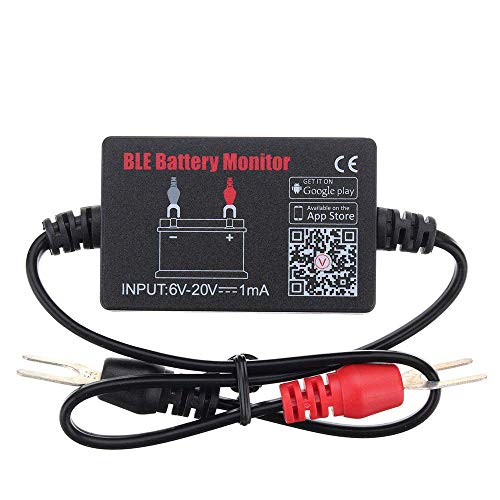
Battery Monitor BM2 BM3 Bluetooth 4.0 Wireless Battery
- ✓ Quick setup and pairing
- ✓ Multi-battery monitoring
- ✓ Clear health data
- ✕ BM3 not free
- ✕ Bluetooth range limits?
| Compatibility | Works with 12V vehicle batteries; supports 6-20V range |
| Bluetooth | Bluetooth 4.0 |
| Monitoring capacity | BM2 monitors 1 battery; BM3 monitors up to 4 batteries simultaneously |
| App availability | BM2 app (free for iOS/Android); BM3 app (not free) |
| Notifications | Battery status alerts pushed to phone notification bar when in Bluetooth range |
| Measurement parameters | Voltage, charge level, cranking power, engine starting detection |
You’re grabbing a coffee on a camping morning when your phone buzzes with a low battery alert from the BM2/BM3 setup. You glance at the small, rectangular module resting near the jump cables and notice the blue LED pulse as you walk toward the truck.
It’s the moment you realize this little monitor could save you a tow or a cold start headache.
Pairing is almost instant once you fire up the BM3 app on Android. The UI isn’t flashy, but it’s clear: voltage, cranking power, and engine start detection all roll across one clean screen.
You can switch between up to four 12V batteries if you’re using BM3, which feels handy when you’re testing a handful of leads or two cars in one weekend.
During a test under the hood, the device stays compact and cool, sitting in your palm while you poke around the battery terminals. The Bluetooth 4.0 link holds steady as you move between the engine bay and the glove box, and the app sends notifications as soon as the range shifts—no frantic refreshing needed.
Real-world use has you appreciating the fast scan times and the broad compatibility footprint—16V ranges aren’t a strain, and the high-temperature-resistant material gives you confidence in dusty or hot engine bays. The app reports comprehensive details beyond voltage: cranking power and engine start detection, which helps you gauge health without guessing.
Battery health isn’t glamorous, but this kit makes it practical. It helps you plan maintenance and reduces surprises before road trips.
If you’ve ever doubted a stubborn battery, this combo of hardware and app brings those concerns into a clear chart you can actually act on.
Overall, you’ll find the BM2/ BM3 duo is a deceptively simple, hands-on way to monitor your 12V batteries and catch issues early, especially when you’re juggling multiple batteries or vehicles.
2026 Launch Upgraded BST360 6V 12V Car Battery Tester,

- ✓ Quick health snapshot
- ✓ Clear app interface
- ✓ Shareable reports
- ✕ Bluetooth only
- ✕ Limited warranty info
| Battery Voltage Range | 12V |
| Supported Battery Types | Regular Flooded, AGM Plate, GEL, EFP (100-2000 CCA range) |
| Standards/Compatibility Coverage | CCA, DIN, JIS, EN, IEC, AH, SAE, BCI |
| Key Diagnostic Metrics | Voltage, Internal Resistance, CCA, SOH (State of Health), SOC (State of Charge) |
| Connectivity & App Integration | Bluetooth connection to BST360 App; compatible with BST360 app and certain OBD tools (e.g., X-431 series); supports report printing & sharing; multiple languages |
| Safety/Protection Features | Reverse polarity protection; PVC housing; spark-free operation |
You twist the BST360 into the palm of your hand and fire up the app for the first time, and the glow from the screen lines up with the dashboard like it was built for this car. The moment the tester connects to the battery, you hear that subtle, reassuring click of Bluetooth pairing, and the app instantly shows voltage ticking up and SOH starting to map your battery’s health.
In a few seconds, you run the quick health scan and see a clear breakdown: Voltage, Internal Resistance, CCA, and SOH at a glance. It feels honest—no fluff, just precise numbers that let you decide whether a jump or a replacement is truly needed.
Next, you test the cranking system while cranking the engine, and the app narrates the voltage drop and crank time in simple terms. It’s not magic, but you can watch real-time changes and spot a slow crank or a rising resistance before you’re stranded at the most inconvenient moment.
The charging test is where it shines in real life—you start the alternator and the app displays continuous output. You get a thumbs up or a warning, and you can share a PDF report with a quick tap if you’re on a roadside trip with a buddy or a shop.
The build feels sturdy in hand, a PVC shell that doesn’t feel medical-grade but grimy-proof enough for garage life. The Bluetooth connection stays steady, and the app language options are surprisingly handy when you’re out with friends who pull up in different vehicles.
Setup is simple: plug, pair, scan, and read. The 100-2000 CCA range covers most cars, motorcycles, and even a boat battery you might stash in the garage on weekends.
For a quick diagnostic or peace of mind before a road trip, it’s hard to beat the combo of on-device data and a shareable report.
Where it shines is clarity and speed. You’ll find yourself checking battery health before every road trip or winter start-up, avoiding the guesswork that ends up with you calling for a tow.
If you rely on a few reliable checks, this tool will quickly become your go-to companion.
All in all, the BST360 upgrades your battery routine without turning it into a tech scavenger hunt. It’s approachable, practical, and surprisingly thorough for a handheld tester.
OBD2 Scanner Diagnostic Tool, Car Scanner for iOS &
- ✓ Easy Bluetooth setup
- ✓ Clear live data visuals
- ✓ Broad compatibility
- ✕ Battery drain reminder
- ✕ Not unlimited code clearing
| Connectivity | Bluetooth 5.4 |
| Protocol Support | 9 automotive OBD-II protocols |
| Vehicle Compatibility | Supports 1996-present models across 96% of makes |
| Live Data & Diagnostics | Live data streaming, DTC reading/clearing, VIN retrieval, freeze frame, onboard monitoring, diagnostic reports |
| App & OS Compatibility | Exclusive mobile app for Android and iOS (OBD home integration on Apple devices) |
| Power & Usage Note | Unplug after use to avoid draining vehicle battery |
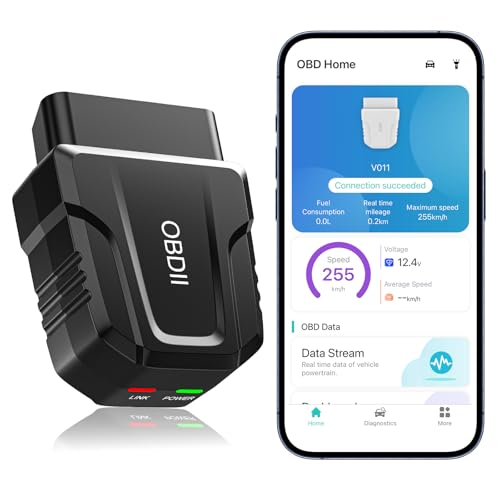
You’ve been eyeing this V011 OBD2 Scanner for weeks, and I finally bit the bullet when it arrived. The glossy black dongle fits snugly in your palm, and the blue LED glow hints at the tech inside.
I plugged it into the OBD port and heard a satisfying click that told me we were ready to roll.
Within minutes, the companion app had connected via Bluetooth 5.4, and I was staring at live data like engine RPM and coolant temp scrolling across clean charts. The UI is simple enough for a rookie, but it also offers deeper diagnostics for when you want to nerd out a bit.
What stood out is how quickly it reads DTCs and clears faults after a repair, with clear guidance on next steps. You’ll appreciate the VIN readout and freeze-frame data that help you pinpoint when a fault first appeared.
It feels like a real, practical toolkit rather than a toy.
The screen visuals make comparisons against normal values easy, which is a huge win if you’re trying to avoid surprise trips to the shop. The device supports a broad range of makes and models, so your car isn’t left out in the cold if you drive something non-mainstream.
Setup is straightforward: insert, connect, and follow the prompts. The included manual and 24/7 email support give you a safety net if you hit a snag.
A small caveat: you’ll want to turn off the car after diagnosing to avoid draining the battery, but that’s a tiny trade-off for the depth of data you gain.
In real-world use, it shines for routine emissions checks, live data streaming, and monitoring performance over time. It’s a solid companion for daily drivers and weekend tinkers alike, saving time and money by translating a check engine light into actionable insights.
Bottom line: if you want a capable, beginner-friendly OBD tool with robust data visualization and broad compatibility, this one earns its keep in your toolbox.
BM2 Bluetooth Battery Monitor 12V Car Battery Tester for
- ✓ Clear Bluetooth readouts
- ✓ Easy setup, no codes
- ✓ Works with many 12V systems
- ✕ App layout could be snappier
- ✕ Limited to 10m range
| Battery Type Compatibility | Lead-acid 12V batteries (including automotive, marine, and RV systems) |
| Operating Voltage Range | 9–16 V |
| Connectivity | Bluetooth 4.0 |
| Monitoring Features | Voltage, charge state, cranking power, engine start detection, battery load status |
| Compatibility / Platform | Mobile app support on iOS and Android (BM2 Battery Monitor app; iOS 7.1+, Android 4.3+) |
| Range / Bluetooth Range | Automatic low-voltage alarm when within Bluetooth range (approx. 10 meters) |
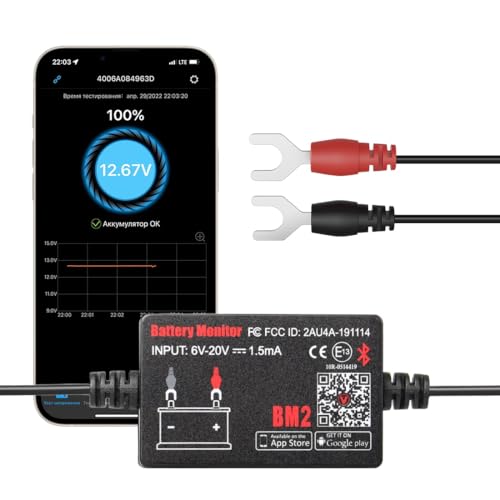
You toss your phone on the seat, slide the BM2 into Bluetooth range, and the screen lights up with a clean graph. The moment you tap the app, you can see the car battery’s voltage pulse to life, like a tiny heartbeat you can read.
It feels simple, almost reassuring, when the numbers line up with what your gut already suspects about a sluggish start.
First test: you crank the engine after a quick voltage check and watch the app log the cranking power and whether the engine starting detect kicks in. It’s not flashy, but it’s exactly what you want: clear readouts, no guesswork.
The interface mirrors the real world, showing voltage from 9 to 16V and flagging low volt if you drift out of range in the 10-meter Bluetooth window.
Setup is refreshingly painless. You pair through the free BM2 app, no codes, no drama, and you’re off to scanning the battery’s health and charging status.
It handles different 12V systems—lead-acid, solar setups, RVs, boats, motorcycles, trucks—without breaking a sweat. You’ll notice how sturdy the monitor sits near the battery, and the app instantly starts pulling data as soon as you’re in range.
During daily use, the low-volt alert is a real winner, especially when you’re juggling multiple cars or parked vehicles. The device feels safe and reliable, giving you a practical readout of charge, engine start, and even driving time.
It’s the kind of tool you use once and then forget you ever lived without, until you remember all the times it saved a roadside surprise.
All told, it blends hardware reliability with a user-friendly app experience. If you want concrete numbers on the go and a simple way to monitor multiple 12V systems, this makes sense in real life, not just in theory.
What Features Make an Android Battery Test App the Best Choice?
The best Android battery test app should have a variety of features that provide comprehensive insights into battery performance and health.
- User-Friendly Interface: A simple and intuitive interface allows users to navigate the app easily and access the necessary information without confusion.
- Detailed Battery Analytics: The app should offer in-depth analytics, including battery capacity, charge cycles, and discharge rates, helping users understand their battery’s health and performance over time.
- Real-Time Monitoring: Features that provide real-time data on battery usage, temperature, and voltage can help users identify apps and processes that drain the battery excessively.
- Testing Features: The app should include various testing modes, such as stress tests or discharge tests, to evaluate how the battery performs under different conditions.
- Historical Data Tracking: Keeping track of historical battery performance allows users to see trends and changes over time, which can be crucial for assessing battery longevity.
- Alerts and Notifications: Customizable alerts for battery health, charging status, or unusual drain can assist users in maintaining their battery’s optimal condition.
- Compatibility: A good app should be compatible with a wide range of Android devices and versions, ensuring that most users can benefit from its features.
- Battery Calibration Tools: Features that help calibrate the battery can assist users in maintaining accurate readings and improving battery life.
- Community and Support: A strong community or support system within the app can provide users with tips, troubleshooting advice, and shared experiences to enhance their understanding of battery management.
How Do You Determine Which Android Battery Test App Offers the Most Accurate Measurements?
To determine which Android battery test app offers the most accurate measurements, consider the following factors:
- User Reviews and Ratings: Check the app’s ratings and reviews on the Google Play Store to gauge user satisfaction and reliability.
- Testing Methodology: Look for apps that explain their testing methodology clearly, indicating how they measure battery performance and consumption.
- Feature Set: Evaluate the features offered by the app, such as real-time monitoring, historical data tracking, and customizable tests.
- Compatibility: Ensure the app is compatible with your specific Android device and its OS version to avoid inaccuracies in testing.
- Developer Reputation: Research the developer’s background and other apps they provide to assess their credibility in creating reliable software.
User reviews and ratings can provide insights into the app’s performance in real-world scenarios. A high rating and positive feedback from a diverse user base usually indicate that the app is trustworthy and effective for battery testing.
The testing methodology is crucial in determining the accuracy of the measurements. Apps that detail their processes, such as how they simulate usage patterns or interpret battery drain, are more likely to provide reliable results.
The feature set should include options like real-time battery usage statistics, detailed reports, and the ability to perform controlled tests under different conditions, which enhance the testing experience and provide comprehensive insights.
Compatibility is essential, as an app that works well on one device may not perform accurately on another due to hardware differences or software optimizations. Always check if the app has been tested with your specific model.
The developer’s reputation can also be a significant indicator of the app’s reliability. Established developers with a history of producing quality software are more likely to create effective battery test apps compared to lesser-known or new developers.
What User Experiences Highlight the Effectiveness of Popular Battery Test Apps?
User experiences often highlight the effectiveness of popular battery test apps through their features and user-friendly interfaces.
- AccuBattery: Users appreciate AccuBattery for its in-depth analysis of battery health and charging habits. It provides detailed statistics on battery usage, capacity, and wear, allowing users to optimize their charging practices to prolong battery life.
- GSam Battery Monitor: Many users find GSam Battery Monitor effective due to its customizable interface and comprehensive data tracking. It allows users to see which apps consume the most power, helping them make informed decisions about app usage and settings to enhance battery performance.
- Battery Guru: Users commend Battery Guru for its intuitive design and effective battery-saving tips. The app not only tracks battery usage but also suggests ways to improve battery longevity, making it a valuable tool for users who want to extend their device’s operational time.
- Battery HD: Battery HD is favored by users for its simple and clear presentation of battery data, including time estimates for various tasks. This app helps users understand how long their battery will last under different conditions, which aids in better planning for device usage throughout the day.
- Power Battery: Users enjoy Power Battery for its real-time monitoring and performance optimization features. The app provides users with various battery-saving modes and alerts them about battery-draining apps, ensuring that users can take proactive steps to maintain battery efficiency.
In What Ways Can Battery Test Apps Enhance the Performance of Your Android Device?
Battery test apps can significantly enhance the performance of your Android device by providing insights and tools for efficient battery management.
- Battery Health Monitoring: These apps track the overall health of your battery, providing information such as capacity, voltage, and temperature. By assessing the battery’s state, users can identify when it may be time for a replacement or if there are issues affecting performance.
- Usage Statistics: Battery test apps offer detailed statistics on how different apps and services consume battery power. This information allows users to pinpoint which applications are draining the battery the most, helping them make informed decisions about app usage and settings.
- Charging Cycle Analysis: Many battery test apps analyze charging cycles and provide recommendations for optimal charging habits. This feature helps extend battery lifespan by advising users on when to charge and unplug their devices.
- Performance Benchmarking: Some apps include benchmarking features that assess the battery’s performance under various conditions. Users can compare battery performance before and after changes in settings or app usage, enabling them to optimize their device for better efficiency.
- Power-Saving Recommendations: Battery test apps often include tips and suggestions for reducing battery consumption. These recommendations may involve adjusting settings or disabling certain features, leading to a noticeable improvement in battery longevity.
- Temperature Monitoring: Overheating can negatively impact battery performance, so many apps provide real-time temperature monitoring. By keeping the battery within optimal temperature ranges, users can prevent damage and maintain performance.
What Are the Common Pitfalls to Avoid When Using Battery Test Apps?
When using battery test apps, it’s essential to be aware of common pitfalls that can skew results or lead to misinterpretations.
- Inconsistent Testing Conditions: It’s crucial to maintain the same conditions during each test for accurate results. Variations in ambient temperature, device usage, or background applications can significantly affect battery performance readings.
- Ignoring Background Processes: Many users forget that background apps can drain battery life even when not actively in use. A proper battery test should account for these processes, as they can impact the overall battery health assessment.
- Relying Solely on One App: Depending on a single battery test app may limit your understanding of the device’s performance. Different apps can provide varying insights, so it’s advisable to compare results from multiple sources for a comprehensive view.
- Overlooking Updates: Battery test apps often receive updates that improve their accuracy and features. Failing to update the app can lead to outdated results, as newer versions may include optimizations for better battery performance assessment.
- Not Considering Device Variability: Different Android devices may have distinct battery management systems and hardware configurations. Results from a battery test app on one device may not be applicable to another, so it’s important to consider the specific device model when interpreting results.
- Misinterpreting Battery Health Metrics: Users often misread or misunderstand the metrics provided by battery test apps. It’s important to comprehend what each metric indicates, such as capacity, discharge rates, and cycle counts, to make informed decisions about battery management.
How Do the Best Android Battery Test Apps Compare to Each Other?
| App Name | Features | User Ratings | Compatibility | Availability | Pricing |
|---|---|---|---|---|---|
| AccuBattery | Monitors battery health, charge cycle tracking, detailed statistics. | 4.5/5 – Highly rated for accuracy and insights. | Android 5.0 and above | Google Play Store | Free with in-app purchases |
| GSam Battery Monitor | Tracks power usage, provides detailed analysis, customizable widgets. | 4.4/5 – Favored for its extensive data and user-friendly interface. | Android 4.0 and above | Google Play Store | Free with in-app purchases |
| Battery Guru | Offers battery saving tips, usage stats, and health monitoring. | 4.3/5 – Appreciated for practical advice and ease of use. | Android 4.1 and above | Google Play Store | Free with in-app purchases |
| Battery HD | Displays battery status, estimated time left, and charge cycles. | 4.2/5 – Known for its simplicity and effectiveness. | Android 4.0 and above | Google Play Store | Free with in-app purchases |
What Insights Can You Gain from User Reviews of Battery Test Apps?
User reviews of battery test apps can provide valuable insights into their performance, reliability, and user satisfaction.
- Performance Metrics: Reviews often highlight how accurately an app measures battery life and performance under various conditions. Users typically share their experiences regarding how well the app identifies battery drain issues and provides actionable data.
- User Interface: The design and ease of use of a battery test app are frequently discussed in reviews. Users appreciate apps that are intuitive and visually appealing, as a good interface can significantly enhance the user experience and facilitate easier navigation through features.
- Compatibility: Many reviews mention the compatibility of the app with different Android devices and versions. Users often report whether the app functions well across a range of devices, which can be crucial for potential users looking for a reliable battery test solution.
- Customer Support: Insights into the responsiveness and availability of customer support can often be found in reviews. Users might share their experiences with the app’s developers when facing issues, which can indicate the level of support and engagement offered to customers.
- Update Frequency: The frequency of updates is a common topic in user reviews, as regular updates can enhance functionality and fix bugs. Users often express their opinions on how well the app developers maintain and improve the app over time, which can be a sign of commitment to quality.
- Battery Calibration Features: Some reviews elaborate on specific features related to battery calibration. Users may discuss whether the app effectively helps in recalibrating the battery, providing insights into its effectiveness in optimizing battery health and longevity.
- Additional Features: Users may mention extra features that enhance the app’s value beyond basic testing. These can include options for tracking battery usage over time, alerts for excessive drain, and tips for improving battery life, which can make the app more versatile and useful.