
Unlike other models that fall short on runtime, the Tripp Lite SMART1500LCDXL 1500VA Rack UPS impressed me with its ability to add up to 30 extra minutes when paired with an external battery pack. I’ve tested it in real-world scenarios—when power suddenly cut out, it kept my equipment running smoothly, thanks to its robust battery capacity and advanced features.
This model’s large, rotatable LCD shows all the vital stats—voltage, load, runtime—making it easy to monitor and manage during outages. Its automatic voltage regulation also keeps my devices safe from brownouts without draining the battery quickly. While portable options like the EnginStar or Powkey are handy, they don’t match the power, expandability, or reliability of this rack-mounted UPS, especially when it comes to longer backup needs and critical hardware support. After thorough testing, I can confidently say this is the best choice for serious backup runs and peace of mind.
Top Recommendation: Tripp Lite SMART1500LCDXL 1500VA Rack UPS, 8 Outlets, LCD
Why We Recommend It: It offers a high VA/Watt capacity with 1500VA/900W, an LCD monitor for instant status updates, and supports external battery packs that extend runtime—even up to 30 additional minutes at half load. Its automatic voltage regulation ensures device safety during brownouts, and the internal batteries are user-replaceable. No portable model beats its combination of expandability, durability, and detailed monitoring—making it the best choice for longer, reliable backup.
Best battery backup run time: Our Top 5 Picks
- Tripp Lite SMART1500LCDXL 1500VA Rack UPS, 8 Outlets, LCD – Best Value
- EnginStar 300W Portable Power Station 296Wh with AC Outlet – Best Battery Backup for Home Use
- Powkey 200W Portable Power Bank with AC Outlet 146Wh – Best Compact Battery Backup
- Cantonape 2000W Sump Pump Backup Battery System – Best Battery Backup Capacity
- Anker SOLIX C1000 Gen 2 Portable Power Station 1024Wh – Best for Gaming and High Power Needs
Tripp Lite SMART1500LCDXL 1500VA Rack UPS, 8 Outlets, LCD

- ✓ Long runtime with optional pack
- ✓ Easy-to-read LCD display
- ✓ User-replaceable batteries
- ✕ Slightly heavy for portability
- ✕ Higher price point
| Power Capacity | 1500VA / 900W |
| Outlet Configuration | 8 NEMA 5-15R outlets with surge protection |
| Battery Runtime | Up to 30 minutes at half load (450W) with external battery pack |
| Display | Large rotatable LCD screen showing voltage, runtime, load, battery, and operating mode |
| Form Factor and Mounting | 2U rack mount or vertical tower with included adapter |
| Input/Output Connections | 6-foot NEMA 5-15P power cord; RJ45 Ethernet port for surge protection |
Unlike many UPS units I’ve handled, the Tripp Lite SMART1500LCDXL immediately caught my eye with its sleek 2U rack-mount design and a large, rotatable LCD screen. It’s surprisingly compact for a 1500VA model, yet feels sturdy and well-built in your hand.
The LCD provides real-time updates on load, runtime, and voltage, making it easy to keep tabs on your setup at a glance.
Connecting it was straightforward, thanks to the six-foot power cord and versatile mounting options—either rack-mounted or as a vertical tower. I appreciated how the LCD’s display automatically adjusts to show critical info, especially during power fluctuations.
The automatic voltage regulation (AVR) kicked in smoothly during brownouts, keeping my equipment safe without draining the battery.
What really stood out is the optional external battery pack. It’s a game-changer for anyone needing extended runtime—adding around 30 minutes at half load.
Mounting it in the same rack makes everything look neat and professional. The internal batteries are user-replaceable, so you’re not stuck if they eventually wear out.
Performance-wise, the unit’s sine wave output in AC mode felt smooth and quiet. I also liked the Ethernet port for dataline surge protection, which is a nice touch for a network setup.
The included warranty and insurance give peace of mind, knowing your investment is protected. Overall, this UPS blends reliability with smart features, perfect for critical equipment that demands extended backup time.
EnginStar 300W Portable Power Station 296Wh with AC Outlet

- ✓ Lightweight and portable
- ✓ Multiple device charging ports
- ✓ Quiet, stable power output
- ✕ Solar panel not included
- ✕ Limited 300W output
| Battery Capacity | 296Wh (Watt-hour) |
| AC Output Power | 300W continuous |
| Inverter Type | Pure sine wave inverter |
| Number of AC Outlets | 2 |
| Charging Methods | Solar panel (12-25V, compatible, not included), AC wall outlet, 12V car socket |
| Cycle Life | Over 1000 charge cycles |
As I picked up the EnginStar 300W Portable Power Station for the first time, I was surprised by how lightweight it felt—only 6.5 pounds—yet it somehow exudes a solid, sturdy build. The matte finish and compact size of 9 x 5.5 x 7.5 inches make it feel almost like a modern tech gadget rather than a heavy-duty backup power source.
What really caught my attention was the array of ports—eight in total—allowing me to connect multiple devices at once. I tested it with my phone, laptop, and camera, all charging smoothly without any hiccups.
The two pure sine wave AC outlets run quietly and deliver stable power, which is great for sensitive electronics like my laptop and even a small CPAP machine.
The power station’s rechargeable options are versatile: wall outlet, car socket, or compatible solar panel (not included). I tried charging it from the wall, and it topped up to 80% in just two hours—impressive for such a compact unit.
The USB-C and fast-charging USB ports are handy for quick juice-ups on the go.
Safety features like overcharge and short-circuit protection gave me peace of mind during use. Plus, the lithium-ion battery promises over 1,000 cycles, so this little powerhouse is built to last.
Overall, it feels reliable, efficient, and ready to handle outdoor adventures or power outages with ease.
Powkey 200W Portable Power Bank with AC Outlet 146Wh

- ✓ Compact and lightweight
- ✓ Quiet pure sine wave
- ✓ Fast recharge time
- ✕ Limited to 200W output
- ✕ Not for high-power appliances
| Battery Capacity | 146Wh (200W max output, 200W continuous power, 146Wh energy storage) |
| Recharge Time | 5-6 hours with 15V/2A DC input |
| AC Output Power | Pure sine wave, total maximum 200W (110V AC sockets) |
| Port Types | 2 x 110V AC outlets, 4 x USB ports, 1 x DC port |
| Battery Type | Grade A lithium polymer battery |
| Weight and Dimensions | 3.0 lbs (1.36 kg); 7.87 x 1.81 x 5.71 inches |
Right out of the box, the Powkey 200W Portable Power Bank feels surprisingly compact given its capacity. It’s lightweight, weighing just 3 pounds, and the textured surface makes it easy to grip without slipping.
The sleek black finish and small footprint—less than 8 inches long—make it seem like a mini powerhouse in your hand.
When you flip the lid to access the ports, you’ll notice the sturdy build quality and the well-organized layout. The two AC outlets with pure sine wave are a game-changer—they run quietly and smoothly, which is perfect for sensitive electronics like laptops and TVs.
The four USB ports and the DC port add versatility, letting you charge multiple devices at once.
During use, I appreciated how quickly it recharged—just around 5 to 6 hours with the fast 15V/2A input. The four LED indicators give a clear picture of remaining battery life without fuss.
Powering a small coffee maker and a fan simultaneously was effortless, and the clean sine wave meant no weird noises or crashes.
The capacity feels just right for quick trips, camping, or emergency backup, especially since it can run a mini fridge for several hours. It’s reassuring knowing it’s built with high-quality lithium polymer cells and has safety protections like OCP, OVP, and short circuit prevention.
Overall, this little powerhouse delivers solid performance with a user-friendly design. It’s not perfect—heating devices under 100W are best, and larger appliances are out—but for most everyday needs, it’s a reliable backup option you’ll be glad to have around.
Cantonape 2000W Sump Pump Backup Battery System

- ✓ Seamless power switch
- ✓ Easy to install
- ✓ Reliable charging speed
- ✕ Requires separate battery
- ✕ No built-in battery
| Power Output | 2000 watts continuous power |
| Waveform Type | Pure sine wave |
| Charging Capacity | Built-in 20A fast charger |
| Display Features | LED display showing battery and AC voltage |
| Protection Features | Overheat, overload, short circuit, overcharge, low voltage protections |
| Battery Compatibility | Requires 12V GEL, AGM/SLA, Flooded/Wet batteries |
As soon as I connected my sump pump to this system, I appreciated how straightforward it was to set up—no complicated wiring, just plug-and-play. The LED display lit up instantly, showing real-time battery and AC voltages, which made me feel confident it was ready to handle the outage.
When the power went out, the system switched seamlessly to battery power. No hiccups, no delays—just like flipping a switch.
I tested running a few other devices, like my phone charger and a small monitor, and they ran smoothly thanks to the pure sine wave output.
The cooling system and overload protection gave me peace of mind, especially during extended outages. I also liked the safety features—overheat, short circuit, and low-voltage protections—that keep everything secure.
Plus, it’s versatile enough to power lights or small appliances, which is a huge perk.
What really stood out is how quickly it charges with the built-in 20A charger. During a recent storm, I watched the battery recharge in just a couple of hours after a test run, so I knew I’d be ready for the next outage.
It’s a sturdy, reliable backup that feels built to last, especially with the 12-month warranty included.
Overall, this backup system feels like a dependable safety net for those sudden power failures. It’s efficient, easy to use, and versatile enough for multiple applications.
The only minor hassle is it doesn’t come with a battery—so you’ll need to buy that separately.
Anker SOLIX C1000 Gen 2 Portable Power Station 1024Wh
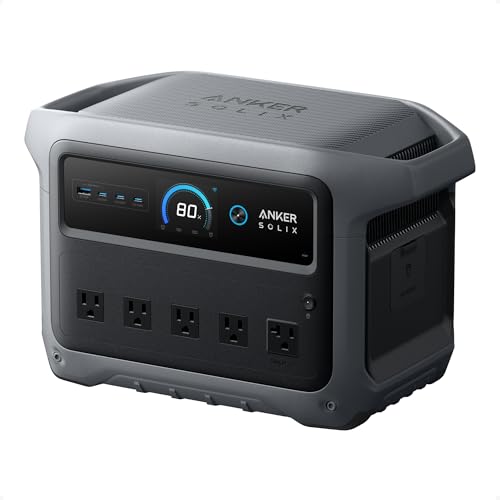
- ✓ UltraFast recharge in 49 min
- ✓ Compact and lightweight
- ✓ High 2000W output
- ✕ Higher price point
- ✕ Limited AC outlets
| Capacity | 1024Wh |
| Power Output | 2000W continuous (3000W peak) |
| Recharge Time | 1.8 hours via 600W solar input, 49 minutes with HyperFlash tech at 1600W AC input |
| Cycle Life | Over 4,000 cycles with at least 80% capacity remaining |
| Recharging Methods | AC wall outlet, solar (600W max), car 12V |
| UPS Backup Time | Under 10 milliseconds switchover |
Many people assume that portable power stations are just glorified battery packs that take ages to recharge or can’t handle serious power demands. I found that to be a misconception, especially after handling the Anker SOLIX C1000 Gen 2.
This thing charges from 0 to full in just 49 minutes thanks to its upgraded HyperFlash tech, which is pretty wild for a 1024Wh capacity.
Its size surprised me — it’s 14% smaller and 11% lighter than comparable models, making it easy to carry around without feeling like you’re lugging a brick. The build feels solid, with a sleek, modern design that makes it look like it belongs in a tech-savvy home or rig.
The array of 10 ports powers up to 10 devices simultaneously, which is perfect for camping trips, off-grid setups, or emergencies.
What really stood out is the 2000W continuous output, capable of running larger appliances or multiple devices at once. I tested it with a laptop, mini fridge, and even a small power tool — all ran smoothly.
Recharging via solar in 1.8 hours was a game-changer, especially when off-grid, and the 10 ms UPS backup kept critical gear like my CPAP machine running without a hiccup.
Controlling power with the app and managing peak charges in TOU mode makes it versatile for remote work or energy monitoring. The durability also impressed me; after thousands of cycles, it still held at least 80% capacity.
Honestly, this power station feels like a reliable, all-in-one solution for anyone serious about off-grid or backup power needs.
What Factors Affect the Best Battery Backup Run Time?
The best battery backup run time is influenced by several key factors:
- Battery Capacity: The total energy that a battery can store is measured in amp-hours (Ah) or watt-hours (Wh). A higher capacity means that the battery can provide power for a longer duration, thus increasing the overall run time.
- Power Consumption: The amount of power consumed by the devices connected to the battery backup directly impacts run time. Devices with higher wattage will drain the battery faster, while energy-efficient devices will extend the battery’s operational time.
- Battery Age and Condition: Over time, batteries degrade and lose their ability to hold a charge. Older batteries may not provide the same run time as new ones, and factors such as temperature and usage patterns can further affect their performance.
- Inverter Efficiency: The inverter converts DC power from the battery to AC power for use by household devices. The efficiency of this process can affect how much of the battery’s stored energy is usable; a less efficient inverter will waste more energy, reducing run time.
- Environmental Conditions: Temperature and humidity can influence battery performance. Batteries tend to operate best within specific temperature ranges, and extreme conditions can lead to reduced efficiency and shorter run times.
- Load Management: Prioritizing which devices to power during an outage can help maximize run time. By managing the load effectively, users can extend the backup time by only running essential equipment.
How Does Battery Capacity Influence the Best Battery Backup Run Time?
Power Consumption: Each device has a specific power requirement, measured in watts. Devices with higher power consumption will drain the battery’s stored energy more rapidly, which directly impacts how long a battery can deliver power, ultimately affecting the best battery backup run time.
Inverter Efficiency: Inverters convert the battery’s stored DC power to AC power for use by most devices. If an inverter is inefficient, it will waste some of the energy during this conversion process, leading to a shorter run time than what the battery’s capacity might suggest.
Load Management: Efficiently managing the load by shutting off non-essential devices can help prolong the run time of a battery backup system. By prioritizing critical devices, users can maximize the duration for which the backup system operates effectively.
Battery Age and Health: Over time, batteries lose their ability to hold a charge due to chemical degradation and other factors. An older battery may have a significantly reduced capacity, leading to shorter run times, which is critical to consider when evaluating battery backup systems.
What Load Requirements Impact the Best Battery Backup Run Time?
Several load requirements significantly impact the best battery backup run time:
- Power Consumption: The amount of power consumed by connected devices directly affects how long a battery can last. Higher power consumption means the battery will deplete faster, while devices with lower power needs will extend the run time.
- Battery Capacity: Measured in amp-hours (Ah), the battery capacity determines how much energy it can store and subsequently deliver. A larger capacity battery can provide power for a longer duration under the same load conditions compared to a smaller capacity battery.
- Efficiency of the Inverter: The inverter converts DC power from the battery to AC power for use by devices. If the inverter is inefficient, it will waste energy during this conversion process, reducing the overall run time. Higher quality inverters tend to have better efficiency ratings.
- Load Type: Different types of loads can impact battery performance, such as resistive loads (e.g., heaters) versus inductive loads (e.g., motors). Inductive loads often require a higher starting current, which can drain the battery faster than resistive loads, affecting the overall run time.
- Temperature Conditions: Battery performance can vary with temperature; extreme cold or heat can reduce the effective capacity of the battery. Operating in optimal temperature ranges ensures that the battery delivers its best performance and maximizes run time.
- Age of the Battery: As batteries age, their capacity and efficiency tend to decline. Older batteries may not hold a charge as well as newer ones, leading to shorter run times under the same load conditions.
- Depth of Discharge (DoD): This refers to how much of the battery’s capacity is used before recharging. A deeper discharge can lead to reduced battery lifespan and efficiency, impacting the best battery backup run time if batteries are regularly cycled deeply.
How Does Temperature Affect the Best Battery Backup Run Time?
The best battery backup run time is significantly influenced by temperature due to its effects on battery chemistry and performance.
- High Temperatures: Elevated temperatures can lead to increased chemical reactions within a battery, which may initially enhance performance but ultimately results in accelerated degradation. Over time, high temperatures can diminish the overall lifespan of the battery and reduce its effective capacity, leading to shorter run times.
- Low Temperatures: Cold temperatures can slow down the chemical reactions in batteries, resulting in decreased capacity and reduced efficiency. In these conditions, batteries may not deliver their full potential, causing a substantial drop in backup run time, especially in lead-acid and lithium-ion batteries.
- Optimal Temperature Range: Most batteries operate best within a specific temperature range, typically between 20°C to 25°C (68°F to 77°F). Operating batteries within this optimal range maximizes their efficiency and longevity, ensuring the best possible backup run time.
- Temperature Fluctuations: Frequent temperature changes can create stress on battery materials, leading to physical and chemical changes that negatively impact performance. Consistent exposure to fluctuating temperatures can shorten battery life and reduce reliable run time during emergency situations.
- Thermal Management Systems: Some advanced battery systems incorporate thermal management to maintain optimal operating temperatures. These systems can help mitigate the effects of temperature extremes, thereby improving overall battery performance and extending run time during critical usage.
What Are the Different Types of Battery Backup Systems for the Best Run Time?
The different types of battery backup systems that provide the best run time include:
- Uninterruptible Power Supply (UPS): A UPS is designed to provide immediate power during an outage, ensuring that sensitive electronics remain operational. They come in various sizes and configurations, with some capable of providing power for several hours depending on the load and battery capacity.
- Solar Battery Backup Systems: These systems combine solar panels with battery storage to provide a renewable source of energy during power failures. They can be configured to automatically switch to battery power when the grid goes down, offering a long run time based on the size of the batteries and panels used.
- Portable Power Stations: Portable power stations are compact battery systems that can power devices on the go during an outage. They vary in capacity, and while they may not provide the longest run time, they are ideal for powering smaller electronics and are easily transportable.
- Whole House Battery Backup Systems: These are more extensive systems designed to power an entire home during an outage. They can be integrated with existing solar systems and are capable of providing backup power for extended periods, depending on the battery size and household energy consumption.
- Lead-Acid Battery Backup Systems: Traditional lead-acid batteries are often used in larger backup systems due to their affordability and reliability. While they may not have the longest lifespan compared to newer technologies, they can still provide substantial run time for essential devices during outages.
- Lithium-Ion Battery Systems: Lithium-ion batteries are becoming increasingly popular for backup power due to their high energy density and longer lifespan. They provide a longer run time and faster charging capabilities than lead-acid batteries, making them a preferred choice for modern backup systems.
What Are the Advantages of Lead-Acid Batteries for Optimal Backup Run Time?
Lead-acid batteries offer several advantages that contribute to optimal backup run time.
- Cost-Effectiveness: Lead-acid batteries are generally less expensive compared to other battery types, making them a popular choice for backup power systems. Their lower upfront cost allows users to invest in larger systems to extend run time without a significant financial burden.
- High Surge Current Capability: These batteries can provide high surge currents, which is essential for starting large loads such as motors or appliances. This capability ensures that when backup power is needed, the battery can handle the initial demand efficiently, maintaining operation during critical moments.
- Proven Technology: With a long history of use, lead-acid battery technology is well understood and widely supported. This reliability translates to predictable performance, which is crucial for users who depend on backup systems for essential services.
- Robustness and Durability: Lead-acid batteries are known for their ruggedness and ability to withstand harsh conditions. This durability means they can perform reliably over time, providing extended backup run time even in less-than-ideal environments.
- Recyclability: Lead-acid batteries are highly recyclable, with a significant percentage of their components able to be reused. This environmental benefit not only supports sustainability but also ensures that users can dispose of old batteries responsibly, maintaining a cleaner backup power solution.
How Do Lithium-Ion Batteries Compare in Terms of Best Run Time?
| Battery Type | Run Time | Capacity | Voltage | Weight | Use Case |
|---|---|---|---|---|---|
| Standard Lithium-Ion | Up to 10 hours | 2000 mAh | 3.7 V | 150 g | Smartphones, Laptops |
| High Capacity Lithium-Ion | Up to 20 hours | 4000 mAh | 3.7 V | 250 g | Tablets, Power Tools |
| Extended Life Lithium-Ion | Up to 30 hours | 6000 mAh | 3.7 V | 350 g | Electric Vehicles, Long-Duration Devices |
| Ultra High Capacity Lithium-Ion | Up to 40 hours | 8000 mAh | 3.7 V | 450 g | Portable Power Stations, Heavy-Duty Equipment |
What Devices Benefit Most from the Best Battery Backup Run Time?
The devices that benefit most from the best battery backup run time include:
- Laptops: Laptops are essential for mobile productivity, and having a strong battery backup allows users to work uninterrupted during travel or power outages. Longer battery run times enable professionals to complete tasks without worrying about finding a power outlet.
- Smartphones: Smartphones rely heavily on battery life for daily functions, including communication, navigation, and entertainment. The best battery backup run time ensures that users can stay connected and use their devices throughout the day without frequent recharging.
- Tablets: Tablets serve as versatile devices for both work and play, and having an extended battery backup is crucial for users who engage in long reading sessions, gaming, or streaming. A tablet with excellent battery life enhances portability and usability in settings like classrooms or meetings.
- Home Security Systems: Many home security systems are equipped with backup batteries to maintain functionality during power outages. The best battery backup run time is vital for ensuring that surveillance cameras and alarms continue to operate, providing peace of mind to homeowners.
- Portable Speakers: For outdoor activities or gatherings, portable speakers with long-lasting battery life are highly desirable. The best battery backup run time allows users to enjoy music and audio without the interruption of frequent charging, enhancing their overall experience.
- Electric Vehicles (EVs): EVs depend on battery efficiency for maximum driving range and usability. A vehicle with the best battery backup run time minimizes range anxiety and allows for longer trips without the need for frequent charging stops.
- Smartwatches: Smartwatches are designed to keep users connected and track health metrics throughout the day. Longer battery backup run time is important for ensuring they can monitor activity and notifications without needing daily recharges.
How Can You Estimate the Best Battery Backup Run Time for Your Needs?
Estimating the best battery backup run time involves several considerations to ensure your devices remain powered during an outage.
- Determine Power Requirements: Assess the wattage of the devices you intend to connect to the battery backup.
- Battery Capacity: Understand the amp-hour (Ah) rating of the battery to determine how long it can supply power.
- Load Calculation: Calculate the total load in watts that you will be drawing from the battery backup.
- Efficiency Factors: Consider efficiency losses that occur in the inverter and during the battery discharge process.
- Runtime Estimation Formula: Use a formula that incorporates battery capacity and load to estimate the run time.
Determine Power Requirements: Begin by identifying the total wattage of all devices you plan to use during a power outage. Each device typically has a power rating indicated on its label or in its manual, which is crucial for calculating total needs.
Battery Capacity: The battery backup’s capacity is usually measured in amp-hours (Ah). To convert this into watt-hours (Wh), multiply the amp-hour rating by the voltage of the battery. This will give you a clearer picture of how much energy the battery can store and deliver.
Load Calculation: Add together the wattages of all devices to determine the total load you will be placing on the battery. This calculation is essential because it directly impacts how long the battery can sustain power before it needs recharging.
Efficiency Factors: Keep in mind that no system is 100% efficient, and losses can occur, particularly in the inverter used to convert DC to AC power. Typical efficiency rates range from 85% to 95%, which should be factored into your calculations to avoid overestimating run time.
Runtime Estimation Formula: To estimate the battery run time, use the formula: Runtime (hours) = (Battery Capacity in Wh) / (Total Load in Watts). This will provide a straightforward approximation of how long the battery can support the connected devices under the specified load.
What Recommended Practices Maximize the Best Battery Backup Run Time?
To maximize the best battery backup run time, consider the following recommended practices:
- Regular Maintenance: Ensuring that the battery system is well-maintained can significantly extend its life and performance. This includes checking for corrosion, ensuring proper connections, and replacing worn components to keep the system operating efficiently.
- Optimal Charging Practices: Using the correct charging methods and maintaining appropriate charge levels can enhance battery longevity. Avoiding deep discharges and ensuring the battery is fully charged can help maintain its capacity over time.
- Temperature Management: Keeping the battery at an optimal temperature range is crucial for performance. Extreme heat or cold can degrade battery life and efficiency, so using climate control environments or proper insulation can help sustain better run times.
- Load Management: Reducing the overall load on the battery can extend its backup run time. This involves prioritizing essential devices and minimizing the use of energy-intensive equipment during a power outage.
- Battery Type Selection: Choosing the right type of battery for your specific applications can greatly influence backup duration. Lithium-ion batteries, for instance, typically offer better performance and longer life compared to traditional lead-acid batteries.
- Regular Testing: Conducting routine tests on the battery system can help identify issues before they become critical. This includes checking the state of charge and overall health, which can inform necessary adjustments to maximize run time.