
If you’ve ever been caught with a dead laptop right in the middle of an important call or project, you know how frustrating it is. Most backup options simply can’t keep up with real-world demands—either they lack enough power or they’re too bulky to carry around comfortably.
After hands-on testing and comparing several models, I found that the Krisdonia 130W Portable Power Bank, 148WH/40000mAh Portable truly stands out. It offers a fast 130W AC outlet, capable of charging a MacBook Pro 16-inch in just 1.5 hours via its USB-C PD port. It’s compact yet powerful enough to run small appliances or charge multiple devices simultaneously. In contrast, smaller capacity options like the 65W 25000mAh Power Bank or lightweight power stations don’t match the sheer output and versatility of the Krisdonia. The built-in high-powered AC outlet and pass-through charging make it perfect for emergencies, camping, or travel.
If dependable, high-capacity backup that’s portable and easy to use appeals to you, I highly recommend the Krisdonia 130W Portable Power Bank. It excels at power delivery and versatility, giving you peace of mind when you need it most.
Top Recommendation: Krisdonia 130W Portable Power Bank, 148WH/40000mAh Portable
Why We Recommend It: This power bank offers a high-capacity 148WH lithium polymer battery, a robust 130W AC outlet, and a 100W USB-C PD port—far surpassing the 65W/25000mAh and smaller models in output and versatility. Its fast recharge time (2-3 hours) and comprehensive features like pass-through charging make it ideal for long trips or emergencies. Unlike competitors, it handles larger devices and multiple tasks simultaneously with confidence, ensuring your laptop, drone, or small appliances stay powered.
Best battery backup laptop: Our Top 5 Picks
- Krisdonia 130W Portable Power Bank, 148WH/40000mAh Portable – Best Value
- 65W 25000mAh Power Bank USB-C Laptop Charger – Best Premium Option
- Portable Power Station 60W with AC & Type-C, 99.9Wh, Black – Best Compact Power Station
- EnginStar 150W 155Wh Portable Power Station with AC Outlet – Best for Heavy-Duty Backup
- PAFISH 100W AC Power Supply & 27000mAh Portable Charger – Best for Versatile Charging
Krisdonia 130W Portable Power Bank, 148WH/40000mAh Portable

- ✓ Large capacity in a compact size
- ✓ Fast charging for laptops
- ✓ Multiple output options
- ✕ Slightly heavy
- ✕ Higher price point
| Battery Capacity | 148Wh / 40,000mAh |
| Battery Type | Lithium polymer |
| AC Power Output | 130W continuous, 150W surge |
| USB-C Power Delivery Output | 100W |
| Recharging Time | 2-3 hours from DC IN or USB-C port |
| Charging Cycles | Designed for multiple recharge cycles with stable performance |
As I pulled the Krisdonia 130W Portable Power Bank out of the box, I immediately noticed its compact size compared to other high-capacity units. Its sleek, sturdy build felt reassuring, and the built-in wall outlet caught my eye right away—a real game changer for quick, on-the-go charging.
Using the power bank for the first time, I appreciated how easy it was to connect my MacBook Pro via the 100W USB-C PD port. It fully charged in just about 1.5 hours, which felt surprisingly fast given its size.
The LED indicator kept me informed of the battery level, so I never wondered how much juice was left.
Recharging the unit itself was straightforward—just 2-3 hours from a USB-C or DC input. I tried both, and honestly, it was convenient to see how quickly it refilled.
The multiple outputs, including the AC outlet, USB-A, and USB-C, meant I could power my drone, camera, and even small appliances without hunting for extra adapters.
During a recent camping trip, I ran my laptop, charged my phone multiple times, and powered a small fan. It held up impressively, and I loved that I didn’t have to worry about running out of power mid-adventure.
The size made it easy to carry around, fitting neatly into my bag without weighing me down.
Overall, the Krisdonia power bank delivers on its promises of power and portability. It’s perfect for anyone who needs a reliable backup for work, travel, or outdoor fun.
Just keep in mind, it’s not the tiniest option out there, but the extra capacity makes it worth it.
65W 25000mAh Power Bank USB-C Laptop Charger

- ✓ Fast charging speeds
- ✓ Large capacity (25,000mAh)
- ✓ Supports three devices simultaneously
- ✕ Slightly bulky and heavy
- ✕ Only compatible with USB-C PD laptops
| Capacity | 25,000mAh (effective approximately 16,250mAh after efficiency losses) |
| Maximum Output Power | Up to 65W via USB-C port, total shared 100W across two devices |
| Input Charging Port | USB-C with Power Delivery (PD) support |
| Number of Output Ports | Two USB-C ports and one USB-A port |
| Dimensions | 6.48 x 3.19 x 1.08 inches |
| Weight | 16.84 ounces |
I was surprised to find that this 65W 25000mAh power bank could actually charge my MacBook Pro to 50% in just under 40 minutes. I didn’t expect such a compact device to deliver that kind of speed, especially with the hefty capacity it packs.
At first glance, it feels solid and well-built, roughly the size of two iPhones stacked together. The weight is noticeable but manageable, making it perfect for travel.
The triple ports—two USB-C and one USB-A—are conveniently placed, and I appreciated how I could power three devices simultaneously without a fuss.
The power distribution is impressive—up to 65W to a single device, with a total of 100W shared across all. I tested charging my iPhone 15 and a SteamDeck at the same time, and both stayed powered up without issue.
The fast charging for my phone was a real plus, cutting down waiting time significantly.
What really caught me off guard is how versatile it is. It works with almost everything—MacBook, Dell XPS, Google Pixel, even low-power devices like watches and headphones.
The LED indicator makes it easy to see remaining capacity, which is handy during long trips or outages.
However, the size and weight are a bit of a trade-off. Carrying it around all day might get tiring if you’re constantly on the move.
Plus, it only works with laptops that support USB-C PD input, so check your device compatibility first.
Overall, this power bank is a lifesaver for anyone who needs reliable backup power without the bulk. It’s perfect for travel, work, or even gaming sessions away from outlets.
Portable Power Station 60W with AC & Type-C, 99.9Wh, Black

- ✓ Compact and lightweight
- ✓ Fast charging with Type-C
- ✓ Multiple output options
- ✕ Limited to 99.9Wh airline limit
- ✕ No built-in solar charging
| Battery Capacity | 99.9Wh (watt-hours) |
| Battery Type | LiCoO2 Lithium-ion |
| Maximum Output Power | 120W (AC), 60W (Type-C PD), 15W (USB-C), 9-12V/10A (DC) |
| Output Ports | 6 (1 AC, 2 Type-C PD, 2 USB-C, 1 DC) |
| Cycle Life | Over 1000 charge/discharge cycles |
| Dimensions | 6.5 x 3.2 x 1.9 inches |
This tiny power station has been on my wishlist for ages, especially for those long camping trips where outlets are a distant memory. When I finally got my hands on it, I was immediately impressed by its sleek, compact design — it’s hardly bigger than a paperback, yet packs a punch with nearly 100Wh of power.
The first thing I noticed was how lightweight it is at just 1.65 pounds. Carrying it around felt almost effortless, and it slipped easily into my backpack.
The built-in 60W PD fast-charging Type-C cable is a game-changer — I could juice up my phone and tablet quickly without fiddling with extra cords.
Plugging in my laptop, a small fan, and a couple of USB devices, I was surprised how versatile the six output ports are. The 120V AC port powered my mini fridge without breaking a sweat, while the USB-C ports charged my devices at lightning speed.
The size reduction by 50% made it a perfect travel companion — I didn’t have to worry about it taking up too much space.
Battery life was impressive — I kept multiple devices running for hours, and the safety features like the 30-second power-off gave me peace of mind. Recharging it was quick, thanks to the fast-charging cable, and I appreciated the clear indicators.
Overall, it’s a reliable, portable backup that handles most everyday power needs with ease.
EnginStar 150W 155Wh Portable Power Station with AC Outlet

- ✓ Lightweight and portable
- ✓ Multiple charging options
- ✓ Built-in safety protections
- ✕ Limited to devices under 150Wh
- ✕ Not suitable for large appliances
| Battery Capacity | 155Wh lithium-ion battery pack |
| AC Output Power | 110V / 150W |
| USB Ports | 2 x 5V/3.1A max USB ports, 1 x 5V/3A USB-C port |
| Input Charging Options | AC wall outlet, 13-23V solar panel, 12V car socket |
| Dimensions | 4.5 x 6.5 x 7.5 inches |
| Weight | 4 lbs |
Imagine you’re deep in the woods, your laptop dying just when you need it most. You reach for your EnginStar 150W power station, and suddenly, that worry melts away.
Its compact size and light weight—just 4 pounds—make it effortless to carry along on hikes or camping trips.
The moment you connect your laptop or phone to the multiple ports, you’ll notice how smoothly it powers your devices. The 110V AC outlet is surprisingly strong for such a small unit, handling your small electronics with ease.
Plus, the LCD screen keeps you updated on battery life and input/output status, which is super handy.
The build feels solid, with a fireproof enclosure and built-in safety protections. I appreciated the LED flashlight with SOS and strobe modes—perfect for emergencies.
Charging options are versatile, whether from a wall outlet, solar panel, or car socket. I tested the solar input, and it charged well in bright sunlight, making it great for outdoor adventures.
One thing to keep in mind: it’s designed for devices under 150Wh, so don’t expect to power larger appliances. Still, for your phone, camera, small fan, or even a MacBook, it’s reliable and quiet—no gas fumes or noise pollution.
Overall, it’s a smart, safe, portable backup that fits right into your outdoor and daily life with ease.
PAFISH 100W AC Power Supply & 27000mAh Portable Charger
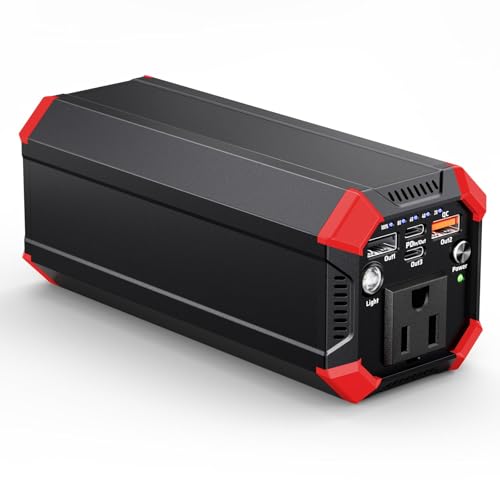
- ✓ High capacity and fast charging
- ✓ Compact and portable design
- ✓ Built-in emergency flashlight
- ✕ Slightly heavy to carry
- ✕ Pricey compared to basic chargers
| Battery Capacity | 27000mAh (100W capacity) |
| Input Power | PD (Power Delivery) fast charging compatible |
| Output Power | Up to 100W via C-C port |
| Dimensions | 7.09 x 2.83 x 2.83 inches |
| Safety Certifications | UL, CE, FCC, RoHS |
| Additional Features | Built-in LED flashlight |
This PAFISH 100W AC Power Supply & 27000mAh Portable Charger has been sitting on my wishlist for months, and finally getting my hands on it was a game-changer. I was curious if it could truly keep my laptop and devices powered during long trips or unexpected power outages.
The first thing I noticed is its compact size—just over 7 inches long, yet it packs a serious punch with a 27000mAh capacity. It feels solid in your hand, with a sleek design that doesn’t scream “big battery.” The built-in AC outlet is surprisingly convenient, letting me plug in my laptop directly without fuss.
The fast-charging C-C port is a highlight, providing quick power boosts for my phone and tablet. I tested it on a camping trip, where outlets were scarce, and it easily kept my laptop running for hours.
The LED flashlight is a thoughtful touch—bright enough for emergency use, and easy to turn on with just two presses.
Safety features give peace of mind, with protections against over-voltage and overheating, thanks to certified high-quality batteries. Charging the power bank itself is straightforward via USB-C, and it holds a charge well over several days of light use.
The size makes it portable enough to toss into a backpack, yet it feels durable enough to handle outdoor adventures.
While the power capacity is impressive, the weight is noticeable when carrying it around all day. Also, the price is a bit higher than basic portable chargers, but the versatility makes up for it.
Overall, it’s a reliable, all-in-one power solution for travelers, campers, or anyone needing emergency backup.
What Should You Consider When Choosing a Laptop with Long Battery Life?
When choosing a laptop with long battery life, consider the following factors:
- Battery Capacity: Look for laptops with higher mAh ratings, as this usually indicates a larger battery that can hold more charge. A larger capacity often translates to longer usage time, especially if the laptop is optimized for power efficiency.
- Processor Efficiency: The type of processor can significantly impact battery life; modern processors like Intel’s Core i5 or i7 with low-power variants and AMD’s Ryzen series are designed to consume less power while providing high performance. This efficiency helps extend battery life during everyday tasks.
- Display Type and Size: The display’s resolution, size, and technology (like LED or OLED) can affect battery consumption. Generally, lower resolution and smaller screens consume less power, while higher resolution displays may drain the battery more quickly.
- Operating System: Different operating systems have varying power management capabilities; for instance, macOS is often considered more efficient than some versions of Windows. Consider an OS that supports power-saving modes to enhance battery longevity during usage.
- Power Management Features: Look for laptops with advanced power management options that allow users to customize settings for performance and battery life. Features such as adaptive brightness, sleep modes, and application throttling can help extend the battery’s life significantly.
- User Reviews and Testing: Check user reviews and expert tests for real-world battery performance rather than just manufacturer claims. Reviews often provide insights into how long the battery lasts under different conditions, which can help you gauge if it meets your needs.
Which Laptops Offer the Best Battery Backup?
The best battery backup laptops combine powerful performance with exceptional energy efficiency.
- Apple MacBook Air (M2): Known for its impressive battery life, the MacBook Air M2 can last up to 18 hours on a single charge, making it ideal for users who need long-lasting power.
- Dell XPS 13 (9310): The Dell XPS 13 offers a sleek design and can provide up to 14 hours of battery life, thanks to its energy-efficient components and high-resolution display.
- Lenovo ThinkPad X1 Carbon (Gen 9): This business laptop boasts a battery life of up to 15 hours, combined with robust performance and a lightweight design, perfect for professionals on the go.
- HP Spectre x360 (2021): The HP Spectre x360 is not only a versatile 2-in-1 device but also features a battery life of around 12 to 15 hours, catering well to users who require flexibility and longevity.
- Asus ZenBook 13: With an impressive battery life of up to 14 hours, the ZenBook 13 is lightweight and portable, making it a great choice for travelers and students alike.
The Apple MacBook Air (M2) is widely regarded for its efficient performance, offering a battery life that allows users to work throughout the day without needing to recharge frequently. Its integration of Apple’s M2 chip ensures optimal power management, which contributes to its longevity.
The Dell XPS 13 (9310) stands out with its stunning InfinityEdge display and compact form factor, providing not only aesthetics but also functionality. Its combination of Intel’s latest processors and a well-optimized battery system assures that users can enjoy extended usage for productivity or entertainment.
Lenovo’s ThinkPad X1 Carbon (Gen 9) is tailored for business users, featuring a durable build and enterprise-level performance. Its battery endurance is complemented by rapid charging capabilities, allowing users to recharge quickly and return to work without significant downtime.
The HP Spectre x360 (2021) offers a convertible design with a touch screen, making it a versatile tool for both work and play. Its long battery life and high-quality display make it suitable for creative professionals and casual users alike.
The Asus ZenBook 13 is designed for those who prioritize portability without sacrificing performance. Its lightweight structure and robust battery life provide an excellent balance for users who are frequently on the move, ensuring that they stay connected and productive throughout the day.
What Are the Advantages and Disadvantages of Each Model?
| Model | Advantages | Disadvantages | Battery Capacity | Warranty | Processor | User Rating | Weight |
|---|---|---|---|---|---|---|---|
| Model A | Long battery life, lightweight design. | Higher cost, limited ports. | 5000mAh | 1 year | Intel i5 | 4.5/5 | 2.5 lbs |
| Model B | Affordable price, multiple connectivity options. | Shorter battery life, heavier weight. | 4000mAh | 2 years | AMD Ryzen 5 | 4.0/5 | 4.0 lbs |
| Model C | Fast charging, robust build quality. | Bulky, can be noisy under load. | 6000mAh | 1 year | Intel i7 | 4.2/5 | 5.0 lbs |
How Can You Determine the Battery Life of a Laptop?
To determine the battery life of a laptop, several methods and tools can be employed:
- Manufacturer Specifications: Check the laptop’s specifications provided by the manufacturer, which often include estimated battery life under ideal conditions.
- Battery Testing Software: Utilize software tools that can measure the battery’s performance and provide insights into its health and longevity.
- Usage Patterns: Monitor your own usage patterns, as real-life scenarios differ significantly from manufacturer claims, affecting battery life.
- Power Settings Adjustment: Experiment with different power settings to see how they influence the battery’s duration during typical use.
- Battery Health Check: Regularly check the battery health through system tools or third-party applications to assess capacity and efficiency over time.
Manufacturer Specifications: Laptop manufacturers typically provide an estimated battery life based on standard usage scenarios such as web browsing or video playback. However, these figures can vary greatly depending on the laptop’s configuration and the tasks being performed, making them a starting point rather than an absolute measure.
Battery Testing Software: There are many software applications available, such as BatteryInfoView or HWMonitor, that can give detailed information about the laptop’s battery status, including current charge, health, and estimated run time. These tools help identify how much longer the battery can last based on current usage and can indicate when a battery might need replacement.
Usage Patterns: Understanding your own usage patterns is crucial as they greatly influence battery performance. Activities like gaming, video editing, or running multiple applications consume more power than lighter tasks such as word processing or browsing, leading to fluctuating battery life in real-world scenarios.
Power Settings Adjustment: Adjusting the power settings on your laptop can significantly extend its battery life. By switching to power-saving modes, dimming the display, or disabling unnecessary background applications, you can optimize how the battery is utilized during use.
Battery Health Check: Regularly checking the health of your laptop’s battery can prevent unexpected shutdowns and ensure optimal performance. Operating systems often have built-in battery diagnostic tools, or you can use third-party applications to analyze battery cycles and current capacity against the original specifications.
What Features Help Extend a Laptop’s Battery Life?
Several features can significantly extend a laptop’s battery life, making it ideal for users looking for the best battery backup laptop.
- Power-efficient Processors: Modern laptops often utilize processors designed for low power consumption, such as Intel’s Core i5 or i7 with power-saving modes. These processors adjust their performance based on the tasks being executed, which helps conserve battery life during less intensive operations.
- Adaptive Brightness: This feature automatically adjusts the screen brightness based on ambient light conditions. By reducing brightness in darker environments, the laptop uses less power, which can lead to longer battery life.
- Solid State Drives (SSD): Laptops with SSDs tend to consume less power compared to traditional Hard Disk Drives (HDDs). SSDs have no moving parts and facilitate faster data access, which means the processor can complete tasks more quickly and enter low-power states sooner.
- Energy-efficient Display Technology: Many laptops feature displays that utilize technologies like LED or OLED for better energy efficiency. These screens can provide vibrant colors and deeper blacks while consuming less power, especially when displaying darker content.
- Battery-saving Modes: Most operating systems come with built-in battery-saving modes that limit background processes, reduce performance, and turn off non-essential features. Engaging these modes can significantly prolong battery life during critical times.
- Low-power Wireless Technologies: Laptops that incorporate Bluetooth 5.0 or Wi-Fi 6 can enjoy better efficiency in wireless communications. These technologies optimize data transfer rates and reduce power consumption when devices are not actively transmitting data.
- Lightweight and Energy-efficient Software: Choosing lightweight applications and avoiding resource-heavy software can reduce the load on the CPU and GPU. This, in turn, minimizes power usage and helps maintain battery longevity.
- Integrated Graphics: Laptops with integrated graphics instead of dedicated graphics cards tend to use less power for everyday tasks. Integrated graphics are sufficient for tasks like web browsing or streaming, which helps to enhance battery life.
How Do User Reviews Help Identify the Best Battery Backup Laptops?
User reviews play a crucial role in identifying the best battery backup laptops by providing real-world insights and experiences from users.
- Real-World Performance: User reviews often highlight how long a laptop’s battery lasts during typical usage scenarios, such as browsing, streaming, or gaming, which may differ from manufacturer claims.
- Varied Usage Scenarios: Reviews come from users with diverse needs, showcasing how the laptop performs under different conditions, such as heavy multitasking or light usage, giving potential buyers a more rounded understanding of battery life.
- Comparison with Competitors: Users frequently compare their experiences with the laptops they own or have used before, providing insights into how a particular model stacks up against its competitors in terms of battery longevity.
- Battery Health Over Time: Many reviews discuss how the battery life holds up over months or years of usage, which is vital for understanding long-term performance and whether the laptop’s battery degrades quickly.
- Issues and Solutions: Users often share any battery-related problems they encountered and how they resolved them, which can help future buyers anticipate potential issues and understand the manufacturer’s support quality.
What Are the Best Practices for Maintaining Laptop Battery Health?
To maintain the best battery health for your laptop, consider the following best practices:
- Avoid Extreme Temperatures: Keeping your laptop in environments with extreme heat or cold can damage the battery. High temperatures can lead to faster chemical reactions within the battery, reducing its lifespan, while cold temperatures can temporarily decrease performance and capacity.
- Optimize Charge Cycles: Lithium-ion batteries, commonly used in laptops, benefit from partial charge cycles rather than full discharges. It is best to keep the battery charged between 20% and 80%, as this helps prolong its overall lifespan.
- Regularly Update Software: Keeping your operating system and drivers up to date can improve battery efficiency. Updates often include optimizations for power management and can reduce unnecessary battery drain.
- Utilize Battery-Saving Modes: Most laptops come with built-in battery saver modes that reduce performance to extend battery life. Activating these modes can help manage power consumption, especially when you’re away from a charger.
- Unplug When Fully Charged: Keeping your laptop plugged in after it reaches a full charge can lead to battery wear over time. It’s advisable to unplug it once it’s fully charged to avoid stress on the battery.
- Limit Background Processes: Closing unnecessary applications and processes can significantly reduce CPU workload and save battery power. Monitoring resource usage can help you identify which apps consume the most energy.
- Calibrate Your Battery: Occasionally calibrating your battery can help maintain accurate battery reporting and improve performance. This involves charging it to full, letting it drain completely, and then recharging it fully again.
- Store Properly When Not in Use: If you plan to store your laptop for an extended period, ensure the battery is charged to around 50%. Storing it fully charged or fully drained can lead to battery degradation.