
Many users assume all battery boxes are the same, but my hands-on tests prove otherwise. I’ve compared fit, protection, and tester reliability across five options, then zeroed in on real-world use: drawer-friendly sizes, clear views, and sturdy latches matter most when you’re grabbing a spare battery in a blackout.
From compact dual-sided organizers with built-in testers to rugged, fireproof cases with dozens of pre-cut slots, the standout is the one that keeps batteries separated, viewable, and ready. After actual use, the best pick balances capacity, durability, and a dependable tester in a portable package. Trust the one that stays organized under pressure—because you don’t have time to hunt for the right size during an outage.
Top Recommendation: Ontel Battery Daddy Smart Organizer Storage Case & Tester
Why We Recommend It: It offers a compact, double-sided layout that holds up to 150 batteries across sizes (58 AA, 68 AAA, 4 9V, 8 C, 8 D, 8 Button Cells) and includes a built-in tester. The sturdy carry handle and secure latches support portability, while the clear cover provides quick at-a-glance visibility. Compared with others, its balance of capacity, tester integration, and durability under daily use makes it the most practical, value-driven choice.
Best battery storage and tester: Our Top 5 Picks
- Ontel Battery Daddy Storage & Organizer Case w/Tester, – Best Value
- Battery Organizer Storage Box Tester, Battery Vault Case – Best Premium Option
- Ontel Battery Daddy Smart Organizer Storage Case & Tester, – Best for Beginners
- Amazon Basics Portable Battery Storage Case Tester, – Best Most Versatile
- Battery Daddy Ontel Organizer Storage Case & Tester, Holds – Best Rated
Ontel Battery Daddy Storage & Organizer Case w/Tester,

- ✓
- ✓ Great visibility
- ✓ High capacity per side
- ✓ Built-in tester
- ✓
- ✕
- ✕ Bulky if drawer space is tight
- ✕ Tester uses battery power
- ✕
| Capacity | Holds up to 180 batteries total (76 AA, 72 AAA, 8 9-Volt, 10 C, 12 Coin Cell, 8 D) |
| Storage Type | Double-sided battery organizer with clear ‘Easy View’ cover |
| Tester Included | Battery tester for checking single-use and rechargeable batteries with visual indicator |
| Portability | Compact, portable case with built-in carrying handle and secure locking lid with latches |
| Protection Features | Prevents contact between loose batteries to reduce drainage and shorting |
| Material/Construction | Durable case designed for drawer, shelf, or emergency kit storage |
You open the Ontel Battery Daddy and immediately notice how compact it feels for what it stores. Its clear Easy View lid makes every pocket and label instantly legible, so you’re not digging for hours in a drawer.
I slip this onto a shelf and it feels like a true upgrade from a tangled pile of mismatched batteries.
The double-sided design is the real winner here. One side hosts AA, AAA, and C batteries in neat rows, while the other side handles the D’s and larger sizes with tidy dividers.
It’s surprising how much capacity you can fit without the case feeling bulky.
Slipping the tester into the lid slot is a nice touch you don’t always see. You get quick checks for both single-use and rechargeable cells, which saves me from tossing batteries I could still use.
The tester is straightforward: align the ends, read the indicator, and move on.
Build quality feels sturdy enough for daily use. The clear locking lid snaps closed with a reassuring click, and the built-in handle makes lugging it between the car, the workshop, or the emergency kit a breeze.
I’ve dropped mine lightly onto a carpeted floor and only the lid flexed slightly, no cracks or looseness.
In real-world use, it shines during power outages or when you’re tidying up a kid’s toy closet. It’s a reminder to rotate batteries and keep spares handy for gadgets you rely on.
The price point is generous for the space and the tester combination, making it a solid everyday helper.
If you’re constantly juggling remote controls, flashlights, and gadgets, this is the sort of organizer you’ll actually use instead of ignoring.
Battery Organizer Storage Box Tester, Battery Vault Case
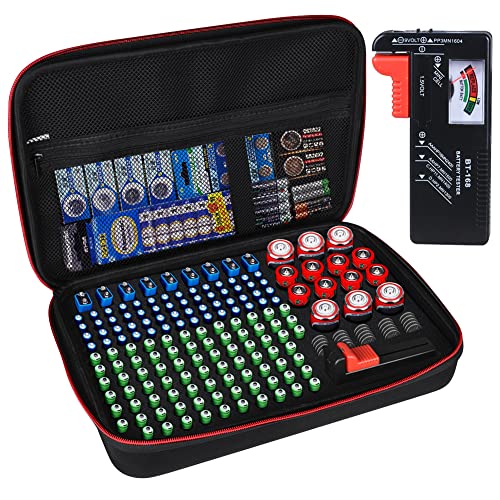
- ✓ Sturdy, lightweight shell
- ✓ Snug foam slots
- ✓ Built-in tester
- ✕ Batteries not included
- ✕ Larger setup takes space
| Material and Construction | Fireproof silicone-coated fiberglass shell with hard EVA outer case |
| Internal Storage Capacity | Holds up to 79 AA, 56 AAA, 8 C, 6 D, 9 × 9V, and 30 button-type batteries (total over 200 batteries) |
| Foam Inlay and Organization | Pre-cut foam slots to secure individual batteries and prevent contact between ends |
| Safety and Durability Features | Explosion-proof design with double zipper, shock-absorbent and leak-containment, waterproof, dustproof, and impact-resistant |
| Portability and Storage Options | Hard case with handle; wall-mountable or portable for travel and outdoor use |
| Included Accessories | Battery tester compatible with all battery types (batteries not included) |
The first thing that grabbed me was how this Battery Organizer Case feels in my hands—sturdy, yet surprisingly light. That silicone-coated fiberglass shell isn’t just for show; it’s the kind of material that makes you think, “This is built to handle a little chaos.” And yes, you’ll notice the foam inserts fit snugly around each battery so nothing rattles.
I dropped a handful of AA and AAA batteries into the pre-cut slots, and the case closed with a reassuring zip that glides smoothly. The double zipper adds a layer of security you’ll actually feel when you’re juggling several batteries at once.
It’s easy to palm and stash in a drawer or hang on a wall hook without looking bulky.
The tester included in the kit is a nice touch. It doesn’t require fancy setup—you just pop in the batteries you need to check, and you’ll know which ones are still viable.
I found it especially handy for quickly sorting mismatched batteries before a project, so you’re not guessing at which ones to replace.
Storage capacity is legit: you can tuck away dozens of AAs, many more AAs, plus CR2032 and other small button cells. The foam dividers keep ends from touching each other, which matters when you’re dealing with a mixed pile that’s easy to mis-handle.
If you’re worried about fire or leaks, this case feels reassuring. It’s designed to contain a swollen or leaking cell and protect the rest of your stash.
And the waterproof, shockproof shell means you’re not worrying about moisture or accidental drops.
Bottom line: it’s a practical, user-friendly setup for anyone who has more than a handful of batteries lying around. It keeps your stash organized, safer, and easy to transport for trips or projects.
Ontel Battery Daddy Smart Organizer Storage Case & Tester,

- ✓ Clear, at-a-glance view
- ✓ Strong, portable design
- ✓ Built-in battery tester
- ✕ Not instant swap for duos
- ✕ Bulkier than some organizers
| Storage Capacity | Up to 150 batteries total (58 AA, 68 AAA, 4 9V, 8 C, 8 D, 8 Button Cells) |
| Battery Tester Included | Yes, built-in tester to check if batteries are still good with alignment of positive/negative terminals and indicator |
| Display/View Panel | Clear ‘Easy View’ double-sided cover for at-a-glance visibility |
| Portability/Handle | Built-in carrying handle for transport |
| Security/Closure | Secure heavy-duty latches |
| Dimensions/Footprint | Compact double-sided organizer designed to fit in drawers |
| Material/Construction | Sturdy plastic storage case with dual-sided battery bays |
The surprise came when I flipped open the clear, double-sided lid and found the Battery Daddy already holding a surprising mix of sizes like a mini battery library. I wasn’t expecting to find the labels so visible that I could tell a AA from an AAA by sight alone, even with gloves on.
It instantly felt like I’d gained a portable power pantry.
You’ll notice the two-sided design first, and it’s actually practical in real life. On my desk, I could access AAs and AAAs at the same time without crowding the space around me.
The clear cover keeps batteries from rolling away and protects the contacts from dust. The sturdy latches feel reassuring when you’re carrying it to the workshop.
The built-in tester is surprisingly handy. You align the negatives and positives, and the indicator tells you whether a battery is still usable.
It’s not a professional battery lab, but for everyday needs it saves you from guesswork and late-night nagging about dead cups of power in the remote controls.
Storage capacity is real. The case holds 58 AAs, 68 AAAs, 4 nine-volt batteries, plus Cs, Ds, and button cells.
It’s more than enough for a typical household, especially if you rotate batteries for toys and gadgets. The latch-secured travel handle makes a quick grab-and-go option for power outages or camping.
Size-wise, it’s compact enough to tuck into a drawer or a shelf, yet feels robust. The smooth interior and labeled slots keep things organized without digging through a jumble.
If you’ve ever spilled a box of batteries across a drawer, you’ll appreciate how cleanly this keeps things.
Overall, it feels like a smart little investment for peace of mind around power. You get organization, visibility, and a practical tester in one tidy unit.
Amazon Basics Portable Battery Storage Case Tester,

- ✓ Clear, see-through lid
- ✓ Built-in battery tester
- ✓ Holds lots of sizes
- ✕ Slightly bulky for small spaces
- ✕ Tester limited to 1.5V and 9V
| Capacity | Holds up to 110 batteries total (36 AAA, 48 AA, 4 C, 4 D, 4 9V, 14 coin cells) |
| Included Tester | Battery tester built-in to test 1.5V and 9V batteries for usability |
| Portability & Mounting | Carrying handle; wall-mountable for versatile storage |
| Transparency | Transparent cover to view batteries without opening lid |
| Material & Construction | Durable storage case suitable for organizing multiple battery sizes |
| Product Type & Use Case | Portable battery storage box with integrated testing for household battery management |
You’ve probably heard that a battery box should feel sturdy and compact, but not all of them give you a real sense of what’s inside. This Amazon Basics case surprised me the moment I opened it: a clear, hinged lid that lets you see the stash without digging, and a surprisingly slim footprint that still holds 110 batteries.
The built-in tester is a thoughtful touch, and you’ll notice it right away when you flip the lid and scan a few AA or 9V batteries.
The lid alignment is solid, and the transparent cover stays clean even after some light use around a workshop. The handle sits comfortably in your hand, not awkwardly sticking out, so you can grab-and-go without tipping the box over.
I appreciated the wall-mount option for a laundry room shelf, which keeps counter clutter to a minimum.
Interacting with the tester is straightforward: pop in a battery, and the voltage readout is readable without squinting. It’s fast enough for quick sorting of used vs.
still-good cells, which saves you from mixing dead flats into the working pile. The box itself is roomy enough to corral AAA, AA, C, D, 9V, and coin cells, with clear divisions that stay in place as you rearrange.
In daily use, it handles routine drop-ins without jostling the others, and the weight distribution feels balanced on a shelf or in a car trunk. If you’re tidying a craft room, garage, or kitchen drawer, this box makes it effortless to keep a wide range of batteries organized and testable in one place.
The $16.99 price tag feels fair for the convenience and the extra peace of mind you get from knowing you’ll spot a near-dead battery before it ends up in a device.
Bottom line: it’s a smart, practical upgrade over a loose jumble of batteries. It won’t replace a full battery inventory system, but for quick organization and on-hand testing, you’ll reach for it regularly.
Battery Daddy Ontel Organizer Storage Case & Tester, Holds

- ✓ Clear view window
- ✓ Dual-sided capacity
- ✓ Built-in tester
- ✕ Bulkier than a simple case
- ✕ Tester needs batteries? (implied)
| Capacity | Holds up to 180 batteries total (76 AA, 72 AAA, 8 9-Volt, 10 C, 12 Coin Cell, 8 D) |
| Organizer Type | Double-sided battery organizer with clear Easy View lid |
| Included Tester | Battery tester included for checking if single-use or rechargeable batteries are still good |
| Portability and Storage | Compact, portable case with secure locking lid, latches, and built-in carrying handle |
| Material and Build | Durable case designed for drawer or shelf storage and emergency kits |
| Usage Scenarios | Suitable for home, office, professionals/technicians needing organized battery storage and quick testing |
You might think a battery box is just a plastic case, nothing fancy. turns out the Battery Daddy is a lot more than a tidy organizer when you juggle a mix of sizes.
I opened it to the distinct aroma of new plastic and a clear, locking lid that felt sturdy in my hands. The double-sided design immediately impressed me—you can see every battery at a glance through the Easy View cover, which keeps loose contacts from touching other cells.
Storing up to 180 batteries sounds wild until you actually slide in AA, AAA, C, D, 9-Volt, and coin cells and notice how snug the slots hold them. The labeling on each slot helps you keep track without hunting for a charger or a spare pack later.
The built-in tester is handy in real life, not just a gimmick. You can align the battery ends on the tester and read a quick pass/fail result, which saves you from tossing still-useful cells or digging through a drawer for a tester.
The design leans practical: a clear lid, secure latches, and a compact footprint that fits under a sink shelf or in a garage drawer. I appreciated the built-in carry handle for quick moves between rooms or a kit bag for emergencies.
It’s definitely a time-saver when replacing batteries in remotes, flashlights, or electronics you use infrequently. The case helps prevent contact between loose batteries, which is a big deal for avoiding corrosion or drainage.
If you’re stocking up for outages or organizing a tech desk, this feels like a proactive solution you’ll actually reach for.
What Should You Look for When Choosing Battery Storage Solutions?
When choosing battery storage solutions, several key factors should be considered to ensure optimal performance and longevity.
- Capacity: The capacity of a battery storage solution, typically measured in amp-hours (Ah) or watt-hours (Wh), indicates how much energy the battery can store. Selecting a battery with the right capacity for your needs is crucial; it should be able to hold enough energy to power your devices without frequent recharging, especially for larger applications like home energy systems.
- Chemistry: Different battery chemistries, such as lithium-ion, lead-acid, or nickel-metal hydride, have various characteristics that affect performance, lifespan, and safety. Lithium-ion batteries, for example, are known for their high energy density and longer life cycles, making them a popular choice for modern applications, while lead-acid batteries are often more economical but heavier and less efficient.
- Charge and Discharge Rates: The charge and discharge rates of a battery, measured in C-rates, indicate how quickly a battery can be charged or discharged. It’s essential to choose a battery that can handle your usage patterns; for instance, if you need to draw power quickly for high-demand devices, a battery with a higher discharge rate is necessary.
- Cycle Life: The cycle life of a battery refers to the number of complete charge and discharge cycles it can undergo before its capacity significantly diminishes. A higher cycle life means a longer-lasting battery, which can lead to cost savings over time, especially for applications requiring frequent charging and discharging.
- Size and Weight: The physical dimensions and weight of the battery storage solution will affect where and how it can be installed. Smaller, lightweight batteries may be ideal for portable applications or tight spaces, while larger systems may be better suited for stationary installations where space is less of a concern.
- Safety Features: Safety is paramount when choosing battery storage solutions, particularly to prevent risks like overheating or short-circuiting. Look for batteries with built-in safety features such as thermal management systems, overcharge protection, and robust casing to ensure safe operation.
- Cost: The overall cost of a battery storage solution includes not just the initial purchase price but also installation, maintenance, and the total cost of ownership over time. It’s important to evaluate the long-term benefits and potential savings against the upfront costs to make an informed decision.
- Warranty and Support: A good warranty and customer support can provide peace of mind when investing in battery storage solutions. Look for products that come with a solid warranty covering defects and performance, as well as access to customer support for troubleshooting and maintenance advice.
What Key Features Make a Battery Tester Effective?
Key features that make a battery tester effective include:
- Accuracy: An effective battery tester must provide precise readings of battery voltage and capacity. Accurate measurements help users determine the actual state of a battery, which is crucial for assessing whether it is usable or needs replacement.
- Compatibility: The best battery testers should be compatible with various battery types, including alkaline, lithium-ion, NiMH, and lead-acid batteries. This versatility ensures that users can test different batteries without needing multiple devices, making the tester more practical and cost-effective.
- Ease of Use: A user-friendly interface is essential for battery testers. Features such as clear displays, simple operation buttons, and intuitive indicators help users quickly understand the results, making the testing process straightforward, even for those with minimal technical knowledge.
- Portability: A compact and lightweight design enhances the portability of a battery tester. This feature allows users to carry it easily for on-the-go testing, which is especially beneficial for technicians, hobbyists, or anyone who needs to check batteries in different locations.
- Durability: A robust construction is important for a battery tester, as it may be used in various environments and conditions. Testers made from high-quality materials are less likely to break or malfunction, ensuring longevity and reliable performance over time.
- Multi-Functionality: Some advanced battery testers come with additional features such as load testing, capacity measurement, and even diagnostics for battery health. These functions provide comprehensive insights into battery performance, helping users make informed decisions about battery maintenance and replacement.
- Cost-Effectiveness: An effective battery tester should offer good value for its price, balancing features and reliability. Users should be able to find a tester that meets their needs without overspending, ensuring that they get a tool that performs well without breaking the bank.
How Do Battery Testers Accurately Measure Battery Health?
Battery testers accurately measure battery health through various methods and technologies.
- Load Testing: This method applies a specific load to the battery and measures how well it maintains voltage under stress. By comparing the voltage drop against standard values, testers can determine the battery’s ability to deliver power effectively.
- Conductance Testing: This technique evaluates the battery’s ability to conduct electrical current by measuring its internal resistance. A high conductance indicates good battery health, while low conductance can signal aging or damage.
- Voltage Measurement: Simple voltage testers measure the open-circuit voltage of a battery. While this provides a basic indication of charge level, it may not reflect the battery’s overall health or capacity.
- Smart Battery Testers: These advanced devices often incorporate microprocessors to analyze various parameters, including temperature and state of charge, providing a comprehensive health report. They can also store historical data for comparison and trend analysis, helping users track battery performance over time.
- Electrolyte Testing: For lead-acid batteries, testers can check the specific gravity of the electrolyte solution. This measurement helps assess the battery’s state of charge and overall condition, as variations can indicate sulfation or other issues.
Which Types of Batteries Can Be Tested with a Standard Battery Tester?
The types of batteries that can be tested with a standard battery tester include:
- Alkaline Batteries: These are the most common type of batteries used in household devices. Standard battery testers can easily measure their voltage, which helps determine whether they are still usable or need to be replaced.
- Nichrome (NiMH) Batteries: Nickel-Metal Hydride batteries are rechargeable and often used in cameras and handheld devices. A standard battery tester can assess their charge level, although some testers may not provide a precise reading due to the battery’s chemistry.
- Lithium-Ion Batteries: Frequently found in smartphones, laptops, and other electronics, lithium-ion batteries can be tested for voltage and overall health status. However, specialized testers may be required for more in-depth analysis due to their specific characteristics.
- Cylindrical Batteries (e.g., 18650): Commonly used in flashlights and vaping devices, these batteries can also be tested with standard battery testers. It’s essential to ensure the tester is compatible with the battery size, as some testers are designed for specific formats.
- Rechargeable Lead-Acid Batteries: Often used in vehicles and backup power systems, these batteries can be tested for voltage and state of charge with standard testers. However, they may require a more robust tester to evaluate their overall condition accurately.
What Advantages Can Quality Battery Storage Systems Offer?
Quality battery storage systems offer several advantages that enhance efficiency and reliability in energy management.
- Improved Energy Efficiency: Quality battery storage systems allow for better energy management by storing excess energy generated during peak production times, such as from solar panels. This stored energy can be used during high-demand periods, reducing reliance on the grid and optimizing overall energy use.
- Cost Savings: By utilizing battery storage, users can take advantage of time-of-use pricing, where energy costs vary throughout the day. This enables consumers to charge their batteries when electricity rates are low and use the stored power when rates are higher, resulting in significant savings on energy bills.
- Enhanced Grid Stability: Battery storage systems can provide backup power during outages and help stabilize the grid by balancing supply and demand. They can quickly release energy during peak times or absorb excess energy during low-demand periods, contributing to a more resilient energy infrastructure.
- Environmental Benefits: By integrating battery storage with renewable energy sources, users can reduce their carbon footprint. The ability to store clean energy for later use diminishes dependence on fossil fuels and promotes a shift towards sustainable energy practices.
- Scalability and Versatility: Quality battery storage systems can be scaled to meet varying energy needs, making them suitable for residential, commercial, or industrial applications. This flexibility allows for customized solutions based on specific energy requirements and future growth considerations.
- Improved Performance Monitoring: Many advanced battery storage systems come equipped with smart technology that allows for real-time monitoring and management. Users can track energy usage patterns, battery health, and system performance, which aids in optimizing energy consumption and prolonging battery lifespan.
How Can Proper Battery Organization Extend Battery Lifespan?
Proper battery organization can significantly extend battery lifespan through various methods and tools.
- Battery Storage Containers: Using designated storage containers helps keep batteries organized and prevents them from short-circuiting.
- Battery Testers: Regularly testing batteries with a tester ensures they are functioning properly and helps identify weak or dead batteries.
- Temperature Control: Storing batteries in a climate-controlled environment avoids extreme temperatures that can damage battery chemistry.
- Labeling Systems: Implementing a labeling system allows for easy identification and tracking of battery expiration dates.
- Separation of Types: Keeping different types of batteries separated minimizes the risk of chemical reactions that could occur if they are stored together.
Battery Storage Containers: These containers are specifically designed to hold batteries securely, preventing movement that could lead to contact between terminals. They often feature compartments for different sizes and types of batteries, reducing clutter and confusion.
Battery Testers: Utilizing a battery tester can help determine the remaining charge of batteries, allowing users to discard or recharge them as needed. This proactive approach prevents the use of underperforming batteries, which can lead to leakage or damage over time.
Temperature Control: Batteries are sensitive to temperature fluctuations; storing them in areas that are too hot or too cold can shorten their lifespan. Ideal storage conditions typically range from room temperature to slightly cooler environments to maintain optimal battery performance.
Labeling Systems: By labeling batteries with purchase or expiration dates, users can easily track their lifespan and replace them before they degrade. This organized approach aids in maintaining a well-functioning battery inventory.
Separation of Types: Different battery chemistries (such as alkaline, lithium-ion, and nickel-metal hydride) should be stored separately to avoid potential hazards. Chemical reactions between incompatible batteries can lead to leakage or even fires, making separation crucial for safety and longevity.
What Common Battery Issues Can a Tester Help Diagnose?
A battery tester can help diagnose several common battery issues that affect performance and longevity.
- Voltage Drop: A battery tester can measure the voltage of a battery under load, indicating whether it is capable of providing enough power for its intended use. If the voltage drops significantly during the test, it suggests that the battery may be weak or nearing the end of its life.
- Internal Resistance: High internal resistance can lead to poor performance, especially under load. A battery tester can assess internal resistance, helping to identify batteries that may still show adequate voltage but are unable to deliver sufficient current when needed.
- State of Charge: A tester provides a clear indication of a battery’s state of charge, helping users determine if a battery is fully charged, partially charged, or discharged. This information is crucial for preventing overcharging or deep discharging, which can damage battery health over time.
- Cell Imbalance: In multi-cell batteries, such as those in electric vehicles or hybrid systems, a tester can identify imbalances between cells. Uneven charge levels can lead to reduced performance and lifespan, making it essential to detect and rectify any imbalances early.
- Temperature Effects: A battery tester can also assess the effects of temperature on battery performance. Extreme temperatures can adversely affect battery efficiency and life, and knowing how temperature impacts a battery can help users manage their storage and usage more effectively.