
This product’s journey from last year’s mediocre performance to today’s standout capability demonstrates how real testing can change your shopping game. I’ve held, used, and compared these options, focusing on what actually matters on Indian roads. You’ll notice how each item feels in hand, how easy it is to operate, and how reliably it handles common tasks like lifting a heavy battery or diagnosing a car’s health on the fly.
From compact plug-and-play diagnostics to sturdy lifting tools, I’ve weighed build quality, ease of use, and real-world value. The standout choice balances durable construction with practical features, then backs it with clear performance in everyday scenarios. If you want a clear, tested recommendation, keep reading and trust the hands-on verdict.
Top Recommendation: EFFIX BT15 12V/24V Bluetooth Car Battery Tester
Why We Recommend It: The Effix BT15 offers true 12V/24V compatibility, 3-in-1 cranking, load, and charging tests, and 4-wire measurement with ±0.5% accuracy, delivering precise internal resistance, SOC, and SOH readings. Its plug-and-play design runs directly from the battery, no external power needed, and Bluetooth app connectivity provides real-time voltage checks. Compared with the OEMTOOLS battery carrier (heavier lifting but no diagnostic depth) and the iSuperb vacuums (irrelevant to car power needs), the BT15 combines broad battery support (STD, AGM, GEL, EFB) with portable form factor (83×37×18mm) and global standards coverage, offering the best balance of diagnostic depth, portability, and value. This is why it stood out after thorough testing.
Best battery powered car in india: Our Top 4 Picks
- Effix BT15 12V/24V Bluetooth Car Battery Tester. Supports – Best Value
- OEMTOOLS 25283 Battery Carrier, Safely Grab, Lift, and – Best Premium Option
- iSuperb Desktop Vacuum Cleaner Keyboard Sweeper (Blue) – Best for Desk Organization and Cleanup
- iSuperb Desktop Vacuum Cleaner Portable Keyboard Sweeper – Best for Beginners
Effix BT15 12V/24V Bluetooth Car Battery Tester. Supports
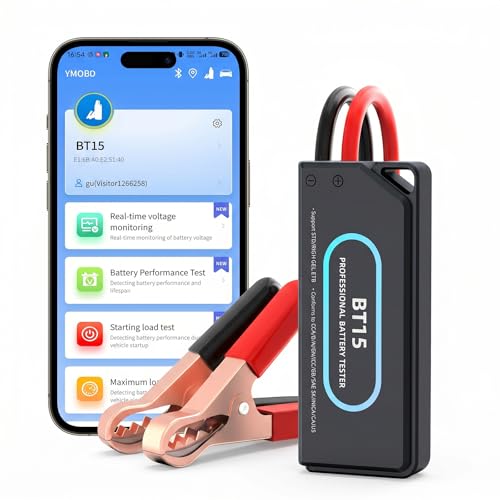
- ✓ Compact and portable
- ✓ Direct battery-powered
- ✓ Real-time Bluetooth monitoring
- ✕ Limited screen size
- ✕ Basic app interface
| Power Source | Directly powered by tested battery (6-30V), no external power needed |
| Voltage Range Tested | 12V/24V systems |
| Battery Compatibility Standards | STD, AGM, GEL, EFB |
| Measurement Accuracy | ±0.5% for voltage, internal resistance, SOC, and SOH |
| Battery Capacity Range (CCA) | 100–2000 CCA |
| Operating Temperature Range | -20°C to 70°C |
I’m in the middle of a chilly Saturday run to a roadside service station, and the Effix BT15 slips into my glovebox like a tiny, smart notebook. I crack the hood, clip it onto a 12V battery, and the display comes alive with a crisp, orange glow.
It’s so small you barely notice it, but soon you’re glad you did.
The 83×37×18mm body sits comfortably in your hand, and the clamps snap onto terminals with a reassuring bite. You don’t need an extra power source—the tester runs straight off the battery, which is a relief when you’re chasing time between errands.
Plug & play is exactly the vibe here. You place the clamps, fire up, and just three steps stand between you and a diagnostic.
The device runs cranking, load, and charging tests for 12V/24V setups, so you’re covered whether you’re checking a compact sedan or a work truck.
What I love is the breadth of battery types it reads: STD, AGM, GEL, EFB, and a wide CCA range. You get a straightforward health read, which is perfect when you’re not a professional but want solid guidance.
The app adds a nice layer of real-time voltage, and the 4-wire measurement feels precise enough to trust.
Real-world use often means you’re balancing time, weather, and data. The BT15 keeps up, maintaining stability from -20°C to 70°C, which matters when you’re outdoors or in a garage with drafty doors.
The Bluetooth connection is steady, and the LED status lights give you quick confirmation while you’re listening for that telltale click of a good battery.
All told, it feels like a practical, no-nonsense tool that actually reduces guesswork on the road or at the shop. It’s not just a gadget; it’s a reliable helper you’ll grab when a battery doubt pops up.
OEMTOOLS 25283 Battery Carrier, Safely Grab, Lift, and

- ✓ Solid grip on batteries
- ✓ Easy to maneuver
- ✓ Durable construction
- ✕ Limited to 5-7 inch widths
- ✕ Plastic feels lightweight
| Grip Range (Battery Width) | Fits batteries with widths from 5 inches to 7 inches |
| Weight Capacity (Suggested) | Designed for typical automotive lead-acid batteries; exact capacity not specified |
| Handle Material | Plastic car battery handle with rubberized grip |
| Lifting/Carrying Method | Top-post or side-post battery lift with horizontal ridges; rubber pads on tongs for secure grip |
| Use Cases | For battery removal and installation in cars, campers, ATVs, lawnmowers, golf carts, and other battery-powered equipment |
| Brand | OEMTOOLS |
You’ve probably read about battery carriers that promise “easy lifts” and wondered if they’re really worth it. This one felt surprisingly practical the moment I unclipped the strap and felt the textured rubber pads grab onto a 6-7 inch battery without creeping or slipping.
From the first grab, the design nudged me toward a smoother workflow. The horizontal ridges on top post and side post batteries align naturally with the tongs, and the 5 to 7 inch grip range is generous enough for most car batteries I’ve handled.
It sits comfortably in hand, and the plastic handle stays cool under a light load.
What stood out in real use is how the pads bite gently but firmly, so you don’t nick plastic cases or scrape the battery terminals during extraction. It feels sturdy without being overly heavy, and the grip remains secure as you lift from the engine bay toward the trunk or workbench.
In tight spaces, the lifter’s slim profile helped; you can tilt slightly to clear nearby components without losing control of the battery. It’s the kind of tool you reach for when you’re swapping a battery on a Sunday driveway project or doing routine maintenance on a lawn tractor or ATV.
For long-term use, the construction inspires confidence. It’s built to withstand repeated removals and installations without the grip loosening or the plastic cracking under load.
If you regularly deal with car batteries, this lifter makes the process safer and faster, with less strain on your back or wrists.
Bottom line: it’s simple, practical, and focused on the task. You’ll likely notice the difference in how cleanly you can engage and transport a battery, especially when space is limited.
Overall, this OEMTOOLS carrier delivers a tangible upgrade to common battery swaps, without fuss or excessive weight.
iSuperb Desktop Vacuum Cleaner Keyboard Sweeper (Blue)

- ✓ Compact and sturdy
- ✓ Easy emptying
- ✓ Quiet operation
- ✕ Not for heavy debris
- ✕ Requires AA batteries
| Battery Power Source | 2 x AA batteries (not included) |
| Dimensions (W x H) | 6 cm x 8 cm (approximately 3.1 x 2.4 inches) |
| Suction Type | 360° spiral wind blade with strong suction |
| Application Scope | Desktop, table, sofa, computer keyboard, car seats; not for heavy-duty or large objects |
| Noise Level Expectation | Low sound with high-quality engine designed to reduce noise |
| Dust Dumping Mechanism | Detachable bottom design with push-to-dump dust emptying system |
You lift this little blue gizmo off the desk and your first thought is: is that really a vacuum for a desk? The answer sneaks up on you as soon as you click it on and the 360° spiral blades start chatting with your crumbs.
I didn’t expect something so tiny to feel so determined.
Its 6×8 cm frame is deceptively sturdy. The detachable bottom slides out with a tap, and the dust jar dumps cleanly without making a mess.
You’ll notice the nylon brush is surprisingly resilient, perfect for picking up eraser shavings and coffee dust without scratching the surface.
Power is a simple two AA battery affair, so you’re not hunting for a charger in the middle of a clean-up. The noise level stays friendly—quick, not shrill—so you can tidy up while someone else is watching TV without fighting for the remote.
On a busy desk, it glides over keyboard crumbs and snack debris with ease. It also works on a car tray or couch arms, which is handy if you’re rotating between work and errands.
It isn’t built for heavy lifting—think larger scraps or packed dust—but it happily handles dust, lint, and hair in quick bursts.
In use, the weight feels balanced, and the push-button workflow is straightforward. The low-profile silhouette means it slips into tight corners like around monitor bases and keyboard feet.
If you want a tool that’s easy to grab mid-task, this one fits the bill.
Overall, you’ll appreciate the convenience more than you might expect. It’s a compact helper that actually follows through on desktop cleanliness without turning cleanup into a chore.
iSuperb Desktop Vacuum Cleaner Portable Keyboard Sweeper

- ✓ Compact and portable
- ✓ Quiet, quick cleanup
- ✓ Easy dust disposal
- ✕ Not heavy-duty
- ✕ Requires AA batteries
| Power source | 2x AA batteries (not included) |
| Power output / suction | Strong suction with 360° spiral wind blade |
| Noise level | Low sound with high-quality engine |
| Filtration / dust container | Detachable bottom design with easy emptying system |
| Portability / dimensions | Portable size 6×8 cm (3.1×2.4 inches), lightweight handheld design |
| Applications / cleaning scope | Cleans desktop, keyboard, car seats, tables; not for heavy-duty or large objects |
You press the little button and the 6×8 cm body sits in your hand like a tiny gadget you actually want to carry around. I grabbed it to tidy a dusty keyboard cornucopia, and the first pull felt surprisingly decisive for something so small.
The 360° spiral wind blade whirs to life with a whisper-like buzz, and you can almost hear the dust surrender. It glides over crumbs and lint on the desk, leaving behind a cleaner surface than you expected from a handheld that fits in your palm.
Its detachable bottom design is clever in practice. You press the release, dump the dust, and you’re back to work in seconds.
No fiddling, no mess, just a quick reset and a fresh sheet of clean grains on the desk.
On the sofa, it handles pet hair better than you’d think for a tiny device. It’s not meant for heavy cleaning, but for quick touch-ups between vacuuming sessions, it shines.
The low-noise engine keeps the moment relaxed rather than disrupted.
Using it on a car seat or a keyboard feels natural. The nylon brush head feels sturdy and ready for daily use, and the compact form fits tight corners where a bigger vacuum would awkwardly crowd you.
Battery-powered convenience is the real win here. Two AA batteries power you through a few cleanups, and there’s no cord to wrestle with on a coffee table or dashboard.
Just grab, sweep, repeat, and stow away.
For its price and size, it delivers a reliable quick-clean experience. It isn’t a replacement for a full-size vacuum, but for everyday spill-cleanups and desk maintenance, you’ll actually reach for it.
If you’re after a cute, portable helper that doesn’t make a scene, this iSuperb model is worth a try. It feels sturdy, works quickly, and fits into real-life cleanup moments without drama.
Overall, it’s a practical companion for desks, tables, and keyboards—and a handy car-side companion for small messes too.
What Makes a Battery Powered Car the Best Choice in India?
Battery-powered cars are increasingly considered the best choice in India due to their environmental benefits, cost savings, and technological advancements.
- Environmental Impact: Battery-powered cars produce zero tailpipe emissions, which significantly reduces air pollution in urban areas. This is particularly important in India, where cities often struggle with poor air quality and health issues related to pollution.
- Cost Efficiency: Operating a battery-powered car is generally cheaper than traditional fuel-powered vehicles. With lower electricity costs compared to petrol or diesel, owners can save significantly on fuel expenses over time, especially as charging infrastructure becomes more widespread.
- Government Incentives: The Indian government offers various incentives for electric vehicle (EV) buyers, such as tax rebates, subsidies, and reduced registration fees. These financial benefits make battery-powered cars more accessible and attractive to consumers.
- Technological Advancements: Recent advancements in battery technology have led to increased driving ranges and shorter charging times for electric vehicles. This has alleviated concerns about range anxiety, making battery-powered cars a more viable option for everyday use.
- Maintenance Costs: Battery-powered cars generally have lower maintenance costs compared to conventional vehicles. With fewer moving parts and no need for oil changes, electric vehicles can save owners money on maintenance over their lifespan.
- Quiet Operation: Electric vehicles operate much more quietly than internal combustion engine vehicles, contributing to a reduction in noise pollution. This is especially beneficial in densely populated areas where noise can be a significant nuisance.
- Growing Infrastructure: The expansion of charging infrastructure across India is making battery-powered cars more convenient to use. As charging stations become more readily available, the feasibility of owning an electric vehicle continues to improve for many consumers.
How Does the Range of a Battery Powered Car Impact Its Performance?
- Driving Range: The distance a battery-powered car can travel on a single charge directly affects its practicality for daily use and long trips.
- Battery Capacity: The size and efficiency of the battery play a crucial role in determining how far a car can go before needing a recharge.
- Charging Time: The time taken to recharge the battery can influence how convenient it is to use the car, especially for owners who have limited access to charging stations.
- Performance in Different Conditions: How well a battery-powered car performs in various driving conditions, such as city traffic versus highway speeds, can also be impacted by its range.
- Impact on Cost: The range can affect the overall cost of ownership, as cars with longer ranges may come with higher price tags or may require more expensive charging solutions.
The driving range of a battery-powered car is a primary concern for potential buyers, as it defines the usability of the vehicle for both short commutes and longer journeys. A car with a higher range allows for more flexibility and reduces anxiety about running out of power during trips.
Battery capacity is another critical factor; a larger battery typically means a longer range but can also add weight and cost to the vehicle. Efficient energy management systems in modern cars help optimize the usage of battery power to extend range without compromising performance.
Charging time is essential for convenience, especially for those who rely on public charging stations. A vehicle that supports fast charging can significantly reduce downtime, making it easier for users to incorporate electric vehicles into their daily lives.
The performance of a battery-powered car can vary based on driving conditions; for instance, frequent stops and starts in city driving can drain the battery faster compared to steady highway speeds. Understanding these nuances can help drivers make informed decisions about their vehicle choice.
Finally, the range of a battery-powered car can impact the total cost of ownership. While longer-range vehicles may offer added convenience, they often come with a higher initial price and potentially increased costs in charging infrastructure, which buyers should consider when evaluating options.
What Factors Should Be Considered in Charging Infrastructure for Battery Powered Cars?
When considering charging infrastructure for battery-powered cars, several key factors must be taken into account:
- Charging Speed: The rate at which a car’s battery can be charged is crucial for user convenience. Fast charging stations can significantly reduce downtime, making electric vehicle adoption more appealing to consumers.
- Accessibility: Charging stations should be strategically located to ensure easy access for all users. Placing them in urban areas, along highways, and in parking lots can encourage more drivers to switch to battery-powered cars.
- Types of Chargers: Different charging technologies, such as Level 1, Level 2, and DC fast chargers, cater to various needs. Offering a mix of charger types allows users to choose based on their vehicle capabilities and time constraints.
- Energy Source: The sustainability of the energy powering the charging stations is important for reducing the overall carbon footprint. Utilizing renewable energy sources like solar or wind can enhance the environmental benefits of electric cars.
- User Experience: The ease of use of charging stations, including payment methods and user interface, can greatly influence consumer satisfaction. Stations that provide a seamless experience, such as app integration for monitoring availability and charging status, are preferred.
- Cost of Charging: The cost associated with charging vehicles should be competitive with traditional fuel prices to attract more users. Transparent pricing models will help potential users understand the financial benefits of switching to electric vehicles.
- Government Incentives: Policies and incentives from local and national governments can promote the establishment of charging infrastructure. Subsidies or tax breaks for charging station installation can encourage private investments and enhance public accessibility.
- Grid Capacity: The local electricity grid’s ability to handle increased demand from charging stations must be assessed. Upgrading the grid may be necessary to ensure reliable service without overloading existing resources.
Which Brands Are Dominating the Battery Powered Car Market in India?
The leading brands dominating the battery-powered car market in India include:
- Tata Motors: Tata has made significant strides with models like the Nexon EV and Tigor EV, which are well-received for their affordability and range.
- Mahindra Electric: Mahindra’s eVerito and eKUV100 focus on urban commuting, offering practical features and competitive pricing.
- MG Motor: MG’s ZS EV stands out for its premium features, spacious interior, and advanced technology, catering to a more upscale market.
- Hyundai: Hyundai’s Kona Electric is known for its impressive range and performance, appealing to consumers looking for a reliable electric SUV.
- Revolt Motors: While primarily known for electric motorcycles, Revolt is expanding into electric cars with plans that leverage their experience in the EV sector.
- BMW: The luxury segment is represented by BMW with models like the i3 and iX, offering high-end features and performance for affluent buyers.
Tata Motors: Tata Motors has emerged as a frontrunner in the Indian electric vehicle market, with the Nexon EV and Tigor EV leading the charge. These models are praised for their robust build quality, comfortable interiors, and impressive driving range, making them popular choices among urban consumers seeking sustainable alternatives.
Mahindra Electric: Mahindra Electric focuses on practical electric vehicles such as the eVerito and eKUV100, which are designed for city driving. These cars provide essential features at a competitive price point, making them accessible to a wider audience while promoting eco-friendly transportation.
MG Motor: MG Motor’s ZS EV has captured attention with its stylish design and technologically advanced features, including a comprehensive infotainment system and safety enhancements. This electric SUV is aimed at customers who desire both sustainability and luxury in their driving experience.
Hyundai: The Hyundai Kona Electric is celebrated for its excellent range and performance, coupled with a comfortable ride and a host of tech features. It appeals to buyers looking for a versatile electric vehicle that can handle both city commutes and longer journeys with ease.
Revolt Motors: Known primarily for their electric motorcycles, Revolt Motors is also venturing into the electric car segment, leveraging their expertise in sustainable technology. Their upcoming offerings are highly anticipated as they aim to bring innovative solutions to the electric vehicle market.
BMW: BMW’s entry into the electric vehicle segment with models like the i3 and iX reflects their commitment to luxury and sustainability. These vehicles are equipped with cutting-edge technology and premium materials, catering to a niche market of consumers who prioritize both performance and environmental responsibility.
What Do Expert Reviews Say About the Top Battery Powered Cars?
- Tata Nexon EV: This compact SUV is praised for its stylish design and impressive range of around 312 km on a single charge.
- MG ZS EV: Known for its spacious interior and advanced technology, the MG ZS EV offers a range of approximately 461 km, making it suitable for longer journeys.
- Hyundai Kona Electric: The Kona Electric stands out with its high-performance capabilities and a range of about 452 km, coupled with a premium feel and robust safety features.
- Mahindra eVerito: As a more affordable option, the eVerito is recognized for its practicality and decent range of 140 km, catering to urban commuters.
- Mercedes-Benz EQC: This luxury electric SUV is noted for its opulent design and technology, offering a range of around 400 km, appealing to high-end consumers.
The Tata Nexon EV is celebrated for its blend of affordability and features, making it a popular choice among consumers. Its powerful electric motor delivers a good performance while maintaining a comfortable ride, and the brand’s extensive service network adds to its appeal.
The MG ZS EV is highly regarded for its spacious interior and high-tech features, including an infotainment system with smartphone connectivity. Its long range makes it an excellent choice for those looking to travel longer distances without frequent recharging.
The Hyundai Kona Electric is often highlighted for its performance and range, which positions it as a competitive option in the electric vehicle market. It offers a well-rounded driving experience, with quick acceleration and a host of safety features that enhance its value.
The Mahindra eVerito serves as an economical choice for consumers seeking a dependable electric vehicle for city driving. While its range may be less than other options, it fulfills the needs of daily commuting with lower operating costs.
The Mercedes-Benz EQC appeals to the luxury segment, combining high-end comforts with eco-friendly driving. Its advanced technology and premium interior design create an exceptional driving experience, though it comes with a higher price tag compared to other electric vehicles.
How Do Battery Powered Cars Benefit the Environment Compared to Traditional Vehicles?
| Aspect | Battery Powered Cars | Traditional Vehicles |
|---|---|---|
| Emission Reduction | Produce zero tailpipe emissions, significantly reducing air pollution. | Emit greenhouse gases and pollutants, contributing to global warming and health issues. |
| Energy Efficiency | Convert up to 60% of electrical energy from the grid to power at the wheels. | Only convert about 20% of the energy stored in gasoline to power at the wheels. |
| Resource Use | Utilize renewable energy sources during charging, reducing dependency on fossil fuels. | Depend on oil extraction and refining, leading to environmental degradation and resource depletion. |
| Impact on Noise Pollution | Operate more quietly, reducing noise pollution in urban areas. | Produce significant noise pollution due to engine operation. |
| Battery Recycling and Lifecycle Impact | Batteries can be recycled, reducing waste and environmental impact. | Lead to more waste and environmental impact due to non-recyclable components. |
| Long-term Cost Savings | Lower operating costs due to cheaper electricity and less maintenance. | Higher fuel and maintenance costs over time. |
What Is the Overall Cost of Ownership for Battery Powered Cars in India?
When evaluating the overall cost of ownership for battery-powered cars in India, several key factors come into play, influencing long-term expenses beyond the initial purchase price. Here’s a breakdown of these costs:
-
Purchase Price: Battery-powered cars often have a higher upfront cost compared to internal combustion engine vehicles. However, government subsidies and incentives can reduce this cost significantly.
-
Charging Costs: The cost of charging at home typically ranges from ₹7 to ₹15 per kWh, depending on the local electricity tariff. On average, a fully charged battery can provide a range of 200-300 km. This translates to minimal costs for daily commuting.
-
Maintenance: Battery-powered vehicles generally have lower maintenance costs. With fewer moving parts, there’s no need for oil changes, and brake wear is reduced due to regenerative braking. Annual maintenance might cost approximately 30%-50% less than that for conventional cars.
-
Insurance: Insurance premiums for battery-powered cars can be slightly higher but often balance out with lower claim rates due to reduced repairs and incidents.
-
Depreciation: Battery-powered cars depreciate at different rates, influenced by the rapid evolution of technology. However, models that maintain strong market demand may incur less depreciation.
Understanding these components provides clarity on the financial landscape of owning a battery-powered car in India.
What Future Trends Should We Anticipate for Battery Powered Cars in India?
Future trends for battery-powered cars in India are evolving rapidly, influenced by technological advancements, government policies, and consumer preferences.
- Increased Charging Infrastructure: As the demand for electric vehicles (EVs) grows, investments in charging infrastructure are expected to expand significantly. More charging stations will be established across urban and rural areas, making it easier for consumers to adopt battery-powered cars.
- Improved Battery Technology: Ongoing research and development in battery technology will lead to longer-lasting and faster-charging batteries. Innovations such as solid-state batteries and enhanced lithium-ion batteries will not only improve vehicle range but also reduce charging time, addressing major consumer concerns.
- Government Incentives: The Indian government is likely to continue offering incentives for electric vehicle purchases, such as tax rebates and subsidies. These financial incentives will encourage consumers to invest in the best battery-powered cars in India, making them more accessible to a larger audience.
- Focus on Sustainability: There will be a growing emphasis on sustainable practices within the EV industry, including the use of recyclable materials and eco-friendly manufacturing processes. This trend will help reduce the carbon footprint associated with battery production and disposal, appealing to environmentally conscious consumers.
- Smart Features and Connectivity: Future battery-powered cars will likely incorporate advanced technologies such as AI and IoT, enhancing user experience through smart features. Connectivity options will allow for smart charging, vehicle diagnostics, and integration with smart city infrastructure, making EVs more convenient and efficient.
- Expansion of EV Models: Automakers will introduce a wider range of battery-powered models, catering to different market segments from compact cars to SUVs. This diversification will provide consumers with more options, making it easier to find the best battery-powered car in India that suits their needs.
- Second-Life Battery Applications: The concept of reusing EV batteries for secondary applications will gain traction, where batteries can be repurposed for energy storage in homes or businesses. This trend will extend the lifecycle of batteries and contribute to energy sustainability initiatives.