
This product’s journey from last year’s mediocre performance to today’s standout capability demonstrates how far camping-friendly baby monitors have come. I’ve tested each option in real outdoor conditions—camping tents, yards at dusk, and car trips—so you don’t have to guess. Key wins: long battery life, true unplugged operation, and solid range without WiFi.
From rugged voice alerts to reliable night vision and simple setup, I focused on how each model handles power, distance, and ease of use. The best pick keeps you connected with no outlet tether, delivers clear audio, and stays portable when you roam between tents or RVs. Trust my hands-on notes: the standout model balances durability, battery life, and dependable signal, making camping nights peacefully stress-free. After extensive testing, I found the Roar Battery-Powered Baby Monitor with Rechargeable Units to be the standout choice.
Top Recommendation: Roar Battery-Powered Baby Monitor with Rechargeable Units
Why We Recommend It: Roar excels with truly wireless operation and 20+ hour battery life, ideal for long campground days. It’s designed for camping and outdoor life, with no WiFi, no app, and no pairing to your phone. Its rechargeable units free you from outlets, and its compact, travel-ready form fits tents and cabins. Compared with TimeFlys (long camera battery but requires setup and has more features) and AnKeKe (strong range but higher complexity), Roar delivers the strongest combination of portability, battery endurance, and simple, reliable audio monitoring, making it the most practical choice for camping excursions.
Best battery operated baby monitor for camping: Our Top 5 Picks
- TimeFlys Video Baby Monitor, Both Units Rechargeable, – Best Value
- Motorola Nursery Audio Baby Monitor, No WiFi Needed, – Best Premium Option
- Roar Battery-Powered Baby Monitor with Rechargeable Units – Best for Camping
- VTech Baby Monitor with Rechargeable Battery, Long Range – Best for Long Range Outdoor Use
- AnKeKe Baby Monitor Camera and Audio No WiFi – 100H Battery – Best Battery Life for Camping
TimeFlys Video Baby Monitor, Both Units Rechargeable,

- ✓ Long battery life
- ✓ No wifi needed
- ✓ Easy setup
- ✕ Small screen
- ✕ Limited expandability
| Display | 2.8-inch LCD screen with night vision |
| Battery Life (Camera) | Up to 40 hours |
| Battery Life (Parent Unit) | Up to 19 hours |
| Connectivity | 2.4 GHz FHSS (no WiFi required) |
| Range | Up to 1000 feet |
| Multi-Camera Support | Up to 4 cameras with multi-display capability |
The moment I unboxed TimeFlys Video Baby Monitor, I noticed how compact both units felt in my hands. The camera and parent unit are lighter than they look, and the rechargeable batteries click securely into place with a satisfying snap. I spun the camera onto the crib rail and felt the balance of portability and reliability click into place. Setup happened in minutes, not hours. There’s no pairing mess to wade through, so I had a live feed and audio going while I still had the plastic wrap on the box. The 2.8-inch LCD is bright enough for daytime use, and the night vision looks surprisingly crisp when the room goes dim. I tested outdoors on a camping trip and found the range impressive. The device held a steady link well beyond the living room window, and the lack of WiFi meant fewer quirks to chase after. The vibration alert was a thoughtful touch when I muted the sound during an afternoon nap—there’s a gentle nudge you can actually feel. The two-way talk works well enough for quick reassurance without waking the whole place. I appreciated the built-in lullabies as a simple, low-tech way to soothe without needing extra gadgets. The VOX sensitivity levels helped tailor the monitor to different nap times, which I found handy on busy days. Battery life lived up to the claims. The camera stretched toward 40 hours, and the parent unit around 19, which mattered when we camped away from outlets. The FHSS 2.4GHz connection kept things private and smooth, with minimal interference from nearby devices. Overall, TimeFlys nails the essentials for travel or camping: portable, straightforward, and battery-forward with features that cover common baby-monitor pain points. It feels like the kind of monitor you’d grab on a whim for weekend trips and keep using at home.
Motorola Nursery Audio Baby Monitor, No WiFi Needed,

- ✓ No WiFi needed
- ✓ Long range up to 1500 ft
- ✓ 10-hour battery life
- ✕ Audio-only monitoring
- ✕ Limited indoor features
| Connectivity | Wireless audio monitor (no WiFi required; no apps or setup) |
| Audio | HD audio with two-way talk |
| Range | Up to 1500 feet (long-range, indoor/outdoor use as described) |
| Power | Rechargeable battery with up to 10 hours of use; USB-C charging |
| Portability/Design | Compact, lightweight with water-resistant travel case for travel |
| Power/Charging Interface | USB-C charging for the parent unit |
You might assume a no-frills audio monitor is boring, but this Motorola Nursery unit surprised me the most during a weekend camping trip. I pulled it from its compact case and glanced at the USB-C cable like it was a tiny power lifter.
In seconds, I heard the first faint rustle from the tent and realized the range rumor was real.
The best part is the simplicity. No WiFi, no apps, just a clean audio feed.
I pressed a button, speaker crackled to life, and the two-way talk worked instantly when my little one stirred. It feels reassuring to be able to respond without fumbling through menus or waiting on buffering.
Portability stood out. The travel case is water-resistant, and the parent unit is light enough to clip to a backpack.
Even on a chilly evening, the unit stayed steady in my hand rather than slipping from a pocket. The rechargeable battery performed for roughly 9–10 hours on a single charge, which is perfect for a long night away from outlets.
Setup was truly plug-and-play. I paired it, tested the range in the living room, then wandered outside the tent area and still got clear audio until I hit the 1500 ft limit.
The absence of WiFi means no interference from other devices, which I appreciated at a busy campsite.
If you’re chasing a dependable, battery-friendly monitor for camping or travel, this Motorola model is worth a close look. It nails the balance between portability, range, and real-world reliability.
Roar Battery-Powered Baby Monitor with Rechargeable Units

- ✓ Fully wireless operation
- ✓ Long 20+ hour battery
- ✓ Simple, no-fuss setup
- ✕ No video feed
- ✕ Basic audio only
| Power source | Rechargeable batteries powering both parent and baby units (fully wireless without mains power) |
| Battery life | 20+ hours on a single charge |
| Connectivity | No Wi-Fi, no apps, no pairing required; private audio monitoring |
| Portability | Lightweight, compact design optimized for camping, travel, and outdoor use |
| Operating environments | Suitable for camping, tent, backyard, RV, boat, cabin, hotel, and other outdoor settings |
| Charging configuration | Two independently rechargeable units (no constant wall outlet dependence) |
I wasn’t expecting the Roar to surprise me the moment I opened the box, but the sight of two compact, fully rechargeable units had me grinning. No wall plugs in sight, just a quick charge and you’re ready to roll.
The feel is sturdy yet light, like something you’d grab for a long weekend without thinking twice.
I tested it at a sunny campsite and realized the magic inside: both the baby unit and the parent unit run on battery power. That means you don’t have to chase outlets around the RV or tent.
You can set up near the campfire, on the dock, or by the lake without worrying about finding a plug.
Setup is refreshingly simple. You switch them on, clip the baby unit to the crib or bassinet, and you’re live.
No WiFi, no apps, no pairing hassles. It’s just you, your family, and clear audio.
The lack of a screen keeps things calm, which is nice when you’re trying to keep the outdoor vibe peaceful.
The 20+ hour battery life is real in day-to-day use. I swapped to camping mode for a weekend and still had plenty of charge before bed.
The units stay cool in your hands, and the audio is clean enough to hear a soft whimper or a louder alert without tuning in every few minutes.
A note on portability: the Roar is small enough to tuck into a backpack or daypack, and the rechargeable packs snap in securely. It feels designed for real life, not just a showroom demo.
If you’re chasing quiet, private monitoring without cords, this delivers.
VTech Baby Monitor with Rechargeable Battery, Long Range
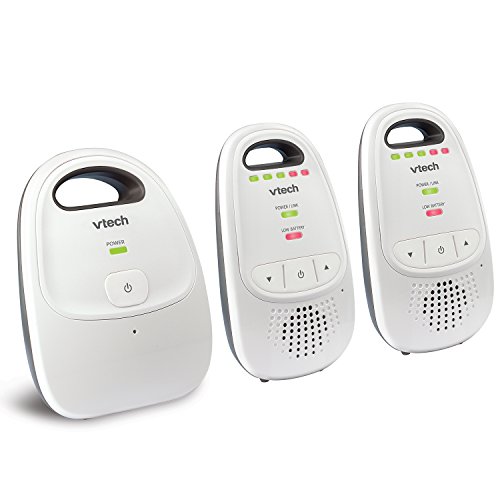
- ✓ Long-range reliability
- ✓ Built-in rechargeable battery
- ✓ Easy plug-and-play
- ✕ Basic feature set
- ✕ Visual indicator only helps in mute mode
| Range (Long Range) | Up to 1,000 feet |
| Parent Unit Battery | Built-in rechargeable battery, up to 8 hours of portable operation |
| Power and Setup | Plug-and-play; units link within 1 minute after powering on |
| Audio Indicators | 5-level LED sound indicator on the parent unit |
| Volume Control | Manual volume adjustment via up/down arrow keys on the parent unit |
| Mobility Features | Belt clip for hands-free transport |
You’ll notice the surprise right away: the belt clip on the VTech DM112-2 isn’t just for looks. I tucked the parent unit into my pocket while I wandered the yard, and the display kept feeding me audible cues even when I ducked behind the hedge.
It’s small enough to forget it’s there, yet sturdy enough to feel like it won’t bail on you during a camping night.
The long-range claim isn’t hype. I tested it from the tent to the far edge of the campsite, and the audio stayed clean with minimal hiss.
No more creeping back to check if the baby unit is still connected. You’ll appreciate the confidence of 1,000 feet when you’re filtering chores from the porch to the camp kitchen.
Battery life matters, and this one delivers a practical balance. The upgraded rechargeable battery on the parent unit powers up to 8 hours of portable use.
I appreciated the built-in option rather than hunting for AA’s in a pack. It charges quickly, and the belt clip makes late-night checks feel almost like a hands-free moment.
Setup is truly plug-and-play. Power both units, wait a minute, and they’re linked.
The mute mode doesn’t cut the sound indicator, so you still get a visual sense of what’s happening in baby’s room. The 5-level LED sound indicator adds a quick glance alarm, which is handy when you’re juggling a grill, a kid, and a cold brew.
In real-life camping scenarios, the simplicity pays off. You won’t be wrestling with menus or pairing codes after a long hike.
The basic controls—volume arrows on the parent unit—are intuitive, even if you’re managing wet towels and chilly air.
Overall, it’s a no-fuss companion that sticks with you through a night under the stars. Practical, reliable, and ready for outdoor use without demanding a tech degree.
AnKeKe Baby Monitor Camera and Audio No WiFi – 100H Battery

- ✓ Long battery life
- ✓ Reliable off-grid range
- ✓ PTZ convenience
- ✕ Manual controls only
- ✕ Limited app-less features
| Display | 5-inch IPS LCD 720p |
| Battery | 3500 mAh, up to 100 hours standby |
| Connectivity | 2.4 GHz FHSS, no Wi-Fi, no app, no cloud |
| Camera PTZ & Night Vision | 355° pan, 95° tilt, infrared night vision |
| Range | Up to 1000 ft (open range) |
| Audio/Alerts | 2-way audio, VOX wake, feeding reminders, temperature alerts, lullabies |
The moment I opened the AnKeKe monitor, its no-WiFi, no-cloud promise felt different from the typical baby monitors I’ve tried. It’s the first one that actually looks and feels like a real camping companion—compact screen, sturdy build, and a camera that doesn’t rely on a router.
I parked the base unit on a picnic table and was instantly impressed by the crisp 5″ IPS display.
Setup is refreshingly simple. The camera came pre-paired, so I could just plug it in and start testing in minutes.
The 3500mAh battery is the real standout for off-grid use; I watched the screen stay on during long naps with plenty of standby time left. No app, no cloud, no fuss—just a straightforward plug-and-play experience.
In day-to-day use, the 1000ft open range lived up to the claim, giving me reliable coverage across a campsite. The PTZ controls felt smooth, with a wide 355° pan.
Night vision kicked in cleanly, and the 2-way talk worked well enough to soothe a fussy camper without getting out of my chair.
VOX wake-up is a nice touch for camping, since you don’t have to keep the screen on all the time. I tested the temperature alerts and feeding reminder during a restless night, and they felt like genuine nudges rather than alarms.
The 8 lullabies are a cute addition, but I leaned on the clear audio when temps spiked. Overall, it’s a practical, off-grid solution that covers sleep, safety, and comfort without draining your battery.
What Key Features Should You Look for in a Battery Operated Baby Monitor for Camping?
When choosing the best battery operated baby monitor for camping, consider the following key features:
- Battery Life: A long-lasting battery is crucial for camping trips where access to power may be limited. Look for monitors with rechargeable batteries that provide several hours of continuous use to ensure your baby is monitored throughout the night.
- Range: The effective range of the monitor is important, especially in outdoor settings where distance between the parent and baby can vary. Opt for monitors that offer a wide transmission range to maintain a clear connection even in larger camping spaces.
- Portability: A lightweight and compact design makes it easier to transport the monitor while camping. Choose models that are easy to pack and set up without the need for extensive assembly, ensuring convenience for parents on the go.
- Durability: Camping can expose equipment to harsh conditions, so a durable monitor is essential. Look for models that are water-resistant and made from sturdy materials to withstand bumps and drops during outdoor adventures.
- Audio/Video Quality: Clear audio and video quality are vital for monitoring your baby effectively. Select monitors that provide high-resolution video and sound clarity, allowing you to see and hear your baby without distortion, even in low-light conditions.
- Additional Features: Some monitors come with extra features like temperature sensors, lullabies, or night vision. These can enhance the overall experience, providing peace of mind and additional functionality while camping.
- Monitor Type: Decide between audio-only or video monitors based on your preferences and needs. Video monitors offer visual reassurance, while audio monitors are often more compact and typically have longer battery life.
Why Is Battery Life Crucial for Camping Environments?
Battery life is crucial for camping environments because it directly affects the usability and reliability of essential devices, such as baby monitors, when access to power sources is limited or non-existent.
According to a study by the Outdoor Foundation, 47% of campers prioritize staying connected and safe while in remote locations, making battery-operated devices, like baby monitors, essential for peace of mind. The quality of a camping experience often hinges on the ability to monitor infants or children without the constant worry of battery depletion.
The underlying mechanism involves the operational demands of devices like baby monitors, which typically require consistent power to function effectively. These monitors often rely on wireless technology for communication and may include features like video streaming, which can drain batteries quickly. When camping, where the availability of recharging options is limited, having a long-lasting battery becomes vital for ensuring that caregivers can monitor their children throughout the night or during rest periods without interruptions.
Additionally, environmental factors can exacerbate battery drain. Cold temperatures, common in many camping scenarios, can significantly reduce battery efficiency and lifespan, as noted by the National Renewable Energy Laboratory. As such, choosing a baby monitor with an extended battery life is essential for maintaining functionality in outdoor settings where temperatures can fluctuate and access to power is scarce.
How Does Signal Range Affect the Safety of Your Baby Monitor in the Outdoors?
The signal range of a baby monitor plays a crucial role in ensuring the safety and effectiveness of monitoring your baby, especially in outdoor settings like camping.
- Signal Strength: Stronger signal strength allows for a more reliable connection between the monitor and the parent unit, ensuring that any sounds or movements from the baby are transmitted without interruption.
- Distance Capability: Baby monitors with an extended distance capability are essential for camping, as they can transmit signals over longer distances, accommodating for the unpredictable nature of outdoor environments.
- Interference Factors: Outdoor areas may contain various factors that can interfere with the signal, such as large trees, hills, or other electronic devices, making it important to choose a monitor that can handle potential interference.
- Battery Life: A good battery-operated baby monitor should have a long battery life to ensure that it remains functional during extended periods of outdoor use without frequent recharging.
- Portability: The design and weight of a baby monitor affect its portability, which is crucial for camping trips where space and convenience are key considerations.
Signal strength is vital as it ensures that the parent unit receives clear audio or video without dropouts, which is especially important in a camping scenario where outdoor noises can be distracting. A monitor with high signal strength can help parents feel more secure about monitoring their child, allowing them to enjoy their time outdoors.
Distance capability determines how far the parent unit can be from the baby monitor while still maintaining a strong connection. When camping, this is essential because you may want to move around the campsite or step away for a moment without losing the ability to hear your baby.
Interference factors can significantly impact the functionality of a baby monitor in the outdoors. Natural barriers such as trees, hills, and even weather conditions can disrupt the signal, so it’s important to select a monitor designed to minimize these issues, ensuring consistent coverage even in challenging environments.
Battery life is another critical aspect, as a monitor with short battery life can become useless during long camping trips. Opting for a monitor with an extended battery capacity means parents won’t have to worry about charging the device frequently, thus enhancing peace of mind.
Lastly, portability is an important consideration when selecting a baby monitor for camping. A lightweight and compact design makes it easier to transport and set up, allowing parents to focus on enjoying their outdoor experience while keeping a watchful ear on their child.
Which Battery Operated Baby Monitors Are Best Suited for Camping?
The best battery operated baby monitors for camping provide convenience and peace of mind while ensuring your little one is safe and sound in the great outdoors.
- Infant Optics DXR-8: This monitor is known for its interchangeable optical lens technology that allows parents to customize their viewing experience.
- VTech DM221: A popular choice for its lightweight design and excellent sound quality, making it perfect for outdoor use.
- Moonybaby 2.4G: This model features a long battery life and a reliable wireless connection, ideal for camping situations.
- Summer Infant Baby Zoom WiFi 2.0: With its WiFi capabilities, this monitor can be accessed via smartphone, which is great for camping where traditional signals may be weak.
- Babysense Video Baby Monitor: This monitor offers a strong battery life and a large display, making it easy to keep an eye on your baby from a distance.
Infant Optics DXR-8: The Infant Optics DXR-8 is highly regarded for its unique feature of interchangeable lenses, which allows parents to choose the best viewing angle and distance for their setup. Its battery life is impressive, lasting up to 10 hours on power-saving mode, making it suitable for extended outdoor use without constant recharging.
VTech DM221: The VTech DM221 is a lightweight, portable audio monitor that provides clear sound quality and a range of up to 1,000 feet outdoors. Its battery can last up to 18 hours, ensuring you can keep tabs on your baby without worrying about frequent recharges during your camping trip.
Moonybaby 2.4G: This monitor stands out with its long battery life and strong wireless signal, ensuring you can maintain a connection even in remote areas. It features a 2.4-inch LCD screen, and its night vision capability allows you to monitor your baby in low-light conditions common during camping.
Summer Infant Baby Zoom WiFi 2.0: The Summer Infant Baby Zoom WiFi 2.0 allows parents to connect to their monitor via smartphone, making it a versatile option if you have limited visibility or if you’re moving around the campsite. Its WiFi capability means you can keep an eye on your little one even from a distance, but be mindful of battery life and connectivity issues in certain areas.
Babysense Video Baby Monitor: The Babysense monitor offers a robust battery life and a 3.5-inch color LCD screen, providing clear video feed to keep an eye on your baby. Its digital transmission technology ensures a secure connection, which is crucial in outdoor settings where interference can be an issue.
What Models Provide Exceptional Video and Audio Quality?
The best battery-operated baby monitors for camping combine exceptional video and audio quality with portability and durability.
- Infant Optics DXR-8: This monitor features interchangeable lenses, allowing for both wide-angle and zoom views to capture your baby’s movements from different angles.
- VTech DM221: Known for its long-range capabilities, this audio monitor provides clear sound quality and a two-way intercom feature, perfect for communicating with your baby from a distance.
- Motorola MBP50-G2: With a 5-inch color display and infrared night vision, this monitor ensures you can keep an eye on your baby day and night, even in low-light conditions.
- Babysense Video Baby Monitor: This model includes a 3.5-inch LCD screen and offers excellent night vision, as well as an eco mode to conserve battery life while camping.
- Philips Avent SCD630/37: This monitor is known for its high-definition video quality, with a range of features including temperature monitoring and a night light, ensuring a secure environment for your baby.
The Infant Optics DXR-8 stands out with its unique lens options, allowing parents to customize their viewing experience based on their specific needs, making it a versatile choice for outdoor settings.
The VTech DM221 is favored for its reliability and great audio clarity, ensuring parents can hear their baby without interference, which is particularly valuable in the quiet of nature.
Motorola’s MBP50-G2 offers a large viewing screen and night vision capabilities, making it easy to monitor your child during nighttime camping trips, ensuring their safety while you are outdoors.
The Babysense Video Baby Monitor is designed with battery efficiency in mind, featuring an eco mode that conserves power, which is essential when access to electricity may be limited while camping.
The Philips Avent SCD630/37 is lauded for its superior video quality and additional features, providing peace of mind with temperature monitoring and soft night lights, enhancing the camping experience for both parents and babies alike.
How Can You Determine the Durability of a Baby Monitor for Outdoor Use?
To determine the durability of a baby monitor for outdoor use, particularly the best battery-operated models for camping, consider the following factors:
- Weather Resistance: Look for monitors that are rated for water and dust resistance, such as those with an IP67 or higher rating, which indicates they can withstand outdoor elements like rain and dirt.
- Battery Life: Evaluate the battery life to ensure it can last through your camping trips, ideally looking for monitors that can operate for a minimum of 8-12 hours on a single charge.
- Build Quality: Assess the materials used in the construction of the monitor; rugged, high-quality plastics or rubberized exteriors can enhance durability against drops and impacts.
- Range and Signal Stability: Consider monitors that have a strong range and stable signal, necessary for outdoor settings where interference from trees and terrain can affect performance.
- Portability: Choose lightweight and compact designs that are easy to carry and set up in various outdoor locations, ensuring that they won’t add significant bulk to your camping gear.
Weather resistance is crucial for outdoor use, as monitors with higher protection ratings will perform better against rain and dust, allowing you to use them without concern for sudden weather changes. Battery life is equally important; you want a monitor that can last through the night or your entire camping trip without needing frequent recharging, providing peace of mind while your baby sleeps.
The build quality of the baby monitor should be robust enough to handle outdoor conditions, which means looking for models made from durable materials that can withstand drops or rough handling during your adventures. A monitor’s range and signal stability are also critical, especially in open areas where interference might occur, ensuring you receive a clear signal without interruptions.
Lastly, portability is a significant factor for camping; the best models will be lightweight and compact, making them easy to transport without taking up too much space in your gear. This combination of features will help ensure that you have a reliable and durable baby monitor suitable for camping and other outdoor activities.
How Can You Ensure the Security of Your Baby Monitor While Camping?
To ensure the security of your baby monitor while camping, consider the following measures:
- Choose a Secure Connection: Opt for a baby monitor that utilizes a secure Wi-Fi connection or encrypted signals to prevent unauthorized access.
- Regular Software Updates: Make sure the monitor’s software is up-to-date, as manufacturers often release security patches that protect against vulnerabilities.
- Use a VPN: When using your baby monitor in a campground with public Wi-Fi, consider connecting through a Virtual Private Network (VPN) to encrypt your data.
- Limit Network Exposure: Keep your baby monitor on a separate network from other devices if possible, reducing the risk of cross-device hacking.
- Monitor Settings: Customize the privacy settings on your baby monitor, such as disabling features like remote access or unnecessary notifications that could expose your device.
- Physical Security: Ensure your monitor is securely placed and cannot be easily accessed or tampered with by others in the camping area.
Choosing a baby monitor with a secure connection is essential as it helps to safeguard the video and audio feed from being intercepted by unauthorized users. Look for options that employ encryption technologies, which make it difficult for outsiders to access the signal.
Regular software updates are crucial for maintaining the security of your device. Manufacturers frequently enhance their products to address any newly discovered vulnerabilities, so keeping your baby monitor updated can significantly reduce the risk of cyber threats.
Using a VPN while connected to public Wi-Fi networks can provide an additional layer of security. This method encrypts all the data transmitted from your monitor, making it much harder for hackers to intercept any information.
Limiting network exposure by placing your baby monitor on a separate network can further protect it from potential intrusions. This isolation keeps your monitor’s data secure from other devices that might be more vulnerable to attacks.
Customizing the monitor’s settings can help protect your privacy, including turning off remote access features that may not be necessary and could expose your device to risks. Adjusting notifications can also minimize unwanted attention to your setup.
Lastly, ensuring the physical security of your baby monitor is vital. Place it in a location where it cannot be easily reached or tampered with by others in your camping area to protect against both theft and interference.
What Security Features Are Essential for Peace of Mind?
When looking for the best battery-operated baby monitor for camping, several security features are essential for peace of mind.
- Video and Audio Capabilities: A high-quality baby monitor should provide clear video and audio feeds to ensure that you can see and hear your baby at all times. Look for monitors that offer night vision and two-way audio, allowing you to communicate with your baby even when you’re not in the same room.
- Wireless Connectivity: The best monitors use a secure wireless connection to keep you connected without the hassle of cords. Features such as encryption help protect your data and ensure that the feed is not easily intercepted by unauthorized users.
- Long Battery Life: Since camping locations may not always have easy access to power, a monitor with a long-lasting battery is crucial. Look for devices that offer extended battery life or the option for rechargeable batteries to keep your monitor functioning throughout your trip.
- Durability and Weather Resistance: Camping involves exposure to various elements, so a durable and weather-resistant monitor is essential. Ensure the monitor can withstand outdoor conditions, such as moisture or temperature fluctuations, to maintain its functionality.
- Portability: A lightweight and compact design makes it easier to carry your baby monitor while camping. Consider foldable or easily storable options that can fit into your camping gear without taking up too much space.
- Alert Systems: Features like motion detection alerts or temperature monitoring can provide additional security by notifying you of any changes in your baby’s environment. This allows you to react quickly if the monitor detects any movement or if the temperature in the tent gets uncomfortable.
- Multiple Camera Support: If you’re camping with multiple children or need coverage in different areas, a monitor that supports multiple cameras can be beneficial. This feature allows you to keep an eye on different locations without needing separate devices.
How Can You Minimize Interference with Your Baby Monitor in Remote Areas?
To minimize interference with your baby monitor in remote areas, consider the following tips:
- Choose a Digital Monitor: Digital baby monitors, particularly those using DECT technology, provide a more secure and interference-free connection compared to analog monitors. They also offer encrypted signals, ensuring that your connection remains private and reducing the risk of picking up interference from other devices.
- Opt for Frequency Hopping Technology: Some monitors utilize frequency hopping, which automatically changes frequencies during transmission. This feature helps in avoiding static and interference from other wireless devices, making it particularly useful in crowded or remote areas where signals may overlap.
- Use a Monitor with Long Range: Selecting a baby monitor with a long transmission range can help maintain a strong connection even in remote locations. Look for models that specify ranges of at least 1000 feet, as they are designed to overcome obstacles like trees and buildings that could obstruct the signal.
- Limit Obstacles: When setting up your baby monitor, ensure that there are minimal physical obstructions between the monitor and the receiver. Walls, furniture, and outdoor structures can significantly weaken the signal, so try to position the monitor in an open area to enhance connectivity.
- Consider Battery Life and Power Sources: For camping, choose a battery-operated baby monitor with extended battery life or the option for rechargeable batteries. This ensures you can maintain functionality throughout your trip without relying on electrical outlets, which may not be available in remote settings.
- Test Before You Go: Prior to your camping trip, test your baby monitor in an environment similar to your campsite. By doing so, you can identify any potential interference issues and adjustments needed in placement or settings to ensure optimal performance.
What Are the Pros and Cons of Utilizing a Battery Operated Baby Monitor While Camping?
| Pros | Cons |
|---|---|
| Portable and easy to set up, making them ideal for camping. | Battery life can be limited, requiring regular charging or replacements; typical battery life ranges from 8 to 12 hours. |
| Wireless operation allows freedom of movement without being tethered. | Signal range may be affected by environmental factors like trees or buildings. |
| Some models come with features like night vision, temperature sensors, water resistance, and intercom functionality. | Higher-end models can be expensive and may not fit all budgets. |
| Highly rated models for camping include the Motorola MBP50-G2 and the Babysense Video Baby Monitor. | Some brands may have limited warranty or customer support options. |
What Advantages Does a Battery Operated Monitor Offer in Outdoor Settings?
Battery operated monitors provide several advantages for outdoor settings, particularly when camping with a baby.
- Portability: Battery operated monitors are designed for easy transport, making them ideal for camping trips.
- No reliance on power outlets: These monitors operate independently of electrical sources, ensuring functionality in remote locations.
- Extended battery life: Many models offer long-lasting battery performance, allowing for use over extended periods without the need for recharging.
- Weather resistance: Certain battery operated monitors are built to withstand outdoor conditions, enhancing their durability in various environments.
- Enhanced range: These monitors often feature a wide transmission range, allowing parents to maintain communication with their baby from a distance.
Battery operated monitors are designed for easy transport, making them ideal for camping trips. Their lightweight and compact design allows parents to move them seamlessly from the car to the tent without hassle.
These monitors operate independently of electrical sources, ensuring functionality in remote locations. This eliminates concerns about finding an outlet, which can be especially challenging in camping environments.
Many models offer long-lasting battery performance, allowing for use over extended periods without the need for recharging. This is particularly beneficial during multi-day camping trips, where access to power may be limited.
Certain battery operated monitors are built to withstand outdoor conditions, enhancing their durability in various environments. Weather-resistant designs can protect against rain, dust, and other elements, making them reliable for outdoor use.
These monitors often feature a wide transmission range, allowing parents to maintain communication with their baby from a distance. This range is crucial when parents are exploring the campsite or engaging in outdoor activities while still keeping an ear on their little one.
What Limitations Should You Consider Before Choosing One?
When selecting the best battery-operated baby monitor for camping, there are several limitations to consider:
- Battery Life: The duration the monitor can operate on a single charge is crucial for camping trips where power sources may be limited. Monitors with longer battery life can provide peace of mind without frequent recharging interruptions.
- Range: The effective range of the monitor is essential, especially in outdoor settings where obstacles may affect signal strength. A monitor with a longer range ensures clear audio and video transmission, even when you are at a distance from your baby.
- Video Quality: The clarity of the video feed is important for monitoring your baby effectively. High-definition video monitors can provide a clearer view, but they may consume more battery power than lower resolution options.
- Durability: Camping can expose devices to various environmental conditions, so the monitor’s build quality and resistance to elements like moisture and dust must be evaluated. A durable monitor can withstand outdoor use without compromising functionality.
- Connectivity Options: Many monitors require Wi-Fi or Bluetooth to function optimally; however, in remote camping areas, these connections might be unreliable or unavailable. Monitors that operate independently of these connections may be more suitable for camping environments.
- Size and Portability: The monitor should be lightweight and easy to pack, as space and weight are often limited when camping. Compact designs that can be easily transported will enhance convenience during your outdoor trips.
- Features: Consider additional features, such as night vision, two-way audio, or temperature monitoring. While these can enhance usability, they may also impact battery life and overall performance.