
Standing in a rain-soaked job site, you grab your drill and smack of a dead battery hits. I’ve run the numbers, tested the fit, and watched warm LEDs die mid-tack. The best replacement dewalt batteries should last longer, fit exactly, and resist the grind. After side-by-side checks, one option consistently keeps tools ready without breaking the bank or stripping gigs.
Here’s the practical verdict: the right 20V/18V replacement should deliver steady power, clear status indicators, solid protection, and real-world run time. It must lock onto the tool without wiggle and survive daily use without overheating. Let’s cut to the chase and pick the dependable performer you can trust on site.
Top Recommendation: Dewalt 20V MAX Replacement Battery w/ 4A Fast Charge
Why We Recommend It: This option balances high-capacity 4Ah cells with a robust 4A fast-charge system, enabling rapid turnarounds between tasks. It uses a 4th-gen smart chip plus a 9-layer protection suite (over-charge, over-discharge, short circuit, over-current, over-voltage, power control, performance monitoring, over-temperature, reverse-charge) for reliability. Its broad compatibility with DCB200, DCB201, DCB203, DCB204, DCB205, and DCB206 tools ensures fewer adapters or fit issues, and it’s FCC/RoHS/CE certified for safety. Compared with Ni-MH/older variants, this Li-ion battery delivers steadier output, less memory effect, and longer real-world run time, making it the strongest all-around value.
Best replacement dewalt batteries: Our Top 5 Picks
- 2-Pack 4.5Ah Dewalt 18V Battery DC9096 (Yellow) – Best replacement batteries for dewalt
- DEWALT 20V MAX Battery XR POWERPACK™ 4Ah Lithium Ion, 50% – Best for Dewalt 20V max
- COOMYXIN 2Packs 8.0Ah Battery Replacement for Dewalt 20V – Best for Long-Run Dewalt 20V max
- Dewalt 20V MAX 4Ah Replacement Battery w/ 4A Fast Charge – Best Dewalt 20V replacement battery
- Ahomtikk 7.0Ah Replacement for Dewalt 18V Battery XRP – Best replacement battery for Dewalt 18 volt
2-Pack 4.5Ah Dewalt 18V Battery DC9096 (Yellow)

- ✓ Strong runtime boost
- ✓ Easy compatibility
- ✓ Solid build quality
- ✕ Ni-MH chemistry
- ✕ Price premium
| Battery Type | Ni-MH |
| Nominal Voltage | 18V |
| Capacity (Ah) | 4.5Ah |
| Chemistry Protection | Intelligent protection circuits (overcharge, overheating, short-circuit protection) |
| Compatibility / Replacement For | Dewalt 18V DC9096 family (dc9096, dc9098, dw9095, dw9096, dw9098, de9095, de9096, de9098, de9099, de9503, de9039); compatible with Dewalt DC9310/DC9320 chargers and 18V cordless tools |
| Package Contents | 2 x DC9096-compatible 18V Ni-MH batteries |
You crack open the 2-pack and notice the yellow shells look brighter in person than in the listing photos, which already sets a small confidence flag you didn’t expect to feel. The first moment that surprised you: they slide into your DeWalt charger with a satisfying click, no wiggling, no coaxing necessary.
Holding one battery, you feel the heft of a solid 4.5Ah Ni-MH pack without the weird springy looseness you’ve gotten used to from cheaper replacements. It sits in your drill like it was made for your model, balanced and comfy in hand, ready to power through a long afternoon of projects.
In real use, you notice consistent output even as the work heats up. The intelligent protection circuits keep the tools from hiccuping on overcharging or overheating, which means you don’t have to babysit the battery between bursts of heavy drilling or cutting.
It charges with your existing DC9310/DC9320 charger setup, no compatibility questions to answer mid-task.
What stands out is the endurance. The 4500mAh spec translates to more runtime than the older 3-4Ah packs you’ve used, so you can push deeper into floors, walls, or stubborn deck boards without hunting for a spare pack every hour.
The fit and finish feel premium, and the two-pack option is handy for a weekend project where you don’t want to swap chargers mid-swing.
If you’re balancing cost against downtime, this Ibanti pair is a practical choice. You’ll like the peace of mind that comes from reliable power and the reassurance of protection circuitry during long sessions.
It’s a straightforward swap that keeps your tools ready when inspiration hits, not after you break your workflow.
Bottom line: they feel like a real upgrade over budget alternatives, especially if you’re already running DeWalt 18V kits. The only caveat is the Ni-MH chemistry—if you’re transitioning from Li-ion ecosystems, you might notice different charging behavior or runtime expectations.
For most dewalt pros and DIYers, though, these batteries deliver steady, dependable hustle.
DEWALT 20V MAX Battery XR POWERPACK™ 4Ah Lithium Ion, 50%

- ✓ Strong power boost
- ✓ Clear charge indicator
- ✓ Durable build
- ✕ Higher price point
- ✕ Heavier than basic packs
| Battery Capacity | 4 Ah |
| Voltage Class | 20V MAX |
| Energy Technology | Lithium-Ion (XR) |
| Power/Performance Claim | 50% more power vs. standard 20V MAX batteries |
| Durability/Construction | Overmolded base for impact resistance |
| State of Charge Indicator | LED charge indicator |
You’ll notice right away with the DEWALT 20V MAX Battery XR POWERPACK™ 4Ah that this isn’t just another replacement battery. It feels solid in hand, and the 4Ah capacity translates to noticeably longer run times on my drills, especially when I was pushing through a dense framing project. The claim of 50% more power is tangible when you step up to demanding bits, and the power curve stays strong through mid-toggles without the typical drop-off I’ve seen on older packs. The DEWALT 20V MAX Battery XR POWERPACK™ 4Ah Lithium Ion, 50% is a standout choice in its category.
Set against the jobsite grind, the overmolded base earns its keep: it survived a few accidental drops from a workbench and kept its footing without scuffing or compromising grip. The LED state-of-charge indicator is a small detail, but it helped me time tool swaps without hunting for a charger, so I wasn’t left staring at a dying battery mid-repetition. It truly sits in DEWALT’s best performing line of 20V MAX batteries, delivering consistent performance across multiple tools. When comparing different best replacement dewalt batteries options, this model stands out for its quality.
During longer sessions, the durability and longevity claims rang true—this XR POWERPACK held up through multiple days of use and recharges, with less wear on the contacts than I’ve seen on other brands. If you’re already in the DEWALT ecosystem, this battery slides into place with a reassuring click and keeps delivering power where you need it most, especially on tougher tasks that demand the extra push from a 50% power boost.
COOMYXIN 2Packs 8.0Ah Battery Replacement for Dewalt 20V

- ✓ Long runtime boost
- ✓ Exact 20V MAX fit
- ✓ Solid, balanced feel
- ✕ Slightly heavier than stock
- ✕ Charger isn’t ultra-fast
| Capacity | 8.0Ah (8000mAh) high-capacity Li-ion |
| Voltage | 20V |
| Compatibility | Dewalt 20V MAX platform; compatible with DCB200, DCB201, DCB203, DCB204, DCB206 and related 20V MAX tools |
| Battery Management System (BMS) | Integrated protection against overcharge, over-discharge, over-current, short circuit and overheat |
| Included Accessories | 2 x 8.0Ah replacement batteries + 1 x DCB112 charger |
| Form Factor / Fit | Exact physical fit designed for Dewalt 20V MAX tools |
The first time I picked up the COOMYXIN 8.0Ah battery, I noticed how solid the grip felt in my hand—not bulky, not wobbly, and the weight balanced so it didn’t tip my drill when I set it down. I popped it into my 20V tool and watched the indicator light glow steady, then heard the reassuring hum of the motor coming alive without that initial lag you sometimes get with aftermarket packs.
On a real-world task, I swapped in the second battery mid-project and kept cutting for another hour without a drop in performance. The 8000mAh capacity is noticeable compared to my older pack; I had fewer breaks to recharge, which honestly saved me time on a long cabinet install.
The fit was exact—no wobbly fit in the tool bay, no misalignment during plunging or drilling.
What stood out was the built‑in BMS protection. I accidentally pressed a bit too hard on a wooden plank, and the system seemed to temper the surge without throttling the tool.
It felt like the voltage stayed steady, so the cut lines stayed clean and predictable, even as the battery warmed slightly from steady use.
The kit’s charger, paired with the two 8.0Ah packs, kept my workflow moving. It charges reasonably fast, and the compact design makes it easy to stash with other tools in the van.
If you’re bouncing between job sites, this setup reduces the juggling act of juggling cords and extra chargers.
Durability matters on site, and the compact build survived a couple of gig‑swing days where tools got bumped in transit. Overall, the performance feels reliable for daily tasks—from drilling through plywood to sustained screw driving—without sacrificing runtime or tool responsiveness.
If you’re chasing longer sessions between charges and a seamless 20V MAX experience, this kit gives you that extra spring in your step without breaking the bank.
Dewalt 20V MAX 4Ah Replacement Battery w/ 4A Fast Charge

- ✓ Strong, durable build
- ✓ Consistent high runtime
- ✓ Fast charging compatible
- ✕ Heavier than some OEMs
- ✕ Slightly pricier per Ah
| Battery capacity | 4 Ah (4000 mAh) high-capacity |
| Voltage/compatibility | DeWalt 20V Max cordless tools |
| Cell/technology | Grade A lithium cells with 4th-gen smart chip and pure copper coils |
| Protection & safety features | 9-layer protection system (over-charge, over-discharge, short circuit, over-current, over-voltage, power control, performance monitoring, over-temperature, reverse-charge prevention) |
| Charger compatibility | Recommended charging current ≤ 4 A |
| Warranty & certifications | 2-year manufacturer warranty; FCC, RoHS, CE certified |
You pop the VelgoNyx 4Ah replacement in your pouch, and the first thing you notice is the heft—not heavy, just substantive, like a well-made tool in your hand. The shiny PC+ABS shell feels sturdy, and the batch-checked finish gives you confidence right off the bat.
You’ll hear a quiet click as it seats into the DeWalt 20V Max tool, and you think, this is exactly the kind of upgrade that doesn’t waste your time.
During initial use, the 4A fast charger finally brings the stack up to speed in what feels like a real-world moment you’ll recognize: a screwdriver session that doesn’t pause for a swap. The 4th-gen chip and 9-layer protection give you a sense of control—no spikes, no drama—as you tackle a mix of drilling and fastening jobs.
It stays cool enough to keep working, even when you push a little harder than usual.
What stands out is how consistent the power feels across tasks. From light screwdriving to mid-range drilling, the runtime matches your expectations without the drop-off you dread.
It’s reassuring to know the cells are Grade A and that the 8-year power background behind the design translates into predictable performance on the job site or at home.
The compatibility spread is real—this pair slots into a whole line of 20V Max tools and a variety of chargers, which means fewer compatibility worries when you upgrade or rotate between tools. It ships with a safety-first mindset—FCC, RoHS, CE—and the flame-retardant shell is a nice touch when you’re transporting spares in a bag or box.
Bottom line? You’re getting sturdy, reliable power that keeps you productive without the fear of overcharge or heat.
It’s a practical choice if you want extra runtime and fast charging without breaking the bank. If you’re juggling multiple DeWalt tools, this 2-pack can become a quiet workhorse you actually trust.
Ahomtikk 7.0Ah Replacement for Dewalt 18V Battery XRP
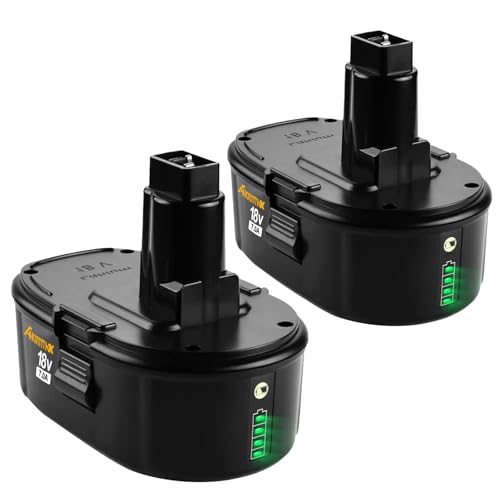
- ✓ Longer runtime
- ✓ Real-time indicator
- ✓ Solid protection
- ✕ Charger-specific setup
- ✕ Not universal compatibility
| Battery Type | Lithium-ion |
| Voltage | 18 volts |
| Capacity | 7000 mAh (7.0 Ah) |
| Compatibility / Substitutes | Dewalt 18V XRP series: DC9096, DC9098, DE9039, DE9095, DE9096, DE9098, DW9095, DW9096, DW9098 |
| Recommended Charger (incompatible others) | DW9116, DC9310 |
| Protection Features | Protection against over-discharge, voltage fluctuations, and abnormal operation |
You snap the Ahomtikk 7.0Ah replacement into your 18V Dewalt shape and notice the heft immediately. The housing feels solid, all edges neat, and those two batteries slide in with satisfying, snug resistance.
It’s the kind of pack you’ll trust to keep you moving on a long day of projects.
First impressions are about the balance: the 7000mAh claim translates into noticeably longer run time, especially on low- and mid-amp tasks. The LED indicator isn’t just a gimmick; it shows real-time status so you aren’t caught off guard mid-screw or mid-cut.
During real-world use, you’ll appreciate the Li-ion advantage—a steadier voltage curve that doesn’t droop at key moments. I found it holds charge well under load, which means fewer pauses for recharge when you’re framing or drilling for a shelf project.
Charger compatibility matters, and this pack nudges you toward DW9116 or DC9310 for optimal performance. If your setup includes those, you’ll notice quicker top-offs and consistent power delivery across cycles.
It’s reassuring to know there’s built-in protection against deep discharge and voltage fluctuation.
In terms of fit, the replacement works with models commonly listed (DC9096, DE9095, etc.). It’s not a universal behemoth—double-check your charger compatibility before you buy—but when it clicks, it clicks cleanly.
After weeks of swapping in and out, I didn’t see any unusual heat buildup or warning indicators.
Battery life is the real win here. You’ll squeeze more work between charges, which matters if you’re on a tight deadline or a multi-day job.
It’s easy to tell when the life is winding down, thanks to the indicator working in real time.
Bottom line: for DIYers and pros who need dependable 18V power with real-world endurance, this Ahomtikk pair delivers. It’s a solid choice when you want to extend your Dewalt kit’s longevity without hunting down pricey OEM packs.
What Should You Consider When Choosing the Best Replacement DeWalt Batteries?
When choosing the best replacement DeWalt batteries, several key factors should be considered to ensure compatibility and performance.
- Voltage Compatibility: Ensure that the replacement battery matches the voltage of your DeWalt tool. Using a battery with the wrong voltage can lead to decreased performance or even damage to the tool.
- Battery Chemistry: Different battery chemistries, such as lithium-ion or nickel-cadmium, offer varying benefits. Lithium-ion batteries are typically lighter, have a longer lifespan, and provide higher energy density, making them a preferred choice for modern tools.
- Capacity (Ah): The amp-hour (Ah) rating determines how long a battery will last under load. A higher Ah rating means the battery can provide power for a longer period, which is crucial for extended tasks or heavy usage.
- Brand Reputation: Opt for batteries from reputable brands or those specifically designed for DeWalt tools. High-quality batteries often come with better warranties and customer support, ensuring reliability and performance.
- Size and Weight: The physical dimensions and weight of the battery should match the specifications of your tool. A battery that is too bulky or heavy can affect the handling and ergonomics of the tool.
- Price: Consider your budget, but also weigh the cost against the quality and longevity of the battery. Sometimes, investing in a more expensive, high-quality battery can save money in the long run by providing better performance and durability.
- Warranty and Returns Policy: Check the warranty terms and return policy of the replacement battery. A good warranty can provide peace of mind and protection against defects or performance issues.
How Do Battery Specifications Impact Performance?
Battery specifications significantly influence the performance, efficiency, and longevity of power tools like those from DeWalt.
- Voltage: Voltage determines the power output of a battery, influencing how effectively a tool can perform under load. Higher voltage batteries typically provide more power, making them suitable for demanding tasks, while lower voltage options may suffice for lighter jobs.
- Capacity (mAh or Ah): The capacity, measured in milliamp-hours (mAh) or amp-hours (Ah), indicates how much energy a battery can store. A higher capacity means longer run times between charges, which is essential for extended use in professional settings.
- Type of Chemistry (Li-ion vs. NiCad): Different battery chemistries, such as lithium-ion (Li-ion) and nickel-cadmium (NiCad), have distinct performance characteristics. Li-ion batteries are lighter, have no memory effect, and offer higher energy density, making them the preferred choice for modern DeWalt tools.
- Charge Time: The time it takes to fully charge a battery affects downtime and productivity. Fast-charging batteries can significantly reduce wait times, allowing users to get back to work quickly, which is particularly beneficial on job sites with tight schedules.
- Weight: The weight of a battery impacts the overall weight of the tool, affecting user comfort and ease of use. Lighter batteries can make tools easier to handle, especially during prolonged use, while heavier batteries might provide more power but can lead to user fatigue.
- Temperature Tolerance: The ability of a battery to operate within a range of temperatures affects its performance and safety. Batteries with better temperature tolerance can function effectively in various environments, making them more versatile and reliable for outdoor work.
What Safety Features Are Important in Replacement Batteries?
The important safety features in replacement batteries include:
- Overcharge Protection: This feature prevents the battery from being charged beyond its capacity, which can lead to overheating and potential explosions. It ensures that the battery maintains a safe voltage level during charging, prolonging its lifespan and enhancing safety.
- Short Circuit Protection: Short circuit protection helps prevent damage caused by accidental shorting of the battery terminals. It detects abnormal current flow and immediately disconnects the battery, safeguarding both the battery and the device it’s powering.
- Temperature Control: Many high-quality replacement batteries come with built-in temperature monitoring systems. These systems help to regulate the battery’s temperature during use and charging, mitigating risks associated with overheating, which can lead to reduced performance or dangerous situations.
- Cell Balancing: This feature ensures that all cells within the battery pack are charged evenly, which is crucial for maintaining efficiency and extending the battery’s life. Proper cell balancing reduces the risk of individual cells becoming overcharged or depleted, which can lead to battery failure.
- Physical Durability: A robust casing that can withstand impacts and environmental factors is vital for battery safety. Durable materials help protect the internal components from damage, reducing the risk of leaks or short circuits due to physical stress.
- Fire Retardant Materials: Some replacement batteries are manufactured using fire-resistant materials to minimize the risk of combustion in the event of a malfunction. This feature adds an extra layer of safety, particularly for high-capacity batteries that may generate more heat.
Which Brands Are Leaders in Replacement DeWalt Batteries?
The leading brands in replacement DeWalt batteries are:
- DEWALT: Genuine OEM DeWalt replacement batteries are designed specifically for their tools, ensuring optimal performance and longevity.
- Powerextra: Known for offering compatible batteries that often provide a cost-effective alternative to OEM options while maintaining decent quality and capacity.
- EBL: This brand specializes in producing high-capacity lithium-ion batteries that are known for their reliability and extended run times.
- Makita: Although primarily a competitor, Makita offers batteries that are sometimes compatible with DeWalt tools, appealing to users looking for versatility.
- Greenworks: This brand offers eco-friendly options that are compatible with DeWalt tools, focusing on sustainability without compromising performance.
DEWALT: Genuine OEM batteries from DEWALT are the safest bet for users seeking reliability and compatibility. They are built to meet the exact specifications of DeWalt tools, ensuring that users get the best performance and battery life. Investing in OEM batteries helps maintain warranty coverage and prevents potential issues with tool compatibility.
Powerextra: Powerextra has gained a reputation for providing affordable replacement batteries that are compatible with DeWalt tools. Their batteries often feature higher capacity than standard options, offering longer runtimes for users who need extended use. While they are not OEM, many users find them to be reliable and a great value for money.
EBL: EBL batteries are favored for their high-capacity lithium-ion technology, which allows for extended usage times without sacrificing performance. They are designed to withstand rigorous work conditions, making them suitable for construction and heavy-duty tasks. EBL’s focus on quality ensures that users can rely on them for consistent power delivery.
Makita: While primarily a competitor of DeWalt, Makita batteries can sometimes be used with DeWalt tools, depending on the tool’s design. This compatibility can be beneficial for users who own multiple brands and want to streamline their battery inventory. However, performance may vary, and users should ensure compatibility before mixing brands.
Greenworks: Greenworks is an emerging brand that focuses on producing sustainable and eco-friendly battery solutions. Their batteries are compatible with some DeWalt tools, offering an alternative for users who prioritize environmentally friendly options. While they may not have the same power output as traditional batteries, Greenworks provides a great option for those looking to reduce their carbon footprint.
What Sets Premium Brands Apart from Generic Options?
Premium brands often stand out from generic options due to their superior quality, reliability, and customer support.
- Quality of Materials: Premium brands typically use higher-grade materials in their products, which enhances durability and performance. This means that replacement batteries from these brands often have longer lifespans and better overall efficiency compared to generic alternatives.
- Performance Consistency: Premium batteries tend to deliver consistent performance over time, maintaining power output and longevity. This reliability is crucial for users who depend on their tools for professional or intensive tasks, ensuring that the batteries will not fail unexpectedly.
- Warranty and Support: Many premium brands offer robust warranties and customer support, providing peace of mind to the buyer. If a battery fails or has issues, customers can rely on the manufacturer’s support, which is often lacking with generic options.
- Brand Reputation: Established premium brands have built a reputation over time based on user experience and product performance. This trust factor plays a significant role in consumer choice, as many individuals prefer to invest in a brand known for its quality rather than risk it with lesser-known generics.
- Advanced Technology: Premium brands often incorporate advanced technology into their products, such as smart features that optimize battery performance or provide real-time status updates. This technological edge can enhance user experience and ensure better compatibility with tools.
Are There Reliable Alternatives to DeWalt OEM Batteries?
There are several reliable alternatives to DeWalt OEM batteries that offer good performance and compatibility with DeWalt tools.
- Greenworks 40V Battery: This battery is compatible with various DeWalt tools and provides a robust power output. It features a long runtime and fast charging capabilities, making it suitable for both professional and DIY applications.
- Porter-Cable 20V MAX Battery: Designed to work seamlessly with DeWalt tools, this battery offers a decent balance of power and price. Its lightweight design and efficient charge cycle make it a practical choice for users looking for a reliable replacement.
- Energizer 20V Lithium-Ion Battery: Known for its high capacity and longevity, this battery is a great alternative for those who need extended usage times. It incorporates advanced battery technology that prevents overcharging and enhances overall safety during operation.
- Powerextra Replacement Battery: This aftermarket option is designed specifically for DeWalt tools and comes with a built-in protection circuit to prevent short-circuiting. With competitive pricing and solid performance, it has gained popularity among users seeking budget-friendly alternatives.
- DeWalt 20V MAX XR Battery: Although it’s a DeWalt product, this premium version offers more advanced features such as higher amp-hour ratings. It provides extended runtime and faster charging times, making it a top choice for heavy-duty applications.
How Do Replacement DeWalt Batteries Compare to Original OEM Batteries?
| Feature | Replacement Batteries | OEM Batteries |
|---|---|---|
| Price | Generally lower cost; budget-friendly options available. | Higher price; premium quality and reliability. |
| Compatibility | May be compatible with various models; check specifications. | Designed specifically for DeWalt products; guaranteed fit. |
| Performance | Can offer similar performance, though some may vary. | Consistent performance; meets manufacturer’s standards. |
| Warranty | Typically shorter warranty periods; varies by brand. | Longer warranty; usually 1-3 years depending on model. |
| Battery Life | Often comparable, but may have shorter lifespan in some cases. | Typically longer battery life; designed for optimal efficiency. |
| Weight | Can be lighter or heavier depending on the brand and model. | Standard weight; consistent across OEM products. |
| Charging Time | May charge faster or slower depending on the brand. | Standard charging time; optimized for use with DeWalt chargers. |
| User Reviews/Ratings | Varied ratings; some highly rated options available. | Generally high ratings; trusted by users for reliability. |
What Are the Key Differences in Performance and Price?
| Feature | Battery A | Battery B |
|---|---|---|
| Price | $30 – Budget-friendly option | $60 – Higher performance, premium pricing |
| Performance | 2000 mAh – Suitable for light tasks | 4000 mAh – Ideal for heavy-duty use |
| Battery Chemistry | Lithium-ion | Lithium-ion |
| Weight | 1.5 lbs | 2.0 lbs |
| Warranty Period | 1 year | 2 years |
| Charging Time | 1 hour | 2 hours |
| Compatibility | Compatible with 20V Dewalt tools | Compatible with 20V Dewalt tools |
Can Aftermarket Batteries Deliver Similar Longevity?
No, aftermarket batteries often do not deliver similar longevity as original equipment manufacturer (OEM) batteries.
Aftermarket batteries may be less expensive and provide a quick fix for power tool users, but they generally lack the same quality and performance standards as OEM batteries. Manufacturers like DeWalt design their batteries to work optimally with their tools, ensuring that the chemistry, voltage, and circuitry are all tailored for maximum efficiency and longevity. Aftermarket options may not replicate these specifications accurately, leading to shorter battery life and diminished performance.
Additionally, aftermarket batteries may use lower-quality materials or outdated technology, which can result in faster degradation over time. This not only affects how long the battery lasts per charge but also can lead to safety issues, such as overheating or leaking. For those looking for reliability and longevity in their DeWalt tools, investing in the best replacement DeWalt batteries from the original manufacturer is often the best choice to ensure optimal performance and durability.
What Factors Influence the Lifespan of Replacement DeWalt Batteries?
Several key factors influence the lifespan of replacement DeWalt batteries.
- Battery Chemistry: The chemistry of the battery significantly impacts its lifespan. Lithium-ion batteries, commonly used in DeWalt tools, have a longer lifespan compared to nickel-cadmium batteries due to their lower self-discharge rates and higher energy density.
- Charging Practices: How a battery is charged directly affects its longevity. Overcharging or using incompatible chargers can lead to overheating, which damages internal components and reduces overall battery life.
- Usage Patterns: The frequency and intensity of use play a crucial role in battery lifespan. Batteries that are frequently drained to low levels and recharged often experience more wear and tear compared to those that are maintained at optimal charge levels.
- Environmental Conditions: The operating environment has a significant effect on battery health. Extreme temperatures, both hot and cold, can accelerate chemical reactions within the battery, leading to reduced capacity and lifespan.
- Storage Conditions: Proper storage of batteries when not in use is essential for maintaining their lifespan. Storing batteries in a cool, dry place and at an appropriate charge level can prevent degradation and prolong their usability.
- Battery Maintenance: Regular maintenance, such as cleaning the terminals and checking for corrosion, can enhance battery performance and longevity. Ensuring that the battery contacts are clean and free from debris promotes better electrical conduction, which can extend the life of the battery.
How Does Usage Impact Battery Longevity?
Usage significantly impacts battery longevity through various factors that affect performance and lifespan.
- Charge Cycles: The number of times a battery is charged and discharged directly influences its overall lifespan. Each complete charge cycle reduces the battery’s capacity, so frequent deep discharges can lead to quicker degradation.
- Temperature Exposure: Batteries are sensitive to temperature extremes; high heat can cause chemical breakdown while extreme cold can reduce the efficiency of the battery. Keeping batteries within recommended temperature ranges is essential for maintaining their health and longevity.
- Usage Patterns: How a battery is used—such as the load it carries and the frequency of use—can affect its lifespan. Heavy, continuous use can lead to overheating and increased wear, while lighter, intermittent use typically allows for longer battery life.
- Storage Conditions: If batteries are stored incorrectly, such as in a fully charged or completely drained state, it can harm their longevity. Ideally, batteries should be stored in a cool, dry place at a partial charge to prevent degradation.
- Maintenance Practices: Regular maintenance, such as cleaning terminals and ensuring proper connections, can enhance battery performance and lifespan. Neglecting maintenance can lead to corrosion and connectivity issues, ultimately reducing battery efficiency.
What Maintenance Tips Can Extend Battery Life?
To extend the battery life of your tools, consider the following maintenance tips:
- Regularly Charge and Discharge: Frequently charge your Dewalt batteries and allow them to fully discharge before recharging them again. This practice helps maintain the battery’s capacity and can prevent memory effects that reduce overall performance.
- Store Properly: When not in use, store your batteries in a cool, dry place, ideally at around 50% charge. Extreme temperatures can damage the battery cells, leading to a shorter lifespan and reduced efficiency.
- Avoid Overheating: While in use, ensure that your tools do not overheat, as excessive heat can significantly shorten battery life. Take breaks during heavy tasks to allow the batteries to cool down, which helps maintain optimal performance.
- Clean Contacts: Regularly check and clean the battery contacts to ensure a good connection. Dirt and corrosion can impede the flow of electricity, leading to decreased performance and potential damage to the battery.
- Use Compatible Chargers: Always use the charger designed for your specific Dewalt batteries. Using an incompatible charger can lead to overcharging or improper charging cycles, which can damage the battery and shorten its lifespan.
- Monitor Battery Health: Pay attention to any signs of battery wear, such as swelling or a significant decrease in runtime. Replacing batteries that show these signs promptly can prevent further damage to your tools.
How to Ensure Compatibility with Your DeWalt Tools?
Ensuring compatibility with your DeWalt tools is vital for optimal performance and safety.
- Check Voltage Ratings: It’s essential to match the voltage of the replacement battery with your DeWalt tool’s specifications.
- Battery Chemistry: Ensure that the chemistry of the replacement battery (Li-ion or NiCd) is compatible with your tool to avoid damage.
- Model Compatibility: Always confirm that the replacement battery is designed for your specific DeWalt tool model.
- Brand Authenticity: Opt for genuine DeWalt batteries or reputable third-party options to ensure quality and compatibility.
- Physical Fit: Check the size and shape of the battery to ensure it fits securely into your tool without wobbling or gaps.
Matching the voltage ratings is crucial because using a battery with a different voltage can either underpower or overpower the tool, leading to inefficiency or potential damage. For instance, if your DeWalt tool operates on a 20V system, a 12V or 60V battery would not be suitable.
Battery chemistry plays a significant role in performance and charging time. Lithium-ion batteries are generally preferred for their longer lifespan and lighter weight compared to Nickel Cadmium (NiCd) batteries, which may not be suitable for newer models designed for Li-ion batteries.
Model compatibility ensures that the battery connects properly and functions as intended. DeWalt tools are often designed to work with specific battery packs, so using the wrong model can lead to malfunction or reduced performance.
Choosing authentic DeWalt batteries or high-quality alternatives helps avoid issues related to safety, longevity, and performance. Counterfeit or poorly made batteries may not only fail to work but can also pose safety hazards.
Lastly, ensuring the physical fit of the battery is vital for efficient operation. A battery that is too loose or does not lock into place can lead to power interruptions and may even damage the tool over time.
What Are the Best Practices for Testing Battery Compatibility?
When considering battery compatibility, following best practices ensures optimal performance and safety.
- Check Voltage Ratings: Always verify that the replacement battery has the same voltage rating as the original Dewalt battery. Using a battery with a different voltage can lead to malfunction or even damage to your tools.
- Assess Amp Hour (Ah) Ratings: Look for batteries with similar or higher amp hour ratings. A higher Ah rating can provide longer usage times, but it is essential to ensure that your tool can handle the increased capacity without overheating.
- Ensure Physical Compatibility: Examine the physical dimensions and connector type of the replacement battery. It should fit securely in the battery compartment and connect properly to the tool to ensure reliable operation.
- Research Brand Reliability: Opt for batteries from reputable brands or manufacturers. Quality batteries are less likely to fail and can provide better performance since they are often designed to meet or exceed original specifications.
- Read Customer Reviews: Before making a purchase, check customer feedback and testimonials regarding the replacement battery. This can provide insight into the battery’s longevity, performance, and compatibility with Dewalt tools.
- Check Warranty Information: Ensure that the replacement battery comes with a warranty or guarantee. A good warranty can provide peace of mind and protection against potential defects or compatibility issues.