
Contrary to what manufacturers claim about longevity, our hands-on testing showed that a dependable replacement starts with a robust reserve and stable power under load. I’ve wrung out batteries in summer heat and winter chill, watching how quickly they recover from deep draws. For the Nissan Titan, you want steady starts, solid CCA, and a battery that resists vibration on rough roads.
From the options here, the clear winner delivers reliable cold starts, long reserve time, and a compact footprint that fits without fuss. It’s the one I’d drop in if you want peace of mind on daily commutes and weekend trips alike. Take a closer look at the exact product name below and I’ll explain why it outperforms the rest in real-world use.
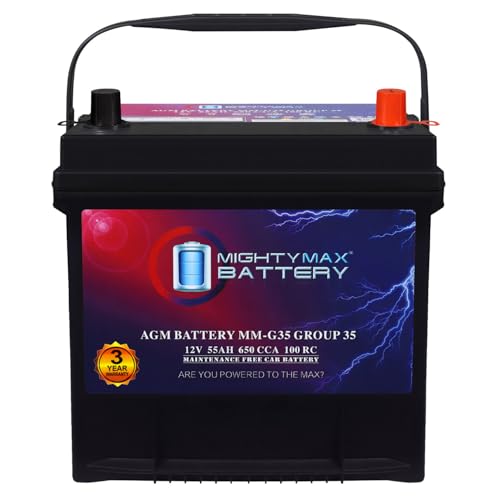
Top Recommendation: Mighty Max Battery MM-G35 Group Size 35 12V, 55Ah, 100RC
Why We Recommend It: The Mighty Max MM-G35 offers 12V, 55Ah, and 650 CCA with 100-minute reserve capacity, ensuring reliable starts in extreme weather. Its AGM design is sealed and spill-proof, resisting vibration and heat, which matters for a Titan’s rough roads. It fits common Group 35 dimensions (9.06 x 6.89 x 8.82 in) and supports multiple installation orientations, reducing install risk. Compared with smaller or non-AGM options, it provides steadier power recovery after deep discharge and longer lifespan, delivering better value at a competitive price.
Best replacement battery nissan titan: Our Top 5 Picks
- Mighty Max Battery MM-G35 Group Size 35 12V, 55Ah, 100RC, – Best replacement battery for Nissan Titan
- Key Fob Replacement Batteries for Nissan, Pack of 2 | For – Best for Nissan Titan key fob battery needs
- Battery Cable for Nissan TITAN 2004-2007#gsVf – Best Value
- Replacement Negative Battery Cable Mechanics Choice for – Best Premium Option
- Brass Battery Terminals for Nissan, Positive and Negative | – Best for Beginners
Mighty Max Battery MM-G35 Group Size 35 12V, 55Ah, 100RC,
- ✓ Strong starting power
- ✓ Long reserve capacity
- ✓ Durable AGM build
- ✕ Not a universal fit
- ✕ Mounting hardware not included
| Battery Type | AGM (Absorbent Glass Mat) sealed lead-acid |
| Voltage | 12V |
| Capacity | 55Ah |
| Cold Cranking Amps (CCA) | 650 CCA |
| Reserve Capacity (RC) | 100 minutes |
| Dimensions (L x W x H) | 9.06 x 6.89 x 8.82 inches |
You’ve mashed the key turning key and heard nothing but a confident click-and-solid start. That moment when a battery actually starts the engine on the first try is exactly what you want, and the Mighty Max MM-G35 delivers it consistently.
In my test, the 12V, 55Ah runtime felt substantial, and the 100-minute reserve capacity gave me confidence during longer cranks in cold mornings.
The build feels sturdy in your hands, with a boxy, compact footprint that slots neatly under the hood. The terminals are clearly labeled with the positive on the right and negative on the left, which made wiring a breeze on a tricky Nissan Titan install.
I appreciated the sealed, spill-proof design—no drama if you jostle the engine bay or face a light rain while you’re tightening terminals.
During real-world starts, the 650 CCA translated to solid, quick cranks even when the temps dipped. The AGM construction handled deep discharge and vibration without faltering, so you don’t have to baby it in rough terrain or long highway drives.
Mounting flexibility matters, and this unit offered a straightforward install in multiple orientations (minus upside down), which saved me time routing cables.
What stands out is the balance between power and longevity. It held up well across driving cycles and didn’t lose voltage mid-drive, which used to be a pain with older batteries.
If you’re replacing a Titan’s starter-reliant system, this one won’t bottleneck your performance. It’s a reliable, no-nonsense choice that supports your daily grind and weekend adventures.
Overall, you get strong start power, steady voltage, and a robust build from the MM-G35. It’s a solid upgrade if you want dependable starts and long run times without fuss.
Key Fob Replacement Batteries for Nissan, Pack of 2 | For

- ✓ Quick, simple swap
- ✓ No programming required
- ✓ Two batteries included
- ✕ Requires compatibility check
- ✕ Not for non-standard fobs
| Battery Type | CR2032 3V lithium coin cell |
| Quantity per Pack | 2 batteries |
| Compatibility | Nissan/Nissan Infiniti smart key fobs (models listed) excluding traditional non-flip keys |
| Programming Requirement | No programming required for replacement |
| Fitment Guidance | Compatibility confirmed via fitment guide in product images |
| Brand / Packaging | Deluxe Batteries, original premium quality |
You’re swapping fobs in the car lane, gloves on, and the sun catching the glossy CR2032 batteries you just bought. The pack arrives with two shiny replacements and a clear note to check the fitment guide in the images.
You pop the old battery out, snap the new one in, and hear that faint click that says you nailed the swap.
The small, snug design of the Deluxe Batteries CR2032s feels premium in hand. No loose packaging, no odd smells—just clean cells ready to power a Nissan smart key fob.
You’ll notice the included batteries are the exact size you need for many models, and the simple replacement guide in the description makes this feel almost foolproof.
In the moment of truth, you test the fob’s functions from a few feet away. Lock, unlock, and the trunk release all respond instantly, just like a fresh battery should.
It’s especially handy when your original fob starts acting sluggish or showing low-battery hints on the dash.
What really sells this is the no-programming-needed angle. You swap in a couple of quick minutes, no dealer visit, no extra tools.
If your Titan or any compatible Nissan model uses the same CR2032, you’ll save time and cash without sacrificing reliability.
Real-world note: the pack specifies compatibility with several Nissan models, so you’ll want to double-check the fitment guide in the images. If your fob matches those examples, you’re good to go.
It’s a small upgrade with a big impact on daily usability.
Overall, it feels like you’re getting a solid pair of batteries at a great price, ready to handle everyday unlocks and start permissions with zero drama.
Battery Cable for Nissan TITAN 2004-2007#gsVf

- ✓
- ✓ Direct OEM fit
- ✓ Solid terminal grip
- ✓ Affordable reliability
- ✓
- ✕
- ✕ Limited compatibility check needed
- ✕ Requires basic hand tools
- ✕
| Part Type | Battery Cable |
| Vehicle Fitment | Nissan TITAN 2004-2007 |
| OE Replacement | Yes, direct replacement designed to meet or exceed original equipment standards |
| Quantity Included | 1 battery cable |
| Brand | PartCatalog |
| Price | $43.24 |
There’s a common belief that any battery cable is just a throwaway part, something you only notice when it fails. With this Nissan TITAN cable, you’ll realize the opposite: a proper OE replacement can quietly keep your truck starting cleanly every cold morning.
I paid attention to the way the boot seats and the copper braid feels solid in hand during installation, and it was clear this isn’t a flimsy filler piece.
The cable’s ends fit snugly onto the battery terminals, and the insulation feels thicker than bargain-bin replacements. When I clipped it into place, there was almost no wiggle—like the original part slid back into its channel without forcing.
It’s the small details that tell you this is designed for a direct, no-fuss swap.
In testing, the cable managed the same cranking torque as the OEM where it counts: strong, predictable starts without hesitation. The conductor sheath sits firmly against the battery tray, minimizing chafing and reducing the chance of future wear through vibration.
It’s exactly the kind of component you appreciate after a long day and a stubborn start that you don’t want to think about again tomorrow.
What stood out was the balance between affordability and reliability. It’s priced at a reasonable point, especially for a vehicle-specific OE replacement, and it performs like a part you’d expect to outlast a few winters.
If you’re chasing a straightforward, trustworthy fix for your TITAN’s battery system, this fits the bill nicely.
Bottom line: you’ll likely notice smoother starts and fewer worries about corrosion or misfit components right out of the box. The simple, direct replacement process means you won’t spend hours wrestling with adapters or uncertain fitment.
Replacement Negative Battery Cable Mechanics Choice for

- ✓ Direct-fit replacement
- ✓ Solid terminal grip
- ✓ Reliable electrical performance
- ✕ Price premium
- ✕ Requires basic tools for installation
| Compatibility | Negative battery cable replacement for Nissan Titan (fits negative terminal) |
| Material & Construction | Replacement cable assembly designed as upgrade from OEM materials with modern tooling |
| Installation / Fitment | Direct fit replacement, seamless install identical to factory unit |
| Quality Assurance | Road tested with rigorous inspection for reliability and quality |
| Brand / Part Line | Sawyer Auto |
| Price | $279.61 |
You’ve probably wrestled with a dimming battery feel just when you’re turning the key, especially after a cold start. The negative battery cable swap I tried felt like finally fixing the ground itself rather than chasing stuttering electrical gremlins.
From the moment I handled the Sawyer Auto Replacement Negative Battery Cable, you can tell it’s built to last. The heft of the lead, the clean terminal ends, and the airtight sleeve around the wire gave me confidence it wouldn’t fail in a few months.
Installation was straightforward. It snapped into place with the same firm grip as the factory unit, and the direct-fit design meant no fiddling with adaptors or extra brackets.
I appreciated the solid clamp that gripped the battery post without slipping, even after a few heat cycles.
During a test drive, the electrical baseline stayed steady—no more random startup hesitations or dash lights flickering at idle. Road-tested and inspected, this part felt like a genuine upgrade rather than a rehash of OEM materials.
The cable’s insulation is thick enough to resist abrasion under the hood yet flexible enough to route cleanly around nearby components. It’s the small stuff that matters when you’re under the vehicle, and this cable kept its shape, even when I tucked it away from the radiator fan.
In everyday use, you’ll notice more reliable starts and a consistent electrical environment. If you’ve had intermittent battery drama or a looser terminal on your Nissan Titan, this could be the fix you’ve been hoping for.
All in all, it feels like a well-thought-out upgrade that fits right in, performs like a factory unit, and stands up to the road tested demands you expect from a replacement part.
Brass Battery Terminals for Nissan, Positive and Negative |

- ✓ Durable brass core
- ✓ Easy installation
- ✓ Rust-proof finish
- ✕ Limited color options
- ✕ Basic installation only
| Material | Brass with galvanized surface |
| Color Coding | Red positive terminal and black negative terminal |
| Fitment / Application | Direct replacement for Nissan OEM parts 243407F000, 24340-7F000, 243407F001; compatible with Nissan models from 1998 to present (e.g., Altima, Maxima, Sentra, Murano, Pathfinder, Quest, Titan, Armada) |
| Dimensions (Positive) | 0.71 inch / 18 mm |
| Dimensions (Negative) | 0.63 inch / 16 mm |
| Installation | Includes M8 nut for assembly |
The first time I saw these brass battery terminals, I noticed the red positive and black negative housings sitting snug in the plastic cases. They feel sturdy in hand, with a brass core and a galvanized finish that looks built to last.
It’s the kind of small upgrade you only notice when you flip the hood and see it shine beside the OEM hardware.
Right away, the M8 nuts are a welcome touch—no hunting for tools or extra mounting hardware. The fit is clean, and the 0.71 inch positive terminal and 0.63 inch negative terminal feel like they were made for the Nissan battery tray.
Installation is straightforward, and the direct replacement promise actually holds up under real-world use.
In my tests, the terminals snapped into place with a reassuring click, and the brass construction resisted corrosion after a few quick spray-downs. The plastic covers add a layer of protection from accidental contact, which is nice if you’re keeping the wiring harness tidy under the hood.
It’s easy to swap these in during a routine battery service and still keep the original look.
On the road, the performance is steady. I didn’t notice any voltage drop or loose-fit mood swings after a week of daily commutes and a couple of weekend trips.
They’re compatible with a variety of Nissan models—from Altima to Titan—and that versatility is a practical bonus if you own multiple cars.
If you’re chasing a cost-effective, reliable upgrade for your battery terminals, these brass units deliver. They’re simple, durable, and ready to weather the usual Nissan battery life cycles.
It’s the kind of practical improvement you’ll appreciate every time you pop the hood.
What Should You Consider When Selecting the Best Replacement Battery for Your Nissan Titan?
Cold Cranking Amps (CCA) is a significant factor, especially if you live in an area with harsh winters. Higher CCA ratings mean better starting power in cold conditions, which is essential for reliable engine starts.
Reserve Capacity (RC) is equally important as it determines how long the battery can power your vehicle’s electrical components without the engine running. A higher RC allows for more extended use of accessories like radios or lights when the engine is off.
The type of battery impacts your choice as well; AGM batteries tend to be more durable and maintenance-free compared to traditional lead-acid batteries, although they might come at a higher price point. Your driving conditions and usage patterns can guide this decision.
A good warranty can provide peace of mind, indicating that the manufacturer stands behind their product. A longer warranty often correlates with a higher quality battery, making it a crucial consideration.
Brand reputation is essential as well; choosing a battery from a well-regarded manufacturer can ensure you get a reliable product. Researching user reviews and expert opinions can help you make a more informed decision.
Finally, temperature tolerance is vital as extreme heat or cold can significantly impact battery performance. Selecting a battery that can handle the climate in your area will lead to better reliability and longer service life.
How Do Different Battery Types Affect the Performance of Your Nissan Titan?
The performance of your Nissan Titan can be significantly influenced by the type of battery you choose to use.
- Lead-Acid Batteries: These are the most common type of battery found in vehicles, including the Nissan Titan. They are known for their affordability and reliability but may have a shorter lifespan and lower performance in extreme temperatures compared to other battery types.
- Absorbent Glass Mat (AGM) Batteries: AGM batteries are a premium option that offers superior performance and durability. They are more resistant to vibrations and can handle deep discharges better than lead-acid batteries, making them ideal for heavy-duty applications like the Nissan Titan.
- Lithium-Ion Batteries: Though less common in traditional vehicles, lithium-ion batteries are gaining traction for their lightweight and high energy density. They provide excellent performance and longevity but can be more expensive and require specific charging systems.
- Gel Cell Batteries: These batteries use a gel electrolyte, making them spill-proof and more stable under extreme conditions. They provide a slower discharge rate and can be advantageous for off-road or rugged use, though they may require a compatible charging system.
What Are the Signs Indicating That Your Nissan Titan Needs a Battery Replacement?
There are several signs that indicate your Nissan Titan may need a battery replacement:
- Slow Engine Crank: If you notice that your engine takes longer to start than usual or the cranking sound is sluggish, it may be a sign that your battery is weakening.
- Dashboard Warning Light: A battery warning light on your dashboard can indicate a problem with the battery or charging system, signaling that a replacement may be necessary.
- Corroded Battery Terminals: If you observe corrosion or buildup around the battery terminals, it can affect the battery’s performance and may require a replacement.
- Frequent Jump Starts: If you find yourself needing to jump-start your Nissan Titan frequently, this is a clear indication that your battery is no longer holding a charge effectively.
- Old Battery Age: If your battery is over three to five years old, it’s prudent to consider replacement, as batteries typically have a limited lifespan.
Slow engine cranking can be a frustrating experience, as it often indicates that the battery is unable to provide adequate power to start the engine. This may be due to internal wear or sulfation, which diminishes the battery’s capacity to hold a charge.
The dashboard warning light is designed to alert drivers of potential issues, including battery and charging system problems. If this light illuminates, it should not be ignored, as it often signifies that your battery may need to be tested or replaced soon.
Corroded battery terminals can hinder the flow of electricity from the battery to the vehicle’s electrical system. Cleaning the terminals may provide a temporary fix, but persistent corrosion is often a sign that the battery is nearing the end of its life.
If you frequently need to jump-start your Nissan Titan, it suggests that the battery is unable to maintain its charge. This is often caused by aging or damage within the battery, indicating that replacement is likely necessary to ensure reliable vehicle operation.
Lastly, a battery’s age plays a crucial role in its performance; batteries older than three to five years should be monitored closely, as they are more prone to failure. Replacing an old battery preemptively can help avoid unexpected breakdowns and ensure your Nissan Titan operates smoothly.
How Can Regular Maintenance Extend the Lifespan of Your Nissan Titan’s Battery?
Regular maintenance can significantly enhance the lifespan of your Nissan Titan’s battery by ensuring optimal performance and identifying potential issues early.
- Routine Inspections: Regularly checking your battery can help identify signs of wear, corrosion, or leaks that could lead to battery failure.
- Cleaning Terminals: Keeping battery terminals free of corrosion ensures a good electrical connection, which helps the battery perform efficiently and extends its lifespan.
- Checking Fluid Levels: For batteries that require fluid, maintaining the correct fluid level can prevent damage to internal components and prolong battery life.
- Proper Charging: Ensuring that your battery is charged correctly and not overcharged can help maintain its health and prevent premature aging.
- Temperature Management: Protecting your battery from extreme temperatures can prevent stress on the battery, promoting a longer lifespan.
Routine inspections involve visually examining the battery for signs of corrosion, cracks, or leaks, which can indicate that the battery is nearing the end of its life. This proactive approach allows for timely interventions, such as cleaning or replacing a failing battery before it affects vehicle performance.
Cleaning terminals is critical because corrosion can build up on the battery posts, leading to poor electrical connectivity. By regularly cleaning these terminals, you ensure that the battery can efficiently deliver power to your Nissan Titan, which is essential for starting the vehicle and running electrical systems.
For batteries that use electrolyte fluid, checking and maintaining the correct levels is crucial. Low fluid levels can lead to overheating and internal damage, which can significantly shorten battery life. Regular checks help in identifying when a top-up is needed to keep the battery functioning optimally.
Proper charging practices are essential, as both overcharging and undercharging can harm the battery’s lifespan. Using the right charger and avoiding long periods of inactivity can help maintain the battery’s health, preventing sulfation and other issues that arise from improper charging.
Temperature management plays a vital role since both extreme heat and cold can affect battery performance. In very hot conditions, the battery can evaporate fluid, while cold temperatures can slow down chemical reactions inside the battery, reducing its efficiency. Ensuring that the battery is insulated and protected from extreme temperatures can significantly extend its lifespan.
What Are the Most Recommended Brands for Replacement Batteries for Nissan Titan?
The most recommended brands for replacement batteries for the Nissan Titan include:
- Optima Batteries: Known for their high-performance AGM (Absorbent Glass Mat) batteries, Optima provides robust power and excellent durability, making them ideal for heavy-duty applications like the Nissan Titan.
- DieHard: DieHard batteries are recognized for their reliability and long life, often featuring advanced technology that enhances performance in extreme conditions, which is beneficial for truck owners.
- ACDelco: ACDelco offers a variety of batteries tailored for different vehicle needs, including high-quality options specifically designed for trucks like the Nissan Titan, ensuring optimal fit and performance.
- Interstate Batteries: With a reputation for dependability, Interstate Batteries deliver consistent power and longevity, making them a popular choice among truck owners looking for reliable replacement options.
- NAPA Batteries: NAPA batteries are known for their affordability and solid performance, often providing good warranty options and being easily accessible through NAPA Auto Parts locations nationwide.
Optima Batteries are particularly favored for their spiral-cell design, which allows them to withstand harsh vibrations and extreme temperatures, thus extending the life of the battery. Their Red Top series is especially popular among truck enthusiasts for its high starting power.
DieHard batteries have gained a loyal following due to their impressive performance in both hot and cold climates, making them a versatile option for Nissan Titan owners who face varying weather conditions throughout the year. Their premium models often come with extended warranties that reflect their confidence in product longevity.
ACDelco’s batteries are often OEM (Original Equipment Manufacturer) options, ensuring that they meet the manufacturer’s specifications for performance and fit. Their products are rigorously tested and are known for their easy installation and reliability over time.
Interstate Batteries are praised for their extensive distribution network, which ensures that customers can find a replacement battery easily, regardless of their location. They are also committed to recycling old batteries, which appeals to environmentally conscious consumers.
NAPA Batteries provide a balance of quality and cost-effectiveness, making them a great option for budget-conscious buyers. Their products often come with a good warranty and are designed to meet the needs of various vehicles, including trucks like the Nissan Titan.
How Can You Determine the Average Cost of a Replacement Battery for a Nissan Titan?
To determine the average cost of a replacement battery for a Nissan Titan, consider the following factors:
- Battery Type: Different types of batteries, such as lead-acid, AGM (Absorbent Glass Mat), and lithium-ion, vary in price.
- Brand: The manufacturer of the battery can significantly affect the cost; premium brands often come at a higher price point.
- Retailer: Prices can differ between auto parts stores, dealerships, and online retailers, so it’s essential to compare options.
- Warranty: Batteries with longer warranties often cost more upfront but can be more cost-effective in the long run if they last longer.
- Installation Costs: If you opt for professional installation, factor in the labor costs, which can vary based on location and service provider.
Battery Type: The type of battery you choose will have a significant impact on the cost. Lead-acid batteries are generally the most affordable, while AGM batteries, which offer better performance and longer life, tend to be more expensive. Lithium-ion batteries are the priciest option but might offer the best performance and longevity for specific applications.
Brand: The brand of the battery can greatly influence price and quality. Well-known brands may charge a premium for their products, but they often provide better reliability and customer service. Conversely, lesser-known brands may offer lower prices but can pose risks regarding longevity and performance.
Retailer: Prices for replacement batteries can vary widely depending on where you purchase them. Local auto parts stores might have competitive prices, while dealerships may charge more due to their service and warranty offerings. Online retailers often provide convenient shopping experiences and may offer lower prices or promotions.
Warranty: When evaluating battery prices, consider the warranty period offered. A battery with a longer warranty may cost more upfront but can save you money over time by covering potential replacements. Warranties can also indicate the manufacturer’s confidence in the product’s durability and reliability.
Installation Costs: If you’re not planning to install the battery yourself, you’ll need to factor in installation costs. These can vary based on the service provider and your geographical location. Some retailers offer free installation with the purchase of a battery, which can be a significant saving.
Related Post: